

Because international organizations like migration so much?
Of Ilaria Bifarini
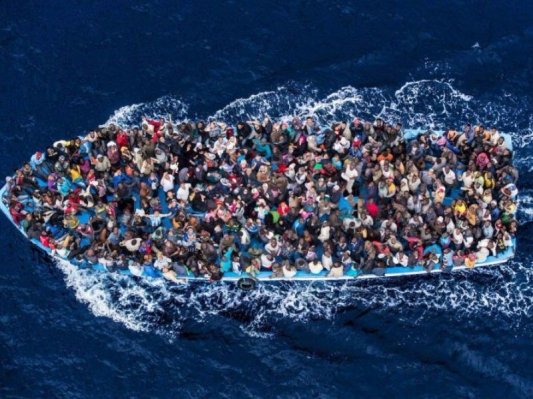
Source: Heretically
“Migration can benefit everyone in building more inclusive and sustainable societies. Globally, the number of international migrants has reached approx 258 million in 2017, compared to 173 million of 2000. Migration contributes to inclusive and sustainable economic growth and development in both countries of origin and destination. In the 2017, remittance flows to low- and middle-income countries have reached $ 466 billion, more than three times the amount of APS (Public development aid) received in the same year. Remittances constitute a significant source of family income, improving the situation of families and communities  through investments in education, healthcare, sanitation services, housing and infrastructure. Destination countries also benefit, as migrants often fill job gaps, they create jobs as entrepreneurs and pay taxes and social security contributions. Overcoming adversity, many migrants become the most dynamic members of society, contributing to the development of science and technology and enriching their host communities through cultural diversity.”
This is what we read in the Agenda 2030 for Sustainable Development of the United Nations, a firma del cinese Liu Zhenmin, UN Under-Secretary-General for Economic and Social Affairs. So, compared to 2000 the number of people who left their country of birth and now live in other countries increased by approximately 50% percent (il 49% to be precise) with a continuous growth trend. Beyond the optimistic and unrealistic tones used in the programmatic document, we can extrapolate the presumed economic model of development supported by the proponents of current migrations, That, unlike the past ones, have reached massive levels and are following new directions. Triggering a hypothesized virtuous circle of growth would be, on the one hand, the supply of labor by migrants for unsatisfied requests from local workers, on the other, the flow of money sent to the countries of origin, which would be used not only to alleviate family poverty, but for productive investments in the national economic fabric. A virtuous model and a harbinger of growth, accompanied by a happy coexistence, almost symbiotic, between migrants and citizens of the host country. Read More
 The. is available on the site