The euro has ruined Italy, lo dice Bloomberg
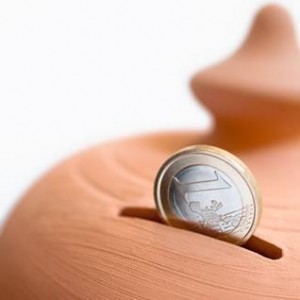
Twenty years of a single currency would have brought nothing to our country. However, our economy also suffers from much deeper structural problems
With the beginning of 2019 l’euro will accomplish 20 years, since exactly January 1st 1999 the single currency made its official entry into the financial markets, to arrive three years later, on January 1st 2002, into the pockets of European citizens, Italians included.
A significant period of circulation for be able to make an initial assessment of its advent. And the sums, especially for the’Italia, They're not flattering at all, actually quite the opposite. Scrolling through the figures put together in recent days by Bloomberg Economics, who gave an account of the first twenty years of euros, in fact, our country emerges with broken bones.
However, what should be explored further is whether our current economic malaise depends directly on the euro, or how much not rather by the fact that the single currency has contributed to amplifying structural deficiencies in our production system. But let's go in order, and let's see what they tell us numbers.

Twenty years of setback

The first evidence, related to the Bloomberg study, they show us without mercy, a devastating scenario for our country. Just think for example that between 1985 and the 2001 il gross domestic product Italian he had grown up with 482 billions of euros (+44%), while between the 2002 and the 2017 the growth was equal to 31 billion, that is, a skimpy one + 2% in almost twenty years.
Another very sore point is that of exports, always the workhorse of our economy. Well, always between 85 and 2001, l’export he grew up in Italy 136,3%, While, since the advent of the euro, growth stopped at a modest +40,9%, that is, less than a third.
To this already desolate panorama, we could then add the fact that GDP per capita is at the same level as 1999, that the unemployment for six years it has always been around 11% and that the industrial production still languishes 22% below the maximum levels reached in 2007. Read More
Share

Becchi: «E invece io dico attenti a quei due che resteranno alleati a lungo»

THE OPINION
Luciano Tirinnanzi intervista Paolo Becchi su Panorama N. 34, 09/08/2018
«According to the authors, è in atto un passaggio dalla Seconda alla Terza Repubblica basato su un dato che – credo anch’io – non può essere contestato. The inability of the so-called "progressive" forces to serve the interests of workers and small and medium-sized businesses, in short, of the majority of Italians. […] I believe Becchi is right when in one of his articles on the "sovereignist revolution", collected now in this book, maintains that the opposition between "right" and "left" has now been overcome by that which in my opinion sees people and elites opposed. […] I want to give new impetus to popular sovereignty. “Italians first” means nothing more than this. They left us a country with little hope for the future and with few smiles. Rebuilding it won't be easy. But I promise you that I will give it my all".
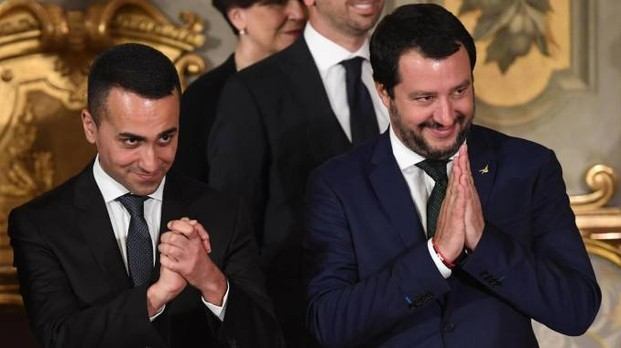
It is an extract from the preface signed by the Minister of the Interior and Deputy Prime Minister Matteo Salvini, which baptizes the political essay by Paolo Becchi and Giuseppe Palma, From the Second to the Third Republic, appena uscito per Paesi edizioni (304 pp., 12 euro). A book that, first, recounts the birth of the Lega-M5s government and frames it as a definitive overcoming of the political past. Ma è davvero così? We asked Professor Becchi, first ideologist of the Cinquestelle and now closer to the positions of the League.
«Il passaggio dalla Seconda alla Terza Repubblica è avvenuto senza coinvolgere la Costituzione, therefore it is partly an improper definition, but which nevertheless tells of the exhaustion of a political process that began in the 1990s. As I write in the book, il suo aspetto innovatore è nella sintesi tra sovranismo identitario, that of Salvini's League, and social sovereignty, proposed instead by Di Maio and the Cinquestelle. Non a caso l’uno si è preso il dicastero dell’Interno e l’altro quello del Lavoro. Terza Repubblica significa avere un governo che sta facendo nascere qualcosa di nuovo, without throwing the constitutional rules to the wind". Read More

Share

Luigi Bisignani at IL TEMPO: Matteo's secret plan

Image results for the man who whispered to the powerfulL’“man who whispers to the powerful” expresses his opinion in one of his usual Sunday letters to the editor of The weather, second newspaper of the capital. The reader will wonder why these sporadic spaces are given to those who are extremely distant from our positions in many respects. Well, after meeting him, the reason is easy to say: l’ “man who whispers to the powerful” can say things, sometimes, more interesting than others. No offense to those who don't whisper anything to anyone… On the contrary…(N.d.R.)
Of Luigi Bisignani
Dear director, Matteo Salvini, like a lion in the savannah, sniffs the air and prepares the next attack to conquer more and more territory. The first moves went better than expected and now that it has placed the immigration front at the center of the European debate, among other things, ridiculing Macron and taking Merkel's applause, can handle “from above” relations with his allies, Forza Italia and Brothers of Italy, who, in order not to be destroyed, will do everything not to turn him against each other. The Movement 5 position, weakened for a number of reasons, first of all the internal struggles between the Grillo-Di Battista-Fico group and the Di Maio-Bonafede-Casaleggio group that have been tearing it apart since they began to smell the scent of power, loses more and more consensus. With a savannah with such an arid landscape, the lion Salvini is secretly preparing his plan B: it will be taken, in one shot, those disappointed by Berlusconi, of Meloni but above all a part of that Grillino electorate who can no longer tolerate that summary justice and facade environmentalism that blocks investments and new infrastructures. Read More

Share

If you want peace, don't make war on us

Of Sergey Lavrov
If you want peace, don't make war on us
Source: Panorama
In an exclusive interview with “Panorama” on newsstands on 3 maggio, Russian Foreign Minister Sergey Lavrov, almost 15 years close collaborator of Putin, accuses the United States, Great Britain and a "small but very aggressive" group of Russophobic European countries. They have to resign themselves, dice, the world is no longer theirs. And he gives his version of the Salisbury poisonings and the use of chemical weapons by the Syrian regime. «The G7 is now inadequate, a model for the future is the Moscow-Beijing agreement".
Lavrov, in the interview he talks about all the main issues that have seen Russia as a protagonist in recent months, from the poisonings of spies in England to Syria, from the United States to relations with Europe.
Here are some passages from the long interview which can be read in full in the weekly: Read More

Share