Holy Land – The convent on the Jordan is reborn

Reporting of Federici Studies Center 64447
No more mines in the Franciscan convent on the banks of the Jordan
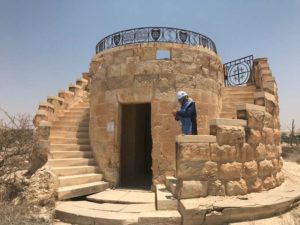
The demining work on the Qasr Al Yahud surface is proceeding quickly, near Jericho (Palestinian territories), locality on the western bank of the Jordan River where the baptism of Jesus is remembered. L'area, site of clashes during the Arab-Israeli war of 1967, it still preserves memories of the battles today. Arrive on site, it means taking a journey through time and history. Walk on the dusty paths lined with numerous shrines and chapels, cross the places traveled by Jesus and the apostles and before that by Elijah, look at the Jordan and Jordan on the other side, It is striking for its sense of peace.
Nevertheless, to remind you that this has not always been a land of peace, there are numerous signs that still warn, further away 51 years, of the presence of mines, sign of man's madness. Despite the yellow signs, the feeling of life that resumes, the force that pushes us to be reborn, it's palpable.
Read More

Share

Injustices and discrimination in the Holy Land

Image results for is the only Catholic NGO that offers legal protection to Palestinians in the Holy Land: at Society St. Yves, active from 27 years and with two locations, in Jerusalem and Bethlehem, it is increasingly a reference in cases of injustice and discrimination.Reporting of Federici Studies Center

Society St. Yves. From justice comes peace
It is the only Catholic-based NGO that offers legal protection to Palestinians in the Holy Land: the St. Society. Yves, active from 27 years and with two locations, in Jerusalem and Bethlehem, it is increasingly a reference in cases of injustice and discrimination.
Penalties in healthcare, lack of permits to enter Israel, demolitions of houses and schools, land confiscations: These are the problems of Palestinians and residents of Jerusalem that the St. Society deals with every day. Yves. Founded in 1991, is the only Catholic organization for human rights in the Holy Land. He was the Latin patriarch of the time, mons. Volerla to Michel Sabbah, on the proposal of the woman who later became its first director, Lynda Brayer. «We were at the end of the first intifada and there was a need for human rights organizations», explains the current director, the lawyer Raffoul Rofa.
The first case handled by St. Yves fu nel 1991 against the Israeli Ministry of Defense. Gas masks were also requested to be distributed to Palestinians in the West Bank, given that a chemical attack from Iraq was feared. The Supreme Court granted the petition and ordered the military to distribute gas masks. From that moment on, the action of the organization began, which every year provides legal assistance to thousands of people in different fields, from health, to freedom of movement, to discrimination in tax matters. Today «St. Yves» has twenty-five employees, including ten lawyers, in the two offices in Jerusalem and Bethlehem.
The organization takes its name from Saint Ivo of Brittany, a 13th century aristocrat and doctor of law, famous defender of the poor and considered the patron saint of lawyers. «We operate in East Jerusalem – continues Rofa – and in Area C of the southern West Bank (subjected to the full control of the Israeli military administration – ndr). In East Jerusalem we deal with legal issues relating to Palestinian residency and family reunification". After the Six Day War (1967), Israel has in fact granted the Palestinians of Jerusalem the status of "permanent resident", but a law enacted later establishes that the Palestinian who has left Jerusalem for seven years, not necessarily continuous, or who has acquired another citizenship through naturalization, may have his or her residency status revoked.

Read More

Share

Holy Land – Jewish desecration of a Salesian cemetery

Reporting of Federici Studies Center

In the indifference of international public opinion (also Vatican?) Jewish acts of vandalism against Catholic buildings continue in the Holy Land: the hatred of Caiaphas' descendants does not even stop in front of cemeteries. And the Israeli authorities do not intervene to put an end to this chain of sacrilegious acts.
Anti-Christian vandalism continues in Beit Gemal in Israel
The cemetery attached to the Salesian religious house of Beit Gemal was once again desecrated overnight
Overturned steles and broken crosses, the images speak for themselves. The cemetery of the Salesian convent of Beit Gemal, vicino a Beit Shemesh, 30 kilometers west of Jerusalem, it was once again damaged in the last few hours. The cemetery is located approximately 500 meters from the Salesian religious house. This latest crime concerns around thirty tombs, according to the Haaretz newspaper. Apparently, the events would have occurred in the night between 16 and the 17 October, according to a statement from the Assembly of Catholic Ordinaries of the Holy Land, widespread following the discovery. It was the religious people who were responsible for the maintenance of the cemetery, and who go there several times a month, the first to realize what happened.

Read More

Share

Holy Land: water is not the same for everyone

Image results for Holy LandReporting of Federici Studies Center

Thirsty Palestine
Having running water at home in the Palestinian Territories is not at all obvious or normal.
Neither in the West Bank nor in the Gaza Strip. For multiple reasons. Some testimonies from Bethlehem.
Observing the landscape around Beit Sahour, urban center east of Bethlehem, the cisterns on top of the houses allow Palestinian homes to be distinguished from buildings that are part of Jewish settlements. This is explained by the locals who every day deal with the problem of water shortage. The tanks on the houses are useful, Indeed, to conserve water or collect rain, but not all homes need it. In the West Bank, water is distributed differently from house to house, at a distance of a few meters from each other. To overcome the inconveniences of the water emergency, the population does its best, but the problem of resource management remains an open wound that shows no signs of healing, indeed it is "an obstacle to peace", as the BBC defined it.
According to the Palestinian Water Authority, il 95 percent of Palestinian water supplies are found in aquifers (there are three underground basins). Surface water, that could theoretically be available, instead it comes from the floods of the wadis (seasonal streams), from the possible desalination of the waters of the Dead Sea and the Jordan River. None of these resources, However, it is in fact usable by the Palestinians.

Read More

Share

Holy Land – New illegal settlements

Reporting of Federici Studies Center

New settlements in the West Bank and recognition of the Golan: Israel defies international law
Israel to revive extensive Jewish construction projects in West Bank. The super hawk Avigdor Lieberman anticipated it on Twitter, Defense Minister of the government chaired by Netanyahu. “Next week – he wrote – we will submit to the Superior Council for planning in Judea-Samaria (West Bank) plans for the construction of 2.500 accommodation, 1.400 of which to be implemented immediately". “We will extend construction throughout Judea-Samaria – he added – from North to South, in small and large settlements”.
Israel militarily occupied East Jerusalem and the West Bank in the war 1967 and has since built dozens of settlements in a territory that according to international law belongs to what should become the State of Palestine, an area that the UN recognizes as "occupied territories".
Since the beginning of the Trump administration, Israel has stepped up, according to reports presented by some NGOs, the construction of new homes and new settlements in the occupied territories, a sign that the presence of a friendly government like the American one has created the conditions for Israel from an international point of view to implement a new phase of building expansion.

Read More

Share

1948 – 2018: the catastrophe of the Palestinian people

Reporting of Federici Studies Center

Life as refugees, the story of Hejar and his family
These days in the Holy Land, the Israelis celebrated their independence and the Palestinians their national tragedy, which we reread through the eyes of Hejar Zghari, refugee in Bethlehem.
A dumpster burns, filling the air with a sour smell. It's a Thursday morning and in the narrow streets of the Dheisha refugee camp, at the gates of Bethlehem, there is almost no one there. Hejar Zghari opens the doors of his home to us, surrounded by other concrete buildings in the camp, populated by 15 thousand Palestinian refugees.
Cheers ha 67 years («I am the first born in my family in the camp»), born in diaspora and raised as a refugee. She graduated here, she got married and became a nurse, mother and grandmother. She appears dressed in traditional clothes and a plate of fruit: Tells: «I am originally from Zakaria, between Ramle and Hebron: ours was a peasant village, there were olive trees, fields cultivated with cereals and orchards. My five brothers were born there. My mother and father had a beautiful house, many animals, rabbits, sheep, goats. When the Zionists arrived they were chased out of the village. Adolescents and young people up to 30-35 years they were taken prisoner. Many of them were killed, a pregnant woman was also murdered. The rest of the village, little more than 1.500 people, he was terrified: they all ran away".

Read More

Share

Gaza Cristiana


Reporting of Federici Studies Center

Gaza, the oldest monastery in the Holy Land will be saved
Thanks to international funds, A two-year plan to restore St. Hilarion Monastery and Jabaliya Church has been initiated, monuments from the Byzantine era. With positive repercussions for Palestinian civil society.
The Palestinian enclave of Gaza hides a priceless cultural treasure, especially Christian, too little known and protected, often threatened by time, climatic events, sand, negligence, uncontrolled urbanization and recurring conflicts (three in the last decade alone). It took little for one of the most important early Christian testimonies of the Holy Land to disappear. A Nuseirat, about ten kilometers south of the city of Gaza, near the coastal dunes, the oldest monastery in the Holy Land is located, dedicated to Saint Hilarion and dating back to the 4th century.
Excavations in the monastery began in the 1990s and since 2012 it is included in the World Monuments Fund's list of the most threatened sites in the world. Also the Byzantine church of Jabaliya, discovered in 1996 a few kilometers north of the city of Gaza, risks the same fate. Resting place for pilgrims, it is known for a rich mosaic, damaged during the war 2012. (…)

Read More

Share