What if the liquid society was a hole in the water?


FIFTH COLUMN

by Marcello Veneziani
The world entered the third millennium with just one key idea, fluid and obsessive, global and elusive: liquid modernity. Twenty years ago, at the end of the last millennium, a sociologist from the East, Zygmunt Bauman, published his essay Liquid modernity, translated into the passage of a millennium across half the world, and in Italy from Laterza. A catchphrase began, first intellectual then media, on the global advent of liquidity, to which further corollaries were soon added by Bauman in as many books: liquid company, liquid love, liquid life, liquid art, liquid surveillance, liquid fear and so on. An insistent mantra from which we have not freed ourselves and which no one questions. Even bisexual actress Kristen Stewart, presents his new lgbt film, saying he “believes in fluid sex”. Bauman is one of the rare authors read and cited by Pope Bergoglio, especially regarding waste lives, liquidated by selfish society: the reduction of the Christian faith to sociology entails as its consequence the replacement of thought, of theology and philosophy, with pop sociology, magari radical, as was Bauman's. There is some irony about this new lay Saint Gennaro with his miracle of universal liquefaction.

Which means liquid modernity? That not only the granite ancient world is over but also the solid era of progress; we have entered a magmatic phase, elusive in his relationships, postmodern, in which everything slides and the flow devours every persistence, every stay, any rigidity. Universal flood, indeed global. Human relationships and social bonds become liquid and changeable, beliefs and identities become labile and fluent, and so on; the borders, the borders disappear submerged by the liquid waves. Liquidity is everywhere (except in the economy, where it is scarce). Read More

Share

Celentano's return


MV, 22 January 2019
FIFTH COLUMN
From how he presented himself, Adrian it's a soup of languages, images and overlays, founded on the expectation of a miracle that will not happen: mixing banalities, clichés, even politically correct obsessions, they think an amazing product will come out. As if a pimp of conformism, shaken and mixed, can produce unconventional fruit. Ma Adriano Celentano it has always been like this, he wants to amaze by saying banalities, he believes he is original and rebellious while remaining in the obvious and popular. Read More

Share

You again, Benito

Of Marcello Veneziani

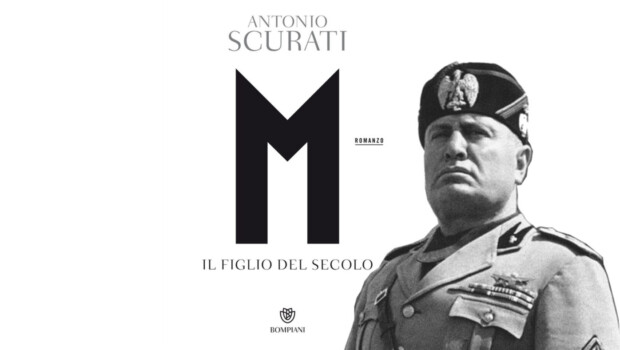
Like today seventy-five years ago Mussolini he was freed from imprisonment in Campo Imperatore. Today the first volume of a monumental work dedicated to the leader tries to free him from the damnatio memoriae Antonio Scurati which goes to the bookshop today, M. the son of the century (ed. Bompiani, 840 pages, 22 euro). It seems strange but in the river of books dedicated to fascism and the Duce there is not a biographical novel entirely focused on his figure. Mussolini appears there a thousand and a thousand times as an evil demiurge, as a menacing shadow or as an ogre in individual stories, even private ones. But a fictionalized biography about him, in multiple volumes, without an apologetic or denigrating tone, something of a narrative equivalent of the monumental historical biography of Renzo De Felice, it wasn't there yet. Curious to see it, especially given the author's premises/promises of equidistance and the confession of having been subjugated by the character, and perhaps fascinated. It also happened to De Felice, who also came from an anti-fascist culture, left. Furthermore, Scurati does not lack narrative talent and a free gaze.
I would like to object something to the title because Mussolini may have been the son of his century but above all he was its father because he generated events, followers, imitations, works and curses like few others. He was the father of fascism and stepfather of anti-fascism. Some even considered that Mussolini invented an eternal category, Urfascism (Umberto Eco). Son of a century but father of an eternity, nice paradox, Benito.
In truth, Scurati's fictional biography renounces too large and significant a part of Mussolini's life: the one that precedes the foundation of fascism, il 1919, that is, the life of an anarchist, as a revolutionary socialist, as leader of the most radical left, as a master, journalist and writer, exile and prisoner, and then director of Avanti and other effervescent magazines, until the foundation of the Popolo d'Italia. But also Mussolini fighting in the First World War. Scurati's Mussolini is already the founder of fascism, much of his life has already passed. Read More

Share

The Maricello

Of Marcello Veneziani
My father was a great builder of maricelli. As soon as he reached the sea, he undressed and began the work. He built a seat on the seashore with two larger flat stones and began his construction project with his feet in the water.. He gathered the largest stones in a circle, now moving them, now sliding them until they turn upside down, bringing their darkest side to light, an intense green belly inhabited by mussels, algae, crabs and snails. Then he created a double layer of enclosure for his natural swimming pool. He worked hard. Sometimes he finished the work when we had to go home.
When I was little the Maricello was made especially for me. I was happy to enter that paternal basin, I wallowed blissfully and protected; I was convinced that its very name, maricello, was derived from mine, or vice versa. But when I got a little older and went out to sea, my father continued his marine construction, with the same enthusiasm, even without a visible beneficiary.
He found emotional motivation again to build temporary swimming pools when his grandchildren arrived, and then my children. He made mischievous things for them, sometimes even double, to avoid interport conflicts between small usufructuaries. And he continued in his art of maritime construction even when they were grown up and he had now passed his gravest years. He arrived at the seaside and set to work diligently, as if he had a contract to respect with the harbor master's office or who knows. Or as if they were ex-votos for Neptune, for Aphrodite or for some unknown marine deity. Read More

Share

And now go with the spare

Of Marcello Veneziani

They are waiting for them at the gate, with rifles drawn. On Rai, in the Ministries, in the public sector, everywhere there will be nominations. And they are already starting to mix threats and victimization. They resume, as has happened at least since 24 years, from the first short Berlusconi government, to talk about proscription lists, of severed heads, as soon as someone dares to talk about change.

Take Rai for example. Once upon a time it followed a deplorable criterion called subdivision, that is, the tasks were divided between the parties. Then Renzi arrived and played the ace-winner; and he had no alibi, But I put the best in there; no, he put scraps, napkins, licks ad personam at command posts. And now, as soon as someone mentions from the government to need to change, they adopt a proven system: they raise the bar against the government, they mark more everything that contrasts it, because then they will be thrown out, they will say it is to censor their well-known independence. And not because they are inadequate, because turnover is expected in a democracy, because they flopped, and because they were there not for merit and quality but only because they were at the service of the company. No, they will protest against discrimination, victims of the populists, sovereignists, fascists, racists, Nazis, therefore fallen for freedom. Read More

Share