

 Of Marcello Veneziani
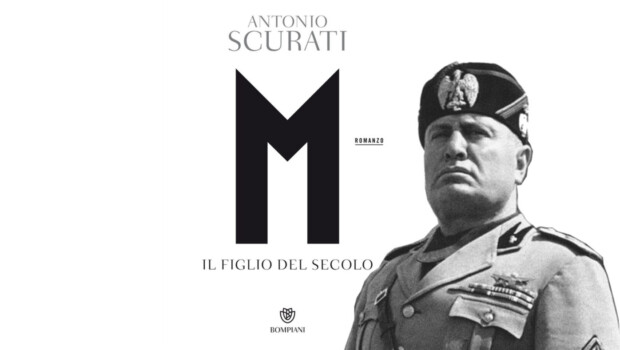
Like today seventy-five years ago Mussolini he was freed from imprisonment in Campo Imperatore. Today the first volume of a monumental work dedicated to the leader tries to free him from the damnatio memoriae Antonio Scurati which goes to the bookshop today, M. the son of the century (ed. Bompiani, 840 pages, 22 euro). It seems strange but in the river of books dedicated to fascism and the Duce there is not a biographical novel entirely focused on his figure. Mussolini appears there a thousand and a thousand times as an evil demiurge, as a menacing shadow or as an ogre in individual stories, even private ones. But a fictionalized biography about him, in multiple volumes, without an apologetic or denigrating tone, something of a narrative equivalent of the monumental historical biography of Renzo De Felice, it wasn't there yet. Curious to see it, especially given the author's premises/promises of equidistance and the confession of having been subjugated by the character, and perhaps fascinated. It also happened to De Felice, who also came from an anti-fascist culture, left. Furthermore, Scurati does not lack narrative talent and a free gaze.
I would like to object something to the title because Mussolini may have been the son of his century but above all he was its father because he generated events, followers, imitations, works and curses like few others. He was the father of fascism and stepfather of anti-fascism. Some even considered that Mussolini invented an eternal category, Urfascism (Umberto Eco). Son of a century but father of an eternity, nice paradox, Benito.
In truth, Scurati's fictional biography renounces too large and significant a part of Mussolini's life: the one that precedes the foundation of fascism, il 1919, that is, the life of an anarchist, as a revolutionary socialist, as leader of the most radical left, as a master, journalist and writer, exile and prisoner, and then director of Avanti and other effervescent magazines, until the foundation of the Popolo d'Italia. But also Mussolini fighting in the First World War. Scurati's Mussolini is already the founder of fascism, much of his life has already passed.
Scurati candidly thinks that today "the anti-fascist prejudice has fallen". It seems to me that exactly the opposite happens: the headlines on TV news and newspapers that remind us of the racial laws every day, they take it out on some funeral with a Roman salute or invent programs, to blame, calls for ever-recurring fascism. But we like to think that a premise so blatantly contradicted by reality serves Scurati to justify his admirable choice to talk about the Duce and fascism without ideological prejudices. Scurati says he believes in the pedagogical mission of literature, and we would like to add some history; even if the transition between the pedagogical mission and the ideological precept to be administered to the youngest is very subtle.
It is encouraging to note that for Scurati the anti-fascist books that had narrated fascism, like Eros and Priapus of Gadda, they were too full of resentment, perhaps understandable for the spirit of the time. Vero, but resentment – contrary to what logic predicts, and common sense and experience and Scurati himself – grow over the years rather than weaken.
The first volume of Scurati's Ducal trilogy comes out accompanied by three other texts different from the dominant angle: Giampaolo Pansa's republican, The republic of the vanquished by Sergio Tau and the rediscovered Mussolini by Arrigo Petacco, passed away recently. Two journalists and a director, not three academics, but who have entered the arduous black forest of fascism by grappling with the truth, without espousing the usual prejudices and ritual demonizations.
Mussolini remains the most important and intriguing figure in the history of Italy, from unity to the present day. In just over twenty years he has left enormous traces like no one else, and not only in the name of war. It has permeated our country, he raised two peoples for and against him (that sometimes they were the same people in two different times). For better or for worse, he is a giant in the history of Italy and in world history. It was the only truthful thing said by that fatuous character who later regretted having said it, thus confirming his mettle. No other historical figure of contemporary Italy can inspire works on par with the classics, of history and tragedy. It will be a joke, but in the end it will be up to fiction to give us back the mercy and truth of history, that historians, like institutions, they still can't give us.
MV, The weather 12 September 2018
http://www.marcelloveneziani.com/articoli/ancora-tu-benito/

A character who embodied Italy in its strengths and weaknesses,but he embodied unreserved love of country like never before. And that, making a comparison with the foxes and the little worms and the hyenas that came out of the convents and exiles, makes him a giant.
I was intrigued by the book, but I read that the Zionist Jew Saviano defined it as a masterpiece.
Now I wonder: how can it be a real and impartial novel if Saviano considers it a masterpiece???
I'm waiting for reviews from REAL Mussolini experts before reading it and risking wasting time and money.