

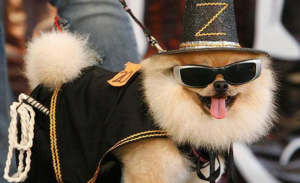
 How many times, scrolling through the screens of social, or listening to the speeches of enthusiastic owners of dogs or other pets, you have read or heard the sentences spoken: «animals are better than humans», «The more I know men, the more I love animals»? These comments are often expressed by people embittered by human relationships, who after a lifetime of disappointments end up seeing the ideal interlocutor in a little animal. After all, who better than a being without the gift of speech - and therefore incapable of cross-examination - can lend itself to alleviating a social handicap? The pet is one total creaturemind dependent on human care, engulfed in the master's emotional sphere to the point of constituting a relationship free of jealousy and anxiety about betrayal. The owner tends to pour out the projections and frustrations of his own existence onto the animal, transforming him into his own alter ego, attributing feelings to him, thoughts, human morality. They are dedicated to him expensive and excessive attention, an insult to people who cannot afford even a fraction of the comforts reserved for these beasts. Often these attitudes are hysterically claimed through the use of social, showing the usual pathological disconnect from the reality to which we are now accustomed.
Love or psychosis?
The famous zoologist and ethologist Konrad Lorenz, in his And the man met the dog, he wrote that those who take away their love from men to give it to an animal, taking refuge in a relationship of convenience, carry out "an act of repugnant social perversion». This type of relationship, Indeed, it represents nothing more than a dimension of replacement of human relationships. It is a psychosis that infantilizes all mental processes, a gesture of refusal of one's responsibilities towards others, with which one is only capable of positioning oneself in a victimistic way.
This type of relationship represents nothing more than a supplementary dimension of human relationships
The writer has owned pets, including dogs, for a lifetime, and he feels anything but aridity and cynical detachment in approaching them. But she also grew up in a rural dimension where respect for animals and the cycles of nature required the existence of two very distinct sectors, the human and the beastly, and where one began, the other finished.
Two enlightening films
He has shown us the extreme consequences of the humanization of the animal world W. Herzog in the documentary film Grizzly Man, a refined criticism of these drifts of anthropomorphization and the search for empathy towards uncorrupted nature. The protagonist, in the pathetic attempt to overcome the invisible line that separates the civilized being from the fair, ends up mauled by bears. There is also a close connection to be noted between this attitude and the modern pseudo-naturalistic push towards the so-called «escape from civilization»: a charlatan vision in which nature is simplified, made kind and welcoming, a living room for disadvantaged people on the run, yet another nuance of the myth of the "noble savage", here applied to the pristine environment. Like in the film Into the wild, based on a true story, in which the protagonist retreats into the wild nature to escape from the society in which he finds it difficult to fit in. This escape will turn into a death trap, merciless towards those who improvise as explorers in a land whose rules and dangers are unknown. Who knows if the protagonist, a moment before dying, has finally realized that the Alaskan woods are not the bedroom to hide in when life only gives you injustices.
Cristina Gauri
source – https://www.ilprimatonazionale.it/cultura/animali-essere-umani-108486/

In my life , I often had cat friends. I have always preferred them to dogs because they are more independent. Perhaps the predilection for one or the other should also be tested and some interesting mentalities would emerge…But the point is that they were never supplementary to the human presences that I liked most and with whom I could discuss, talk, argue and thus establish a constructive exchange relationship. Despite these animal friends cheering up my existential solitudes due to wild places or the needs of work with weekly travel. I agree with the article writer as I still see behavioral pathologies in those who take obsessive care of their dogs (especially the dog is prey to these manias because it is more dependent on the human being) and does not see the aberrations committed by human beings against other human beings; the vision is one-sided on the cruelty and torture inflicted on animals, but there is blindness to everything else. E’ a clear affective deformation, but very common nowadays to close oneself to the pains of human exchanges and entrench oneself in a more comfortable and peaceful animal relationship(but devoid of any intellectual stimulation)