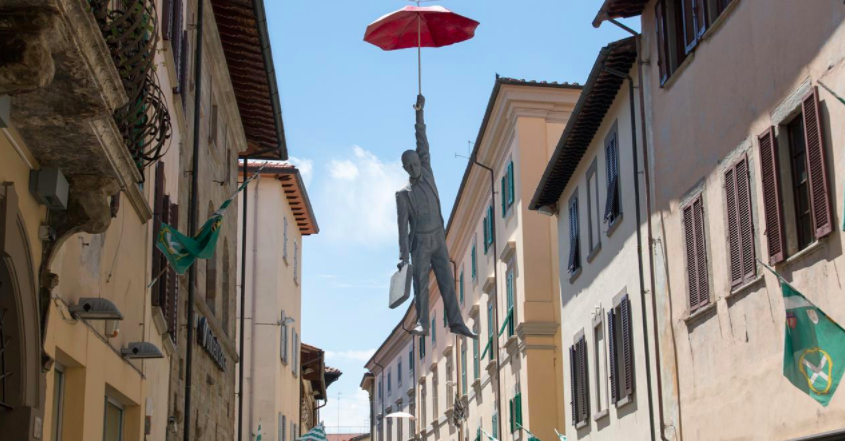
Renzi scraps himself. The end of the pro-Brussels parties, between populism and protest votes…

Of Enrica Perucchietti
Renzi scraps himself. The end of the pro-Brussels parties, between populism and protest votes…
Source: uneditors
Renzi: the scrapper has scrapped himself
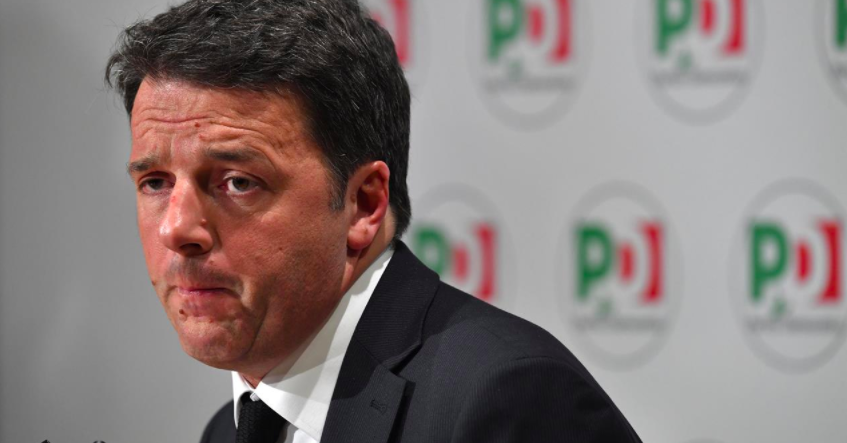
The news arrived at 18.15 yesterday afternoon: Matteo Renzi he resigned as secretary of the PD (maintaining the position of senator).
The curtain has fallen on the elections, the verdict was clear (and it was predictable). The centre-right is the first coalition in the country with the League surpassing Forza Italia, placing itself as the third force in the country. The Movement 5 Stars it is, Instead, the first party in the country, after having broken through especially in the South. The PD instead collapsed under the 20% and his critics led to the inevitable decision that many expected him to take in the aftermath of the referendum of 4 December.
I already wrote it in 2014 in the unauthorized biography of the former prime minister, The B side. by Matteo Renzi: like in any game of chance, the career of the former mayor of Florence and then Prime Minister was burn the stages and burn yourself in turn.

The gambler who was in a hurry

He predicted it «The Economist» in a dated article 22 March 2014, describing it as a «Gambler in a rush», a gambler which is in a hurry. Already then the press had embraced satire by portraying the prime minister as a teleseller, a magician, an illusionist. One who shoots burst of promises, one after the other without being able to realize them. Read More

Share

The Five Stars like Andreotti's DC. The precedent of 1976 which gives the grillini hope

ImageReport Linkiesta
The abstention of the PCI and socialists was decisive, will go down in history as "the government of no confidence". The protagonists of the time remember that the situation was very similar to the current one. Five stars and the League hope so. Scotti: "If you don't want to go back to voting there aren't many alternatives"

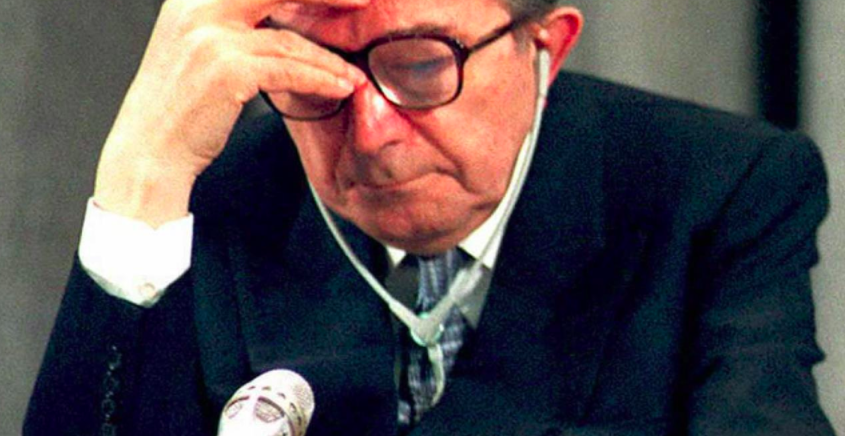
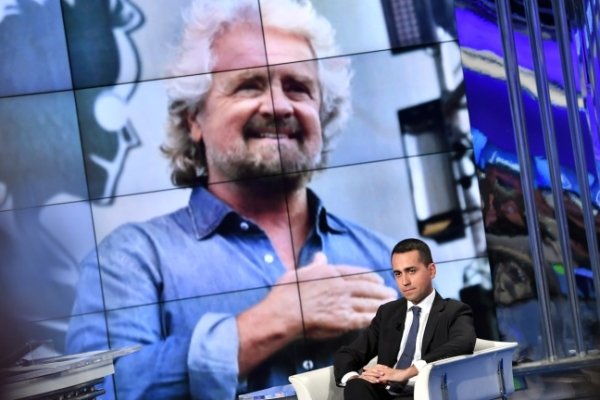
The calendar goes back forty years. Memories go to the First Republic, they recall the Christian Democracy and the figure of Giulio Andreotti. If there is a precedent that many are looking at with interest in these hours, it is precisely the "government of no confidence". The DC monochrome born in the summer of 1976 thanks to the abstention of the communist party and the socialists. An executive that is the result of a long discussion and difficult mediation, despite the absence of a real parliamentary majority. Matteo Salvini was three years old, Luigi Di Maio was not yet born. Nevertheless, with all the necessary differences, the situation closely resembles the current one. That's why at the Quirinale – and certainly also among the leaders of Five Star and the League – there are those who are reviewing that page of history. A precedent to take inspiration from to break the probable stalemate of the next few weeks.
Even then the polls had awarded two winners. Benigno Zaccagnini's Christian Democrats had conquered the 38,7 percent, while Enrico Berlinguer's party had stopped at 34,4 percent. Complex situation, given that neither party had sufficient numbers to govern. A impasse made even more complicated by the choice of the socialists, determined not to enter government without the simultaneous presence of the communists. After a long mediation – managed at the Quirinale by president Giovanni Leone – the solution was identified in a single-party DC government. An attempt made possible by the PCI's abstention, Psi, Psdi, e Pri. “The alternative was to immediately return to the vote” remembers Vincenzo Scotti today, several times minister and undersecretary for the Budget of that executive. «But in republican history it had never happened. And so, in the end, he decided to go that route". At Palazzo Madama the Andreotti III government obtained confidence with 136 Yes, 17 antonyms and 69 abstentions. At Montecitorio with 258 favorable votes, 44 antonyms and 303 abstained.

Without making merciless comparisons, a lot has changed since then. Starting with the leaders. Luigi Di Maio and Matteo Salvini are not Andreotti. «But I'm not even De Gasperi, Togliatti and Nenni» laughs Vincenzo Scotti, who was undersecretary for the budget of that government. «And I say this with the utmost respect for everyone»

The scenario is replicable? Like forty years ago, neither of the two winners today has the numbers to govern alone. The centre-right coalition won at the polls the 37 percent, the Five Stars the 33 percent. Imagining parliamentary alliances with the Democratic Party is unrealistic. Net of the rumors of recent days, it is almost impossible for the Dems to openly support a Grillino or Northern League executive. And so the illustrious precedent becomes relevant again. To govern, the Northern League-led centre-right should hope for the PD's benevolent abstention. The road is more difficult for the grillini, who can count on a smaller parliamentary group. An executive led by Luigi Di Maio could only gain confidence with the simultaneous exit of the center-left and part of the center-right from the Chamber. Complicated, right. But not impossible. «Today the reality is completely different from 1976» says Scotti. «But if you don't want to go back to elections there aren't many alternatives. The center-right and the Five Star Movement can govern together, I find it very difficult. Or they can form a minority government, thanks to the abstention of the opponents, with the aim of implementing a limited and short-term program".
The time limit is obvious. The Andreotti III government did not have a long life, remaining in office for less than two years. And that executive's program was also limited: every relevant provision had to be agreed in advance with the Communist Party. But the coincidences with that experience are not over. In the 1976 the great mediation was preceded by an important institutional transition: the election of the President of the Chamber. The first great proof of understanding between the DC and the PCI took place around Pietro Ingrao, chosen as Sandro Pertini's successor on the most important seat in Montecitorio. Today many people imagine a similar scenario. The election of a member of the Democratic Party in place of Laura Boldrini could represent a first step towards the birth of a minority government. «Ingrao's signal was very important – Scotti insists – This time too we will understand a lot from the election of the presidents of the House and Senate".

The calendar goes back forty years. Memories go to the First Republic, they recall the Christian Democracy and the figure of Giulio Andreotti. If there is a precedent that many are looking at with interest in these hours, it is precisely the "government of no confidence". The DC monochrome born in the summer of 1976 thanks to the abstention of the communist party and the socialists

Then the difficult mediation succeeded. A few days later, it was the end of July, Giulio Andreotti officially baptized the 33rd government in republican history. A very particular executive right from the announcement in the Chamber. «I proposed to the Head of State – said the Prime Minister in Montecitorio – the appointment of the ministers who appear with me today to obtain confidence, or at least non-distrust, of the Senate and the Chamber of Deputies". Today no one is betting on the outcome of the operation. «That was a very interesting experience, which came after years of head-on opposition between the Christian Democrats and the Communist Party" recalls Giuseppe Zamberletti, who was Undersecretary of the Interior of that government. «But at that moment there was a clear political plan, not the confusion of these days". In the 1976 the path to mediation had been identified, albeit with a thousand difficulties. «The PCI was beginning to highlight its mutation – insists the Christian Democrat – I remember that that year there was an earthquake in Friuli. The collaboration with the communists began right there, during the operations that followed the earthquake. But then, above all, There was a very intense internal debate within the parties. I remember the torment, the discussions...". Without making merciless comparisons, a lot has changed since then. Starting with the leaders. Luigi Di Maio and Matteo Salvini are not Andreotti. «But I'm not even De Gasperi, Togliatti and Nenni» laughs Scotti. «And I say this with the utmost respect for everyone».
Meanwhile, the despised First Republic is back in the news. So much for the alleged renovation. «But that was a whole other world – Scotti insists – Then the parties had clear objectives to pursue". Zamberletti agrees. «It's a period that I look back on with nostalgia, very different from today. There is no longer any debate within the political forces, the involvement of the national community and the periphery is lacking. The choices were made after long debates, sometimes harsh. Today decisions are made only by the top".
Source: http://linkiestait.musvc1.net/e/t?q=5%3d7ZAY9%26J%3d3%26F%3d3cB%26G%3d1e5X4%26S%3djLtN_tsSx_53_ryUr_2D_tsSx_48wUy.DiLmAeQv3.iR_tsSx_48iR_tsSx_48aPvAcJg_JQ1R_TfZBS8_PSuP_Zhb3_PSuP_Zhb8_PSuP_ZhA-cGpIuC-uLeJn7-cMo7-l9-f5-dG-cFdPgGtRk-Al-Nt7cCf7nRg-6eJ-3a7d-e0e-Dc-_JQ1R_Tfa9U73a9ch_tsSx_48%26d%3dKwKvA3.FeR%26kK%3d1eBV0

Read More

Share

A real government

Of Giovanni Petrosillo

A real government
Source: Giovanni Petrosillo

The elections just concluded have decreed the victory of the 5 Stars in the south and the League in the North. F.I. is not doing well in the centre-right coalition., while Meloni's party strengthens. The Democratic Party has collapsed everywhere, even in the strongholds of yesteryear. Leu has just exceeded the barrier threshold. Ali estreme, Casapound and Power to the people, they practically do not exist as does the bogeyman of the fascism/anti-fascism opposition, with which the media tried to revive atavistic as well as imaginary diatribes (with the aim of channeling voters towards establishment groups).
Neither the Five Star Movement nor the centre-right have the majority to create a stable executive. The games are open for alliances that allow one or the other to settle in Palazzo Chigi. Salvini and his associates lack around fifty deputies and thirty senators to reach their goal. Many more at grillini. The latter, however, are the most voted movement in Italy and seem to have a better chance of making it by orienting themselves to the left. Renzi wants to prevent this from happening because he intends to create a personal party by splitting the Democratic Party. But if the latter enters the government no one would follow him anymore so he staged the first resignations-non-resignations in history.
In any case, both Salvini and Di Maio will have to come to terms with someone watering down their electoral promises, if not also their political vision which already wasn't that great.
The real crux of the matter is this: the world has the knife between its teeth again, dragged by the multipolar wave. Global power relations are changing. Russia creates unbeatable missiles. China increases its arsenals. Americans have never stopped spending on weapons and improving them. Other regional powers behave menacingly and flex their muscles where they can or where they feel they are entitled to. Italy is paying the price, both inside and outside the borders, weakening on all fronts. A threat from the markets is enough to change internal policy or a Turkish ship to reduce foreign policy.
In the face of these great issues that Grillini and Northern League supporters are saying? Di Maio flew to Washington and settled with some trilateral while Salvini went no further than criticizing the euro, to the EU and Germany, now they have also become more “constructive”. The rest of the programs are rubbish on citizen's income, Flat tax and other economic measures etc. ecc. which can soothe but not solve problems that are especially of a non-economic nature.
As Alberto Negri wrote instead: “Russia, Erdogan, the war in syria, Cipro, Israel, Egypt, Libya and Eni: a minute to understand the gas strategy. This is essentially how things are. If Russian gas goes to Erdogan, Russia will essentially bypass Ukraine and transfer a share of European dependence from Moscow to Ankara. The Tap project (gas dell’Azerbiajan all’Italia) it goes ahead anyway because it interests Turkey even if it competes with Moscow. But gas from Cyprus and the eastern Mediterranean disrupts Turkey's plans to become a decisive gas hub for Europe. If we then add gas from Israel and Egypt to this, Turkey's strategic position weakens. Worse still if Iranian gas one day passes from Iran to Iraq to terminals in Syria: This is one of the reasons for the anti-Iranian proxy war against Assad by Türkiye and the Gulf monarchies. And finally, let's also include Algeria and Libya, already connected by two gas pipelines with Italy: and now we understand well why they got rid of Gaddafi. Italy, with Eni, it enters into all or almost all of the projects mentioned and this evidently annoys various regional and non-regional players. None of these strategic topics for Italy entered the electoral campaign at all: they are not difficult to understand I have summarized them here in 18 lines, or a minute of reading".
And it's not just about energy strategy but, above all, of geopolitical relocation of Italy and Europe in a context undergoing profound transformation. On this our so-called populists have said nothing and have nothing to say. There is no hope. These gentlemen did not understand the true spirit of the times, for this reason they are already losers and will not be able to do better (but not even worse, credo) of those who preceded them. However, being better than those who preceded them will not be enough to revive the country. Not doing bad or doing well is no longer enough, something great and innovative needs to be done here, reviewing the past to build the future, looking around where we are surrounded by wolves.
*Our site does not adhere to everything the author has written, but he finds the analysis interesting

Read More

Share

Sull'esito della tornata elettorale (by Marco Tarchi)

Of Marco Tarchi
On the outcome of the electoral round
Source: Vanity Fair

As he comments on the Movement's exploits 5 position (and of the League)?

Anything but unexpected. The symptoms of the growing disaffection of a good part of the electorate towardsestablishmenthad been evident for some time. It's a bit surprising that both managed to recover a fair share (Together, about the 10%) of those who until a month and a half ago declared they wanted to abstain.

He would technically define the M5S as a populist party?

No. I have always distinguished Grillo's political speech - which is fully populist - and the action of the M5S, which has tended to distance itself from it, especially after the death of Gianroberto Casaleggio. Today there are some traits of the populist mentality in the movement, but several others are missing.

Grillo said that the M5S managed to positively channel the repressed anger of Italians elsewhere (see France, Hungary and others) it was picked up by far-right movements. He agrees?

Yes and no, because I don't agree with the label of "extreme right" attributed to the Front National, to Orban or to the Austrian Fpö. They are populist parties. That said, Yes, the M5S also largely intercepted pushes that could have gone in that direction (Meaning what, from us, to the League).

Why has the M5S still achieved so much despite some stumbles in recent months? Voting for him is an act of faith? Read More

Share

Elections 2018: winners and losers


Reporting of Roman correspondence
Of Wolf Gori
Boom of the “League” and the “Movement 5 position” (M5s), limited growth of “Fratelli di Italia”, sharp decline of "Forza Italia" and historic collapse of the "Democratic Party". Cyclone “Burian”, after hitting the streets of our country, it bursts into political buildings, changing the characteristics of the Parliament which emerges shocked by the latest electoral round.
The vote of 4 March 2018 in fact it marks the end of classic bipolarism, bringing to the surface the feelings and requests of the "real country". In that sense, it represents a memorable watershed for the political history of our country as seen by Italian voters, in the wake of a now consolidated European trend, definitively turning our backs on the Europe of Brussels and the traditional "moderate" parties to embrace and reward the two main sovereignist and anti-system groups, “League” and “Movement 5 position” (M5s), led by two leaders pointed out by the local and international establishment as "unpresentable" and whose political affirmation, until recently, it was considered entirely utopian. Below we report the overall statistical data divided by Chamber and Senate.
Chamber of Deputies
The centre-right “Lega” coalition, “Forza Italia”, “Brothers of Italy” and “We with Italy”, with the 37%, got it overall 260 seats; the “Movement 5 position”, the most voted party with the 32,68% of preferences, he got 221 seats; the “Democratic Party” with the 22,85%, 112 seats; last, “Free and Equal”, slightly exceeding the barrier of 3%, he managed to win 14 seats. Read More

Share

Salvini tracks down the Pd and Five Star Movement: "Intesa su poltrone e governo?"

“It is incredible that after a vote that changed the balance and the face of the country, once ministers have been kicked out, there is a delegitimized government that is busy renewing important and non-urgent positions such as those of the Services”.

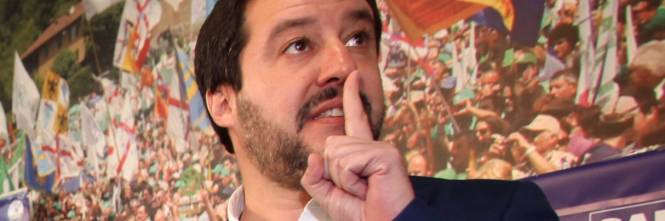
Per Matteo Salvini it's not just a move “shameful”, but also a first step towards an agreement between the Democratic Party (or what will remain of it after the breakup with Matteo Renzi) and Movement 5 position. “The silence of the grillini makes me suspicious – explains the leader of the League – I wouldn't want there to be an agreement between Paolo Gentiloni e Luigi Di Maio around the corner starting from the seats to get to the government”.

Today Gentiloni extended the summits of the secret services (the director of the Dis, Alessandro Pansa, and the director of Aise, Alberto Manenti) for a year and informed all the leaders of the parties. A move he put on the “What is it?” Salvini. “Gentiloni proceeding with the extension of the offices of the Services is a shameful thing that comes three days after the vote of the Italians who delegitimized the government and rejected the ministers”, attacks the secretary of the League explaining all’AdnKronos That “there is someone who renews positions as if nothing had happened” for one thing of which “there are no emergencies”. “I wouldn't want to – conclude – that there were other reasons behind it, I wouldn't want this to be the antechamber of a agreement between the Democratic Party and the M5S, given the silence of the five-star members themselves”. Read More

Share

The symbol of the electoral turning point: the end of Tosi (which takes less than the Psiup)

https://www.vvox.it/wp-content/uploads/2018/03/dibba-di-maio.jpg

Anti-establishment parties will be hampered by extra-parliamentary forces. But the country (and Veneto) they need to change their ways

CONTINUE ON:
https://www.vvox.it/2018/03/06/il-simbolo-della-svolta-elettorale-la-fine-di-tosi-che-prende-meno-del-psiup/ Read More

Share

Anger, rancor, revenge: thus the Italy of the villages and districts rebelled against Matteo Renzi

Report Linkiesta

Image
Anger, rancor, revenge: thus the Italy of the villages and districts rebelled against Matteo Renzi

Small businesses, relational capitalism, cooperative banks: the territories of the Third Italy ranging from Veneto to Abruzzo are the economic cornerstone of Italy, but the crisis dealt them a deadly blow. To understand Renzi's collapse and Salvini and Di Maio's boom we must start from here. (by Stefano Cingolani, LAWS)

Read More

Share
1 20 21 22 23 24 25 26 28