«Maggio ’68», the revolution of nothing

Report Roman correspondence

Of Giovanni Tortelli
The events of the student protest that from the squares of Paris to those of half of Europe gave rise to "May '68" took the form of a true cultural revolution, and as such they were warned. The '68 movement had all the characteristics of the cultural revolution: spontaneity, the surprise effect, the grassroots initiative and the transversality of the demands.
Which were not political except very indirectly. They were indeed bearers of a new deontological and teleological order to replace a system in which the individual's way of thinking, the organization of the family and social institutions were still based on the principles of a hierarchy and natural law authority, principles that came definitively, if not quite suddenly, delegitimized.
Of course. No delegitimizing force - least of all the 1968 protest - could have had success against archetypes of natural law as implicit in man and rooted in his lifestyle and faith as the family., institutions and the entire social order including the Church, if we had not already taken action against them at the time with strokes of Jacobinism first and then of modernism. Read More

Share

Nobel economics winner Krugman against Mattarella's choice. Ecco perché l'antipolitica vince sull'establishment

Written and reported by Antonio Amorosi
Nobel economics Krugman against Mattarella. He prefers the euro to democracy
Nobel economia Krugman, harsh criticism of Mattarella: prefers the Euro to democracy. Krugman is not a populist but he makes it clear why the choice is wrong

Read More

Share

This is the worst crisis in the history of the Republic. E ora l'Italia è davvero nei guai

Report Linkiesta

Image

This is the worst crisis in the history of the Republic. And now Italy is really in trouble

A crisis different from the others, which will lead to different consequences from the others. The Lega-M5S position which contrasts the legitimacy of national and international powers enjoys strong popular consensus. (Of Flavia Perina, LAWS)

Read More

Share

Save soldier Mattarella from those who want to defend him at all costs

Linkiesta reporting

Image

Save soldier Mattarella from those who want to defend him at all costs

The choices of the President of the Republic have triggered an unprecedented conflict. A struggle that sees self-styled defenders of the institutions fight against those who feel expropriated from the popular investiture. But the Hill, seat of national harmony, it cannot become a battlefield. (Of Alessandro Giuli, LAWS)

Read More

Share

A country with a brain in smoke (of cannabis)

Of Claudio Risé
A country with a brain in smoke (of cannabis)
Source: Claudio Risé
A country with its head in smoke: This is one of the emergencies that the new government will have to face, without wasting too much time. On the consumption of cannabis and its derivatives, marijuana and hashish, Italy is at the top of the charts. His young people (dai 15 ai 34 years) they joint the 6% more than the European average; and this also leads to peaks in smoking and alcohol consumption. A sick youth appears, weak, insecure, scared. Anyone who works with teachers knows this well: Accompanying pupils on school trips is now at multiple risks, illnesses among children, complaints from hoteliers, accidents and unforeseen events of all kinds, not always without deaths, then told in the news. But adults don't joke either: here too we are at 32% against the 26% of EU average. Contrary to the slogan dear to the elites: “the joint does nothing” (and the psychedelic painter Matteo Guarnaccia already made a cartoon about it in the 1990s: “who knows how bored he is”), all this smoke leaves traces first and foremost in hospitals: il 15% of new users end up in treatment for panic attacks and out-of-control states. Also because people don't even know what they smoke: the THC level increased by more than 10% in 10 years. If there is a borderline situation, on the border between psychosis and “normality”, with a couple of joints it suddenly slips where it shouldn't (and “royalty”). Read More

Share

Cosa c'è dietro l'immigrazione di massa

Of Ilaria Bifarini
What's behind mass immigration
Source: You are afraid
In recent years, European public opinion has learned to understand and in some way metabolize the phenomenon ofmass immigration. Throngs of men, women and children crowd around uncomfortable boats that sail the Mediterranean Sea until they are reached by boats of the now well-known NGOs, which take on the task of ferrying migrants to the northern coasts. This is only the last stage of a process that begins in the immigrants' countries of origin, but which has its roots in the financial mechanisms that regulate the global economy.
Austerity, debt, Malthusianism
The topic was discussed last Thursday at the Theater Hall of the Cristo Re Foundation, in Rome. Speakers Enzo Pennetta, biologist, teacher and writer, e Ilaria Bifarini, economist, author of the books Neoliberalism and mass manipulation (2017) e The Colonists of austerity: Africa, Neoliberalism and mass migration (2018). It is an analysis of the facts that starts from afar that Bifarini offers, which is defined as one “redeemed Bocconian”, from the name of the prestigious university where he studied, the “Bocconi” in Milan, factory of future high finance managers.
L’austerity, in his opinion, e even before the debt, they would be the triggers of mass immigration as well as the globalization of poverty. Austerity that, in Pennetta's introduction, would find a correlation with the Malthusianism, economic doctrine inspired by the Englishman Thomas Malthus according to which the population grows faster than the available resources. Hence the necessity, promoted by followers of this theory, Of reduce social assistance because it encourages population growth. And exactly cuts in public spending are the point of contact between Malthus and austerity. Read More

Share

The Porcata

Let's take this opportunity to answer a question that came in recently: “Why, unlike other sites similar to yours, you cover current events a lot?” Why, rejecting intellectualism and loving non-fiction, we live in this world and not in the empyrean, therefore we prefer to give food for thought on what actually happens so as not to only give what is theoretical or theoretical. Furthermore 10 years, the choice proved to be a winning one”. (N.d.r.)
Of Marcello Veneziani

In the end, the rubbish arrived. Out with the populist government that came from the polls, away the minister unwelcome to the eurarchs, the technical government wanted by the Palace is born, in the name of European economic terrorism. One nightmare ends and another begins, maybe worse. Three months and we are worse than before. Mattarella's no to Savona and, through him, the entire establishment, it is the no to sovereign Italy.
If you go to vote, Salvini and the center-right start with the advantage, Di Maio takes a big risk and Diba is back in his place; but now expect the anti-populist bombing, financial terrorism to sow panic among people and intimidate voters... After a long agony the second republic is over but we don't know what stuff is starting: the third republic, the fourth international, Beethoveen's fifth... Read More

Share

Sovereignists of the world unite. A manifesto against globalization

Of Luigi Morrone
Sovereignists of the world unite. A manifesto against globalization
Source: Corriere della Sera
Since the seventies of the last century, we are witnessing a rebirth of interest in the historiographical debate around the idea of ​​"Nation". The essay “The Nation: Story of an idea” by Anthony David Stephen Smith, just published Rubbettino, with an understanding introduction by Alessandro Campi, outlines the current situation of the debate. A debate commonly marked by a banally post-Marxist approach, which tends to confine the "construction" of the idea of ​​the Nation to mythology, according to a refrain repeated as an ossified formula: “It is not the Nation that creates nationalism, but the opposite". According to this paradigm:
1. The concept of Nation was established in the 19th century and any attempt to backdate it is marked by obvious forcing, because only in the modern era were the conditions created for the construction of "nationalist myths";
2. Nationalism "invents" the idea of ​​the Nation starting from these myths to which a shared "identity" can be traced, which was called “Culture-Nation” by nineteenth-century nationalists (Cultural nation), that is, belonging to a community of culture and lineage that precedes its organization into a State. Myths that are completely made up (come Ossian) or which take inspiration from historical figures, transfiguring their reality. He is born, Like this, the epic of the rooster Vercingetorix, of Arminius, prince of the German Cherusci, of the Celtic leader Ambiorix, National hero of Belgium, del Cid Campeador, for Spain, by Alexander Nevsky and Ivan Susanin, for Russia;
3. The idea of ​​"Nation", as a “liquid” idea, it no longer makes sense in the present time, where it is destined to give way to the idea of ​​a trans-national community, daughter of globalization.
In this perspective, pointed out in the 1940s by Hans Kohn, it moves, first of all, the anthropologist Ernest Gellner, but his theories were further refined – among others – by Eric J. Hobsbawn, da Benedict Anderson, there Ottfried Höffe, da William H. McNeill, da Michel Theretschenko. Such theses, prevalent in mainstream literature today, however, they find refutation in scholars such as Adrian Hastings and John Armstrong. Read More

Share

Metapolitics of a nascent government

THE OPINION
Of Mario Bozzi Trails
Metapolitics of a nascent government
Source: Mario Bozzi Trails
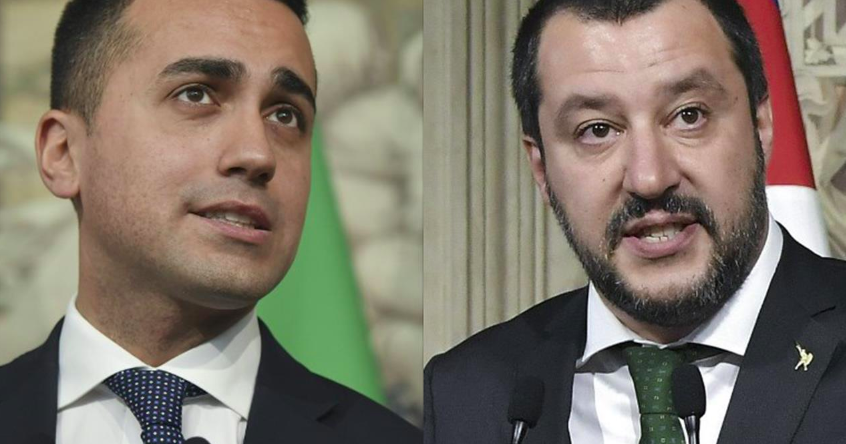
Of which the newly formed yellow-green government is the "son". ? Certainly of electoral consensus, collected by the Five Star Movement and the League, today representative of the majority of the Italian people, even beyond mere parliamentary numbers. However, political data alone is not enough.
There are also metapolitical factors, which come to mark the nascent experience of government and underline it, well beyond the programs, the distinctive features. They represent the synthesis of visions and trends that have now settled at the level of public opinion, visions and trends that everyone will finally have to start dealing with, avoiding easy schematizations and preconceived theses.
Meanwhile, there is the long wave of anti-politics, dispensed, in recent years with full hands, through the anti-caste culture and television simplifications: that of complaints about public funding quadrupled in the space of a few years, on inflated “election reimbursements”., on the privileges of parliamentarians, on entertainment expenses without control, on corruption, on political dynasties. Read More

Share
1 11 12 13 14 15 16 17 28