Esiste davvero il "Piano Kalergi"? Here's the answer

by Valerio Benedetti
One of the favorite topics of "conspiracyist" circles is undoubtedly the so-called “Kalergi Plan”. According to this theory, there would be a well-conceived plan systematically pursued by various subjects (United States, European Union, ecc.), which would have as its priority the destruction of the European peoples through a "racial mixture" with the huge foreign masses that flow into our continent every day. The initiator of this diabolical plan would be Count "Kalergi", who founded the Paneuropa movement.
To realize the amateurism of most of these "conspiracy" texts (on paper or online), it is simply enough to note the bizarre translations of some passages from the works of "Kalergi", the apocalyptic tones, as well as the claim of some authors to have finally written the first work on this obscure character that no one wants to deal with. And all this is proclaimed from the rooftops, although there is one scientific literature (especially in German) which he has long subjected to harsh criticism the hagiographic stories of the followers of the pan-European movement (1). Ora, to see clearly in this matter, a synthetic analysis of this man's biography and ideas is necessary.
Read More
Share

France and Germany against the Italian maneuver

Of
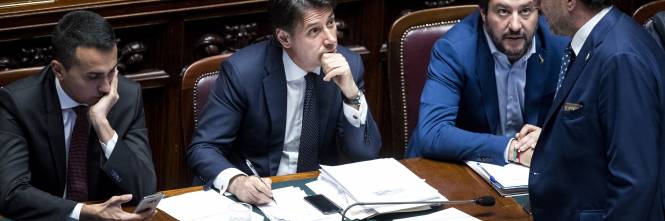
The attacks and criticisms of the maneuver of yellow-green government ormai sono all’ordine del giorno.
Ieri ci hanno pensato Bce, Bundesbank, Ue, Austria and Holland. Oggi è la volta della Germania e della Francia.
“I regret that Italy did not accept the hand extended by the European Commission. La Commissione europea aveva detto ‘discutiamo, let's talk, proviamo a migliorare questo bilancio’, e l’Italia ha rifiutato questo dialogo”, declared the French Economy Minister, Bruno Le Maire invitando l’Italia a “demonstrate responsibility” e “lucidity” on this dossier. The Mayor, speaking on the show 'Les 4 truths’ in France 2, he said that “now it is up to the European Commission to make its decision”.
Read More

Share

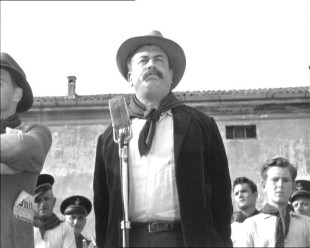
The case. Counter-order comrades: the left discovers and rehabilitates the genius of Giovannino Guareschi

By Mario Bozzi Sentieri
Attending, in Busseto, at the inauguration of an exhibition dedicated to “Giovannino Guareschi photographer”, Stefano Bonaccini, president of the Emilia-Romagna Region, as well as a leading exponent of the Democratic Party, he declared: “Reviving the memory of Guareschi through his works is a tribute to those who knew him and, above all, for the younger ones, who can find ideas and reflections that are still current in his characters. Guareschi is one of the most versatile minds of our land. A multifaceted figure in his own way, which still deserves to be explored even further".
Bonaccini's is the last step in the "customs clearance" process, left, of the author of Don Camillo, which is worth it point out, in memory above all of those young people to whom the president of Emilia-Romagna is addressing.
Read More

Share

L'Italia è l'avanguardia populista in Europa

Italy is the populist vanguard in Europe
di Aleksandr Gel'evich Dugin
Aleksandr Gel'evich Dugin (born in Moscow on 7 January 1962), Russian philosopher and geopolitician with a long ideological and political activity behind him. Dissident in the Soviet era, therefore harsh opponent of Yeltsin, today he supports Putin, which however does not spare criticism. With his political ideas he has become a point of reference for populists and anti-globalists of all latitudes. His works have been translated into several languages.
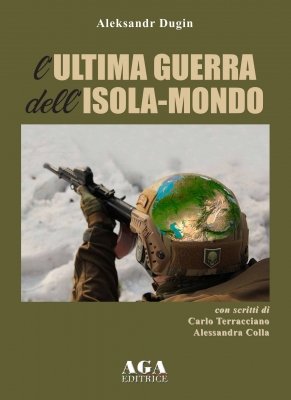
He was recently in Italy to present his book “Putin against Putin” published by AGA Editrice, in which he draws an unprecedented portrait of the Russian president. Also published by AGA Editrice is "The Last War of the Island-World", in which the Russian philosopher analyzes the geopolitical evolution of Russia as a global "tellurocratic" power, from its origins to the current presidency of Vladimir Putin.
The following interview was conducted by Paolo Becchi and Donato Mancuso.
Professor Dugin, in your latest book you identify Russian civilization with the "civilization of the Earth". We want to briefly explain the meaning of this definition?
As I tried to explain in my book, geopolitics admits two global positions. Mackinder calls them “the seaman's point of view” and “the landman's point of view”. These are two types of civilizations: the dynamic civilization of the Sea (progressist, mercantile) and the static civilization of Earth (conservative, heroic).
Read More

Share

Putinophobia

Image results for Russian hackersOf Roberto Zavaglia
Power of Russian hackers: thirteen were enough to overturn the outcome of the US presidential elections, dragging Trump to the White House instead of the highly favored Clinton. After months of investigations and cries of alarm from the entire international press over Putin's intolerable interference, last February, special prosecutor Mueller finally indicted 13 Russian citizens and three Russian "entities" who, with their troll activity on social networks, managed to influence the choice of millions of citizens. The rumors about the budget they might have had to camp permanently on Facebook, Twitter and YouTube, these tireless manipulators of consensus, vary from 100 thousand euros to approximately double that.
Read More

Share

Sovereignism is not a protest. That's why he's destined to win

sovereignism European Union

by Lorenzo Vita

The sovereignists do not necessarily represent a gut or protest vote. And even if the "populist" wind has started to blow in the 2009, with the advent of the economic crisis, it is impossible today to reiterate that that vote was the result of the crisis. Foreign Policy explained it well, in an editorial that retraces the last stages of the end of the leaders of social democracy and the advent of the new men who have taken power or are undermining the old guard.
For a long time, we were told that the sovereignist movements were the result of a protest. The mainstream intelligentsia has labeled the phenomenon as a sort of demagogic exaltation of the popular class, in search of certainties after the impoverishment caused by the great crisis that shocked the West. But relegating it to the danger of losing purchasing power or jobs risks being superficial, or at least misleading.
Read More

Share

COMMERZABANK AND DEUTSCHE “GIVE ADVICE” TO THE ITALIAN PRESIDENT

Risultati immagini per blondet & friendsby Maurizio Blondet
A direct appeal to the president of the republic comes from the chief economist of Commerzbank, George Kramer: lo ha fatto su Handelsblatt Global, the English edition of the main economic newspaper. Here's the reasoning:https://global.handelsblatt.com/opinion/power-markets-chasten-italy-populists-980858The EU has a hard time. We ("the markets") puniremo governo populista, esigendo tali interessi sul loro debito pubblico, to make it insolvent. L’Italia dovrà chiedere aiuto alla BCE. It is true that…
Read all.
SOURCE: https://www.maurizioblondet.it/commerzabank-e-deutsche-danno-consigli-al-presidente-italiano/

Share

Essay on American Freemasonry

a_503 copy

Giuseppe Federici Study Center – For a new onset
Press release no. 88/18 of the 12 November 2018, Saint Albert the Great
Arthur Preuss, Essay on American Freemasonry, CLS, Verrua Savoy 2014, pages. 334, euro 18,00.
Preface of the French edition of 1998
“A remarkable study”: it is the judgment of an expert, Léon de Poncins (in Christianity and F∴ M∴) on the book by Arthur Preuss, A Study in American Freemasonry, which is now published by the Centro Librario Sodalitium.
The author
Arthur Preuss was born in Saint Louis (Missouri, United States) il 22 March 1871 da Edward and Concordia Schuricht, both of German origin. He was a writer, Catholic journalist and publisher. After studying at Canisius College in Buffalo (New York), Preuss began his journalistic and literary career collaborating with his father on the Saint Louis Daily America (1890-1892). In the 1893 founded the Chicago Review, which became The Review (1894) ed infine The Catholic Fortnightly Review (dal 1905). As an editor, Preuss spread texts on dogmatic and moral theology especially in the United States. As an author, he published The Fundamental Fallacy of Socialism (1907), A Study in American Freemasonry (1908) e Dictionary of Secret and Other Societies (1924).

Read More

Share

Headquarters, il film "Rosso Istria" arrives in theaters. Gasparri: «It tells a denied truth»

red-istria-poster

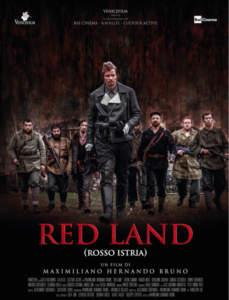
A stellar cast for a courageous first work: And Red Land (Red Istria), the film I go through the martyrdom of Norma Cossetto tells of the terrible violence suffered by the Istrian populations, Fiumane, Julians and Dalmatians by the Tito partisans. The film, produced by Venicefilm in collaboration with Rai Cinema, will have its world premiere on Tuesday 6 November at 20 at the “The Space – Moderno” cinema in Piazza della Repubblica in Rome, while in the morning will be presented to the press in the Nassiriya Hall of the Senate. A sign of the institutional commitment to ensure that this production was realized, e created under the aegis of Rai.
An unexpected fact, consider the reticence and sometimes the outright denialism towards this page of Italian history. Despite, Indeed, for fifteen years now (the law was passed in 2004), the memory of the Foibe has entered the civil calendar of the country with Remembrance Day of the 10 February, talking about this Italian drama is still very difficult. He knows it well among others Antonello Belluco, who signs the screenplay together with the director Maximiliano Hernando Bruno to his first work. Belluco's previous work on theme of partisan violence, The Secret of Italy, which tells the story of the Codevigo massacre, it was in fact the subject of a ferocious boycott, which also saw the ANPI deployed. And the same production as Red Land (Red Istria) it had a long and difficult gestation: all the commitment and courage of the team that produced the film and of those who supported it were needed so that Norma Cossetto's story could finally be told to the general public, leaving the channels of "voluntary" projections (as it was game force for The secret of Italy), projecting itself onto the international scene also thanks to the participation of stars such as Franco Nero e Geraldine Chaplin e, above all, getting Rai's institutional commitment. Read More

Share
1 14 15 16 17 18