

Valid ancient and modern psychologists discuss the nature of feeling without arriving at an agreed definition. Some believe that feeling derives from an affective or emotional faculty that is distinct from both the volitional faculty (motivates) both from the perceptive-intellectual faculty. Others reduce feelings to psychological movements and phenomena; others instead make them representative or intellectual functions. The scholastic theory formulated by Saint Thomas (d’Aquino) in the footsteps of Aristotle, despite its antiquity, presents the best guarantees of truth. According to this doctrine, there are only two psychic faculties in man: the cognitive and the appetitive, each of which is distinguished into sensitive and supersensible or spiritual. We therefore have the sensitive area with the sensory organs, sensations and passions, which belong together to the body and the soul that informs it. From there we move on to the spiritual zone, in which intellect and will function, which are immaterial faculties. Sensation is typical of the sensitive faculties, That, by passive impression of the external world on the senses, it becomes perception of the object and its representation (ghost – image), which corresponds in the appetitive faculty to the movement towards the perceived object, that is, that impulse accompanied by physical emotion, which is usually called passion (amore, hatred, gioia, sadness etc.).
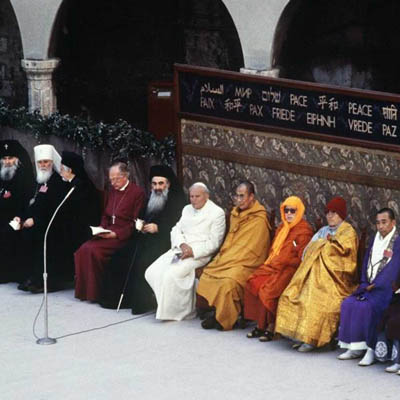
Just as the sensitive appetite has its passions subordinate to sensitive representations, thus the rational appetite or will has its affections subordinate to intellectual representations (concepts-ideas). Among these affections of the will are feelings, which despite residing in a spiritual faculty, like the will, has repercussions in the sensitive area and, resembling the sensation, It has both a passive and active character, as it can be said to be an impression ordered to an action. The range of feelings is indefinite, which has love as its basis. Religious feeling arises from the knowledge of God the Creator, which inspires humble awe in man, adoration, fear, above all love. According to Catholic doctrine, religious sentiment does not precede, but it accompanies and follows the knowledge of God and is precious energy for the development of piety and spiritual perfection. But from Lutheranism onwards, feeling has become for many the only or main source of religion reduced to a simple individual psychological experience. [The same is true for the Modernists and, essentially, for all that vast movement that claims to be faithful to the Second Vatican. On the other hand theheresy of ecumenism it has the possibility of taking root only where religion is considered a mere individual psychological experience; therefore every experience, as it is subjective and certainly not objective, it would be good or at least not worthy of censorship; thus every religion would be acceptable and finally there would be no more false religions (all the others) against true religion (the Catholic), but they would all be experiences and feelings. The natural and logical conclusion is that they would all be equally false. Even the God who revealed himself in true religion (the Catholic) it would be the product of feeling and individual psychology, ndR]. So for the Schleiermacher, founder of sentimental theology, e per i Prammatisti, who lend their theories to Modernism. Psychological sentimentalism, exaggeration of simple feeling, on religious grounds it is anarchy and loss of the spirit, which is unconsciously moving towards Pantheism and Atheism. [Example. Many modern nominal Catholics (ordinarily anarchists in doctrine and morality) they go on pilgrimage, they recite the Rosary and fervent prayers, yet they profess to be ecumenists or rather they are not at all disturbed by ecumenism. Without judging the internal hole of each one, from that – from these facts – we infer that their practice is feeling rather than faith: if they had the Catholic faith, in fact, they would distance themselves from crypto-atheist neo-religion which is ecumenism, which is supplanting Catholicism almost everywhere and which produces war not peace, ndR].
dal Dictionary of dogmatic theology, Piolanti, Relative, Garofalo – peace to their souls! – Studies, Roma, 1952.
Just as the sensitive appetite has its passions subordinate to sensitive representations, thus the rational appetite or will has its affections subordinate to intellectual representations (concepts-ideas). Among these affections of the will are feelings, which despite residing in a spiritual faculty, like the will, has repercussions in the sensitive area and, resembling the sensation, It has both a passive and active character, as it can be said to be an impression ordered to an action. The range of feelings is indefinite, which has love as its basis. Religious feeling arises from the knowledge of God the Creator, which inspires humble awe in man, adoration, fear, above all love. According to Catholic doctrine, religious sentiment does not precede, but it accompanies and follows the knowledge of God and is precious energy for the development of piety and spiritual perfection. But from Lutheranism onwards, feeling has become for many the only or main source of religion reduced to a simple individual psychological experience. [The same is true for the Modernists and, essentially, for all that vast movement that claims to be faithful to the Second Vatican. On the other hand theheresy of ecumenism it has the possibility of taking root only where religion is considered a mere individual psychological experience; therefore every experience, as it is subjective and certainly not objective, it would be good or at least not worthy of censorship; thus every religion would be acceptable and finally there would be no more false religions (all the others) against true religion (the Catholic), but they would all be experiences and feelings. The natural and logical conclusion is that they would all be equally false. Even the God who revealed himself in true religion (the Catholic) it would be the product of feeling and individual psychology, ndR]. So for the Schleiermacher, founder of sentimental theology, e per i Prammatisti, who lend their theories to Modernism. Psychological sentimentalism, exaggeration of simple feeling, on religious grounds it is anarchy and loss of the spirit, which is unconsciously moving towards Pantheism and Atheism. [Example. Many modern nominal Catholics (ordinarily anarchists in doctrine and morality) they go on pilgrimage, they recite the Rosary and fervent prayers, yet they profess to be ecumenists or rather they are not at all disturbed by ecumenism. Without judging the internal hole of each one, from that – from these facts – we infer that their practice is feeling rather than faith: if they had the Catholic faith, in fact, they would distance themselves from crypto-atheist neo-religion which is ecumenism, which is supplanting Catholicism almost everywhere and which produces war not peace, ndR].
dal Dictionary of dogmatic theology, Piolanti, Relative, Garofalo – peace to their souls! – Studies, Roma, 1952.
source – https://www.sursumcorda.cloud/articoli/dizionario-di-teologia-dommatica/2183-dizionario-di-teologia-dommatica-il-sentimento-religioso.html
