

Of Paul Craig Roberts
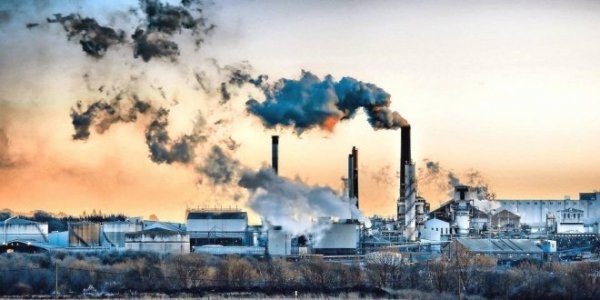
Source: Comedonchisciotte
Some ecological economists, come Herman E. Daly, argue that the external costs related to pollution and the depletion of global resources are not taken into consideration by the gross domestic product, so we cannot know if an increase in GDP is, actually, a gain or a loss.
External costs are enormous and constantly growing. Since the beginning of the world, manufacturing and industrial multinationals, those of the agri-food sector, city sewage systems, and other culprits have made third parties pay the costs of their environmentally harmful activities. There have been numerous reports recently, many of which centered on Monsanto's Roundup, whose main component, glyphosate, it is considered carcinogenic.
An organization aimed at safeguarding public health, l’Environmental Working Group, recently reported that its tests showed the presence of glyphosate in 43 are 45 types of foods for children's breakfast, including muesli, oat flakes and snacks produced by Quake, Kellog e General Mills. LINK.
In Brazil it was discovered that 83% of breast milk contains glyphosate. LINK.
The Institute for the Environment of Monaco ((Munich Environmental Institute) reported that 14 of the best-selling German beer brands contain glyphosate. LINK.
Glyphosate has been found in the urine of Mexican farmers and in Mexican groundwater. LINK.
According to Scientific American, “even the inert compounds in Roundup are capable of killing human cells, especially the embryonic ones, placentals and umbilical cord.” LINK.
A German toxicologist has accused the German Federal Institute for Risk Assessment of scientific fraud (Federal Institute for Risk Assessment) and the European Food Safety Authority (European Food Safety Authority – EFSA) for having accepted the thesis of a working group managed by Monsanto on the non-carcinogenicity of glyphosate. LINK.
The controversy over these findings stems from the fact that corporate-funded researchers find no correlation between glyphosate and cancer, while the independent ones discover them. This is not at all surprising, given that a scientist on the corporate payroll has no independence and is unlikely to arrive at conclusions that conflict with those he is paid to arrive at.
Then there is the controversy over what levels of contamination are necessary to consider products containing traces of glyphosate dangerous. However, it seems that these concentrations increase with use and time. Sooner or later they will be enough to cause damage.
The thesis of this article is that, whether glyphophate is carcinogenic, costs related to lost lives and healthcare expenses are not paid by Monsanto/Bayer. If these costs were not external to Monsanto, that is, if the multinational were to reimburse these expenses, the price of the product would not be profitable enough to allow its production. The costs would far outweigh the gains.
It is very difficult to get to the truth, because politicians and enforcement authorities are corruptible and tend to favor their business associates. In Brazil, at this moment, Lawmakers are trying to liberalize the use of pesticides and ban the sale of organic produce in supermarkets. LINK.
In the case of glyphosate, the wind could change and start blowing against Monsanto/Bayer. The California Supreme Court has accepted the request of the national authority to include the herbicide glyphosate in the list of carcinogenic substances reported by the Proposition 65. LINK.
Last week, a San Francisco, a jury awarded a former school gardener compensation of 289 million dollars for cancer damage caused by Roundup. There is no doubt that Monsanto will appeal the ruling and that the case will be debated in the courts until the gardener's death. But this sets a precedent, and suggests that jurors are starting to distrust made-to-order science. There are approximately others 1000 pending cases similar to this one. LINK.
What is important to keep in mind is that, whether Roundup is carcinogenic, However, it is a single product from a single company. This gives us an idea of how large the external costs can be. Of course, The deleterious effects of glyphosate go far beyond those described in this article. LINK.
GMO foods are also having repercussions on livestock. LINK
Now consider the negative impact on the air, on water and land where chemical agriculture is practiced. Florida is experiencing an algae invasion due to chemical fertilizers being drained from farmland and the sugar industry has succeeded in destroying Lake Okeechobee. LINK.
Fertilizer runoff causes the proliferation of cyanobacteria, which kill marine fauna and are dangerous for humans. Currently, the waters of the Santa Lucia river, in Florida, reach a level of toxicity 10 times the normal and you can't even touch them. LINK.
The red tides (the characteristic color taken on by marine-coastal waters following the rapid growth of dinoflagellates or diatoms NdT) it may have natural origins, but fertilizer runoff contributes to their growth and persistence. Furthermore, the increase in temperatures due to pollution also favors red tides, as well as wetland drainage for housing developments, which causes a faster movement of water masses, no longer subjected to natural filtering. LINK, LINK.
Faced with the worsening of its water resources and the proliferation of algae, Florida's response was to cut its water monitoring program. LINK.
If we take into consideration the enormous external costs of industrial agriculture, it is clear that the figures attributed to sugar and other agricultural products in the GDP calculation are exaggerated. The prices paid by consumers are too low and the profits guaranteed to industrial agriculture are too high, because they do not understand the costs of the disappearance of marine fauna, loss of tourism revenue and damage to human health due to algae blooms, caused in turn by fertilizer run-off.
In this article I have just scratched the surface of the external cost problem. Michigan has discovered that its drinking water is unsafe. The chemicals used for decades on military bases [present in the area] and in the production of thousands of consumer goods they are now found in aquifers. LINK.
As an exercise, choose any activity and think about its external costs. Take, for example, the US multinationals that have outsourced American jobs to Asia. Their profits have increased, but the tax base, at the federal level, state and local, has decreased. Payroll taxes earmarked for social security (Social Security) and the healthcare system (Medicaid) they have fallen, endangering these important pillars of political and social stability of the United States. The tax base of pension funds for teachers and other state employees has also fallen. If the multinationals that have outsourced jobs abroad were to bear these costs, they would no longer be profitable. In other words, few people have benefited from it, passing on the enormous costs to the community
Or consider something simple like a pet shop. The owners who sell and the customers who buy colorful pythons from 30/40 cm., boa constrictors and anacondas do not think at all about the considerable size that these reptiles will reach and neither do the control bodies that allow their importation. These creatures, capable of devouring domestic animals, children and capable of suffocating large adults, they are eventually dumped in the Everglades, where they have devastated natural wildlife and have become too numerous to keep under control. External costs have now exceeded the total price of all snakes sold in pet stores by many orders of magnitude.
Ecological economists underline how capitalism can function in aempty economy”, where human pressure on natural resources is mild. But capitalism cannot function in atotal economy,” where natural resources are at the point of exhaustion. External costs related to economic growth, as calculated by GDP, may exceed the value of the product itself.
We can be virtually certain that this is the situation we currently face. The disappearance of entire species, the discovery of toxins in food, in drinks, in the water, in breast milk, in the air, in the earth, the desperate attempt to obtain energy with fracking (which destroys groundwater and causes earthquakes) these are all signs of a planet now in difficulty. When it comes down to it, we see how all the profits that capitalism has generated over the centuries are probably due to the fact that capitalists have never covered the total costs of their products. They passed them on to the environment and third parties and pocketed the savings, as if they were earnings.
Update: Herman Daly notes that, according to an article that appeared last year in the English medical journal The Lancet, the estimated annual cost of pollution can be estimated at 6% of global GDP, while the annual growth rate [of global GDP] it's just the 2%, with an effective decrease in 4% of global well-being, not an increase in 2% [as it would seem]. In other words, we may already find ourselves in the situation where economic growth is uneconomic. LINK.
Source: www.paulcraigroberts.org
Link: https://www.paulcraigroberts.org/2018/08/17/is-capitalism-killing-us/
Translated by Markus for comedonchisciotte.org
Similar Posts
