

Of Roberto Pecchioli
Source: Heretically
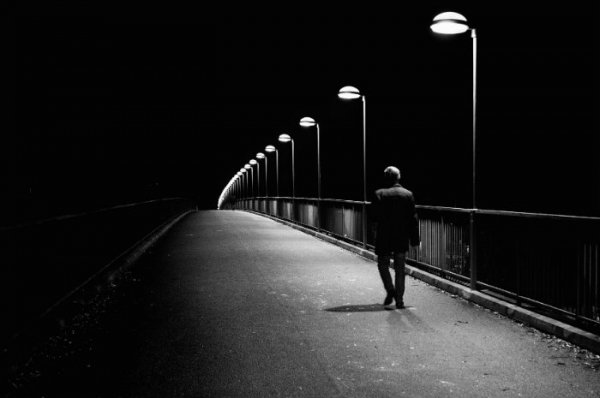
The British government established the Ministry of Loneliness. The proud empire that belonged to Queen Victoria and the East India Company raises the white flag. Old England was the first homeland of individualism, from Locke to Hume passing through Bentham's utilitarianism and the economics of the Scots, Smith e Mandeville. Before them, Thomas Hobbes theorized that homo homini lupus, therefore it must be kept in check quickly by iron-clad governments. Theresa May, British Prime Minister, perhaps out of feminine sensitivity, he captured something profound: the present time, in the West, it is that of disintegration, of depression, of loneliness.
We believe that the decision is the most sensational admission of defeat made by a political system, economic and social. Loneliness, in the United Kingdom, it captures at least ten million subjects, one sixth of the population and is certainly one of the main causes of alcoholism, of addictions, of depression, of suicides. It seems more widespread among the middle classes than among the very poor, but it is nothing more than the natural outcome of a way of life – individualism, career pursuit, success, money – which inevitably distances one from others. If for Aristotle, man was a social animal, or politician, whose realization occurred in the concreteness of the polis, for the postmodern Westerner, Max Stirner's dramatic conviction applies: the One. According to the German thinker of the Hegelian left, the only way to save man from every form of political slavery, cultural or religious consists in exalting it as an absolute value. The individual becomes the Unique, whose task is to appropriate only one, authentic ownership, himself.
We might remember it as the Protestantism of Northern Europe and Great Britain, in the form of the radical Anglicanism of the Puritans, arrives at the same conclusions through different paths, with man alone before the mystery of everything, paroxystically engaged in the vita activa to demonstrate to himself that he possesses grace. The consequence, forgotten every reference to transcendence, it is the loneliness following the unleashing of human passions.
Theresa May, at least, she has realized the problem and wants to do something; However, we doubt that the new ministry will be able to reverse the situation. At most, will deploy some social workers with the task of ringing the bells of the English during office hours, excluding weekends and public holidays. The conservative exponent is a distinguished sixty-year-old married without children, a condition shared with the chubby Angela Merkel, mom, sterile mother of the Germans. Paolo Gentiloni of the Silverj accounts, taciturn head of the Italian government does not escape the sad rule, like the Frenchman Emmanuel Macron, not to mention his wife Brigitte Trogneux's children from his first marriage, a quarter of a century older, three times mother and grandmother of seven grandchildren. Among the major European government leaders, only the Spaniard Mariano Rajoy has two children. There is undoubtedly a connection between the existential loneliness that has taken over our space and the rejection of fatherhood/motherhood and responsibility. Since Rajoy is Galician, let's quote a saying from his land: everything is worse, everything can get worse.
Luciano De Crescenzo, in his delightful Thus Spoke Bellavista, he taught that there are men of love and men of freedom. The latter would be more prone to individual loneliness, and the Neapolitan professor indicates us Mediterraneans as men of love, most brought to the community. De Crescenzo wrote in the 1980s and since then the panorama has worsened everywhere, the social climate has also deteriorated in our parts. Gabriel Garcìa Marquez called the story of the village of Macondo and the Buendìa family One Hundred Years of Solitude, but it was only the geographical isolation that preserved the imaginary community from contact with the outside world. A loner in life was the Portuguese president Salazar. In his latest interview, to the journalist who accused him of having kept the nation out of modernity for decades, the elderly Catholic economist replied: And it doesn't seem like much to her?
The Spanish writer Camilo José Cela published in 1952 his most significant work, The hive, The hive, a neo-realist story set in a poor post-civil war Madrid, difficile, but very human, a hive in which, amidst a thousand pains, there was a certain solidarity, a common thread of life. Today no one could write a similar novel. The hive, city apartment buildings and suburban houses are the containers of hostile tribes, of solitary and misfit individuals, monuments to the uprootedness that makes one alone in the crowd. Everyone is rushing to do something, indeed to produce what is measurable in money. Ivan Illich preached in vain the return to conviviality, to the calm slowness of the bicycle, Serge Latouche invites us to clear out, decolonize, our imagination from a world of goods and sensations with price tags.
Up to thirty, forty years ago, solitude was quite rare. For some it was a choice, but generally the families were large and several generations lived together under the same roof. Sometimes escaping the "tribe" was an achievement of freedom, but it remained, somewhere, an Ithaca to return to, a place of the soul where someone would welcome us, someone with the same face as us and with memories, ties, common experiences.
The thread is perhaps not completely broken, but it got tangled like some skeins of wool. Enrico Montale rendered this condition splendidly in the House of Customs Officers: "a thread gets fat. I still have one of them; but the house moves away and on top of the roof the smoked weather vane turns mercilessly. I keep one end; but you remain alone nor here do you breathe in the darkness.”
Our solitude, which no ministry can alleviate, it is that of the barred doors, of non-places where we crowd for the needs of contemporaneity: the airports are all the same, with pre-established routes and safety blocks, the only ones where someone will ask us; the endless connections of motorways and ring roads to reach the beehive- casa, the hive- work and the beehive-shopping centre. Lonely masses on the march, afflicted by nomadism and annoyed by the presence of others who do exactly the same things. The success of sects and religious groups that offer a minimum of assistance to so many uprooted and alone men and women is easily explained, a presence to hold on to, a cause to vote for. It's not just a problem for the elderly, frowned upon for a thousand reasons that can be summarized in one: they are not productive.
An increasing number of young people are alone as they have no siblings to grow up with, but also of parents, broken families or never born, fathers and mothers too busy achieving their goals, often simply forced to pull the cart far from home. It is equally normal that for millions of children the only refuge is their peer group, the siblings, and the continuous connection that replaces the real world, the hikikomori, the Japanese word for loners stuck in front of the computer, prisoners of a new agoraphobia. Soli, especially young people, even when faced with the weight of the decisions to be made: no one trained in responsibility, you navigate by sight, with online instructions for everything, an immense existential GPS that exhausts and makes us alone in front of the machine that decides, Linus' new blanket.
There is a queue at the supermarket, solitudes of proximity that cannot be touched or reached; we have become like the parallels of geometry, that meet only infinitely. On the whole, a testy and competitive individualism, the button war for a seat, the division of condominium expenses, e, to go up, the cynical, no-holds-barred fight for what we define as success. The Solitude of Prime Numbers is Paolo Giordano's successful debut novel. The two unlucky protagonists, Alice and Mattia, they have, or maybe they are, twin prime numbers, 2.760.889.966.649 e 2.760.889.966.651. The common destiny seems the same, each is a prime number. In mathematics, prime numbers are defined as those that can only be divided by one or themselves. Lonely numbers, like contemporary humans, with one big difference: numbers can be multiplied, loneliness can only be shared with oneself.
Many, Unfortunately, I am no longer able to spiritually handle loneliness, even temporary. They have unaccustomed us to introspection, to reflection: being alone becomes an intolerable torture. Narcissistic personalities, so numerous, they need others exclusively to show themselves, the Other is merely an audience from which applause is expected, envy, approval. All our personal oddities are no longer bizarre, but unquestionable originality. Thinking about yourself is no longer selfish, but knowing how to live, swimming in the sea of the world.
The remedy is increasingly the use of pharmacological treatments or psychotherapy,the medicalization of life that Illich railed against. Experts cure, possibly, the effects, certainly not the causes. For many, the progressive descent means alcoholism, drugs, addictions of various kinds, anxiety, lo stress, and above all depression. It will be country-wide indifference, but in past generations, especially among the poor, depression was not known. Maybe there was no time to get depressed, despite more difficult lives. Giuseppe Berto in the novel Dark Evil analyzed in depth the evil of living that turns into depression. Loneliness and depression are not synonymous, Obviously, but there is a profound connection between the two situations. Surely, individualism is the thread that unites them.
The defeats of life, and problems, the difficulties, inadequacies experienced as existential defeats become dramas especially for those who are alone. The real drama is that the formidable push from the outside world is towards ways of life, behaviors, attitudes related to loneliness. If the only value, the only property is the Self (Stirner), the next one is a problem, an obstacle, or a competitor to defeat. We even invented game theory, that is, a half mathematical and half psychological model suitable for programming individual decisions in conflict situations or in strategic interaction with other rival subjects, aimed at maximum profit. The world we live in, our one hundred years of solitude, they resemble a curious Nash equilibrium, the game theory strategy system in which no one has any interest in changing anymore. When no one is able to improve their behavior anymore, to change, we need to act together: therefore collaborate, escape from the imposed solitude, give credit back to others.
E’, reached this point, an operation of enormous difficulty. His British Majesty's Ministry of Solitude at least has the merit of putting its finger on the wound, but the wound cannot be stitched by bureaucracy, e, above all, from a general attitude that does not question the foundations of our life. The inclined plane is now two centuries old, and can be represented in comparison with figurative art. Over time, it has ceased to represent man and nature, to take refuge in the abstract, in the surreal, into the absurd. Exactly two hundred years ago, Caspar David Friedrich painted The Wanderer on a Sea of Fog. He was still a well-rounded man, lonely, but dressed carefully, equipped with a stick; he seems to reign alone over an enemy nature, from the rock from which he observes the fog, the sharp peaks of the mountains. At the end of the 19th century, art launched the piercing signal of Munch's Scream, the faceless cry of a desperate being, gripped by terror, also solitary. The 20th century has given us an art in which man is absent, except in abnormal forms, monstrous. One humanity alone, upset, desperate, enemy.
Inner solitude must also be mentioned, the spiritual exile of some, those who cannot, they can or want to adapt to the current way of life. A further class of losers as they are irreducible to the dominant human type.
Who knows what the concrete actions of the new British minister for loneliness will be, We sincerely hope that it can ease someone's daily life, but nothing will be possible if in London, as in the whole of the West, we do not work towards political defeat, economical, anthropology of individualism and mass man, the patrons of solitude.
Similar Posts

That's right.