

Of Giacomo Colonna
Source: Clarissa
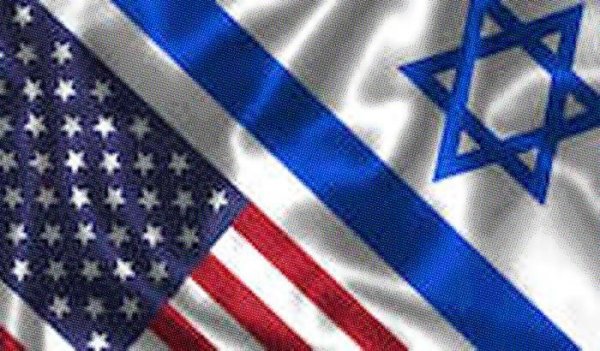
The process of destabilization of the Middle East continues at forced stages. After US President Trump's explosive statement on Jerusalem the 6 December, which brought tension, clashes and victims to Palestine, Channel 10 announced that last 12 December an agreement would be signed in Washington at the level of the highest US and Israeli national security officials, formally aimed at countering the development of Iran's nuclear program.
The agreement would have been formalized by the US National Security Council (NSC, body responsible for developing American political-military strategy) in the form of an informal framework document, in line with what was stated last 13 October by President Trump regarding his administration's desire not to reconfirm North American membership of the agreement reached in 2015 at an international level on the Iranian nuclear program.
As far as American officials, requests for comments, have downplayed the importance of the Israeli-American protocol, the latter in reality would not be limited to the Iranian nuclear issue but would contain real joint planning on the steps to be taken for the future structure of the entire Middle East, as we already hypothesized a few days ago – when this news had not yet circulated.
In fact, four distinct working groups would have been set up, coordinated on the American side by national security advisor H.R. McMaster and on the Israeli side by the head of the Israeli National Security Council, Meir Ben-Shabbat. The latter has been operational since 1989 in the Shin Bet, the Israeli General Security Service which is in charge of the country's internal security; at the time of his appointment last August he was in command of Shin Bet operations in southern Israel. In the 2008-2009 he had personally directed the service's operations in the bloody Cast Lead operation against Gaza, under the direct supervision of the Prime Minister. Ben-Shabbat also headed the Israeli Secret Service's Cyber Directorate and the National Anti-Terrorism Directorate, Espionage, Research and Politics - assignments which therefore highlight the high profile characteristics, both technical and political.
Herbert Raymond McMaster also combines technical skills from his military curriculum, in particular in the sector of the so-called counter-insurgency (he was advisor to the general. David Petraeus in Iraq e Afghanistan), to significant experience as a political-military analyst: professor of military history at the American Military Academy since 1994 al 1996, he is a professor at the Hoover Institution on War Revolution and Peace, which is one of the conservative American think tanks most linked to the corresponding Israeli circles; finally he is a member of the Council on Foreign Relations (CFR), whose historical role in tracing the strategic lines of US international policy there is certainly no need to insist.
There are four working groups that will have to practically coordinate the activities decided by the Israeli-American joint action agreement.
The first working group deals not only with diplomatic activities but also with “hedged shares” aimed at preventing Tehran from acquiring nuclear weapons, as well as to monitor any Iranian violations of the agreements 2015. A second working group addresses strategies to counter Iranian influence in the region, particularly its relations with Hezbollah in Lebanon: this group, note, it also has the task of planning a coordinated policy regarding future developments of the situation in Syria. The third working group must deal with countering the development and manufacturing of missile systems that Iran could use from Syria and Lebanon. The fourth working group, In the end, the press sources that published the news report verbatim, is in charge “the joint preparation of various escalation scenarios that may occur in the region, whether they concern Iran or Hezbollah”. A formulation that leaves room for any type of action – be it defensive, preventive or offensive, without limitations.
This is an important event from various points of view, for those who follow Middle Eastern events: first of all it confirms what we have supported in the Middle East without peace, that is, US policy in the wider Middle East has long been designed by a mixed Israeli-American ruling class that has had increasing access to the top of US administrations for thirty years. In recent years, it has been reaping the operational fruits of an ambitious and far-sighted long-term strategy of which the current Israeli Prime Minister in particular was the author., but even more so his father, Benzion Netanyahu (1910-2012), nato Mileikowsky, in over half a century of intense cultural and political activity, first as secretary to Ze'ev Jabotinsky, and so since when, as director in New York of the New Zionist Organization of America in the crucial years 1940-1948, he established a dense network of political and intellectual relationships in the circles of Congress and the most prestigious American universities.
The second aspect is already confirmed in facts: the destabilizing action entrusted to the working groups envisaged by the agreement will this time focus directly on Iran, using the tools of political warfare that we have seen in action in Syria, Libya, Egypt, Ukraine in the last ten years – presented in the media as “democratic revolutions”, these destabilizing actions aim to eliminate Iran as an autonomous power in the Middle East, breaking down the last obstacle to Israeli hegemony throughout the region.
In the Middle East, the risks of this new interventionist step by the Westerners led by the Jewish State are obviously very great at this point: as Italians and Europeans we should ask ourselves whether the strategic plan underlying this decisive step for the coming decades corresponds to Italy's real interests, of Europe and world peace.
Similar Posts
