

Of Claudio Risé
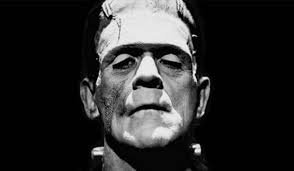
Source: Claudio Risé
A 200 years after Mary Shelley's masterpiece, genetic engineering realizes Doctor Frankenstein's nightmare. Life reduced to the product of technology impoverishes relationships and creates loneliness. And without father or mother the individual increasingly resembles a mummy.
Man not born of a woman but built in a laboratory turns two hundred years old.
A lady from the most cultured and restless English society of the 19th century recounted its birth and dramatic life: Mary Shelley, wife of the poet Percy Bysshe Shelley and daughter of the feminist writer Mary Wollstonecraft and William Godwin, liberal philosopher.
Like many surprising insights and discoveries, the idea matured thanks to boredom and not knowing what to do. Mary was with her husband Percy and her half-sister Claire,
guest in a villa on Lake Geneva of his friend Lord George Byron, famous poet, together with Byron's doctor John Polidori. He kept company
Pellegrino Rossi from Carrara leaves, He too, like Byron and Shelley, was a passionate supporter of “sovereignists” of the time: the liberation movements from supranational empires, now in the process of decomposition.
Rossi, already very young Special Commissioner of Gioacchino Murat in
failed Italian campaign, at that time he was a professor in Geneva. Era
estate, it rained continuously, there was the sultry humidity of summer Geneva and i
four didn't know what to do. At the proposal of Lord Byron they began to
telling ghost stories in front of the large fireplace. But not to Mary
nothing came to mind, and being a hard worker and a productivist, she was ashamed
in comparison with the imagination of poets (and Dr. Polidori, which he will write later
the first vampire story). Until one night when he couldn't
falling asleep he had a vision of a “pale student of deconsecrated knowledge
kneeling next to the “What” that he had put together”. He saw like this:
“the horrible silhouette of a lying man, Then, due to the effect of some powerful person
machine, give signs of life and move with an uncertain movement, quasi
vitale. Horrible, because the effect of any would be supremely horrendous
human attempt to mimic the stupendous device of the Creator of
world”.
The holiday was coming to an end and the friends said goodbye with the agreement to write
its own story for the following year. Mary's was “Frankenstein o Il
modern Prometheus”, which tells the dream many years in advance
of modern man to manufacture other human beings. Which is also: “What
happens when a man tries to have a baby without a woman”
as the feminist scholar Anne K. wrote. Mellor, of Columbia
University, and vice versa. The idea took shape in the collective unconscious of Europe
which entered the era of industrialization and technology, e
will accompany humanity in the following two centuries. Today it is being realized on
multiple fronts, in particular in new procreative techniques, in engineering
genetics and in the manufacturing of robots. He invented posthumanism with
a lucid dream Mary Shelley, two hundred years ago, at Villa Diodati, Cologny,
Geneva.
In the “altered states of consciousness” like the one Mary Shelley found herself in
Cologny, whoever has a vision or hears a message finds himself in contact with
the collective unconscious of one's time and of the peoples who participate in it. Il
Villa Diodati group was heavily involved in the history of the time: Byron
he will soon die trying to help Greece free itself
from the Turkish empire, Pellegrino Rossi, appointed prime minister by Pius IX for
reform the Vatican State, he will then be slaughtered in Rome, perhaps in a conspiracy
of Jesuits, Shelley is considered a dangerous rebel in England
imperial. It should come as no surprise that Mary Shelley, who had hired a
psychological position of deep listening to oneself, in an attempt to produce the
“history” that Byron asked his guests daily, had one
prophetic vision for many. He will then make a book about it: Frankenstein. The Prometheus
modern, which describes the profound dynamics that would have upset the
two centuries following the human generation, and he will be one of the first for a long time
best seller in world publishing.
The novel in fact tells the story of a young lay scholar's attempt to build
a living being in the laboratory, bringing together pieces and substances of the world
living, however collected by laboratories, hospitals and cemeteries. In the attempt the man
puts all his intelligence and attention, committing most of his to it
time and isolating oneself from one's dearest loved ones and from nature: “my eyes were
now insensitive to the beauties of nature”, he tells in the book. In the end, “in
a dark November night” the attempt succeeds: “the creature… he breathed with fatigue,
and a convulsive movement agitated her limbs”. But he is a hideous monster. Il
first of a long series, that modern literature will tell in its own
accompaniment (increasingly aware over time) of the
technoscientific attempt to fabricate human life.
This monster, Furthermore, he is alone, but he is not at all happy about it. Not in itself
that would be bad, but it becomes so, and also tremendously aggressive, precisely
because he doesn't care about being great, big and very strong. He would like to
above all “be like everyone else”, and loved by them, and have a woman
with I know. Instead “everyone else” they flee from him, for its unbearable diversity. The
Loneliness is one of the deepest aspects of Frankenstein, modern
Prometheus, as well as the entire history of “prometeico” development
technoscientific in human reproduction, and its results. Even from the point
from a clinical point of view, the most obvious result of this development is precisely the
growing loneliness of the human being, whose relationships and dealings with others
they become increasingly poorer, while those with the world of things
inanimate, of the “products” of the technique (as is Frankenstein himself)
they become more and more disturbing.
Those who work with people's physical and mental discomfort know well that today
Emotional problems come first, starting from the difficulty in holding the
increasingly widespread loneliness.
About the emotionally troubled world into which Frankenstein was born came out of
Hardly an astonishing little book: Lady Frankenstein and the Horrendous Offspring, the cure
by Anna Maria Crispino and Silvia Neonato, edited by Iacobelli. The authors,
feminists forever, they say things of great common sense and rare accuracy
philological. “In conclusion “Crispino asks, what does the monster want? He wants the
its creator recognizes it, he wants a bride to love... he wants to feel
“normal”. He wants to be, like everyone, related”. Doctor Frankenstein though
does not consent. He builds the female for the monster, but then destroys it.
Perhaps with reason, because the problem is that (as Crispino recalls) these
creatures they are “create” by pseudo-scientific arrogance, non “generate” from the
nature. The doctor will not survive the horror of his horrid creature, e “il
demon” (how it looks in the end) will set up a fire on the pack, to turn off
amidst the ice the sterile fire of a wrong creation.
“A woman who thinks generates monsters”, it's a verse (often true) from the
poet Adrienne Rich. Mary Shelley, however, did not have just one relationship
intellectual with the generation. She gave birth to three children who later died quickly,
before being able to generate a healthy one. His mother, Mary Wollstonecraft died
when she was just born. It is true that all this contributed to the”anxiety e
repulsion for gestation and birth that the entire novel communicates”,
as Marina Vitale says in “Lady Frankenstein”. But the disaster, In the
Frankenstein is not due to the mother: the dramatic relationship with
generation has indeed made Mary Shelley even more convinced of hers
indispensability. The trouble is that, especially in subsequent emulations
scientific, the mother is not there, or it is made to disappear; like his father
replaced by a test tube. At the end of Frankenstein the monster appears as
a mummy (mummy). The mother (also a mummy, in English) there isn't
more. This is how human life could end.
Similar Posts
