

 Maria Montessori, among the first women to graduate in Medicine in Italy and to be counted among the pioneers of feminism, she was a forerunner of gender ideology. Interesting to read what the active Catholic Princess Maria Cristina Giustiniani Bandini thought of her (1866-1959), which, precisely because it is Catholic, it has been locked away by the secular intelligentsia:
«The vestals of feminism frequent modernist circles, starting with the president of the National Council of Women, Countess Gabriella Spalletti and the vice president, Dora Melegari […] But among all these ladies, the most dangerous is Maria Montessori […] I find her a presumptuous and exhibitionist woman, with absolutely subversive ideas. […] he argued that the best way to help the family in Italy is sexual education in childhood, and to explain it he used crude and unacceptable language»[1].
Montessori wanted to revolutionize humanity:
«Each one, in life, he has a function that he does not know he has and which is related to the good of others. The aim of the individual is not to live better, but to develop certain circumstances that are useful to others. The great law that regulates life in the cosmos is that of collaboration between all beings. Deepening the study of this law means working for the triumph of union between various peoples, and so, for the triumph of human civilization»[2].
She became a militant feminist. In the 1899 the freemason Guido Baccelli, seven times Minister of Education, he appointed her as Italy's representative at the International Women's Congress, held in London. Supported by the mayor of Rome Ernesto Nathan, Jew of Anglo-Italian origins, republican in the line of Mazzini and Saffi, freemason from 1887 (Grand Master of the Grand Orient of Italy from 1896 al 1904 and from 1917 al 1919), she achieved success thanks also to funding, as we saw in the first episode (Who), of the Franchetti barons, in particular the senator's wife, Alice Hallgarten, New York Jew. In the 1909 Alice and Leopoldo Franchetti visited the «Children's House» for the little ones 3 a 6 years of the San Lorenzo neighborhood of Rome. It is here that they saw Montessori at work with the experimentation of her method: the little ones put at ease, free to interact spontaneously with the environment, learning "without oppressive constraints" to live in community. Here the barons invited her to spend a period of time at Villa Montesca, in Città di Castello, to train rural school teachers on the new Montessori method, and it was during this stay that Montessori "perfected" her scientific pedagogy, publishing in 1909, with dedication to the Franchetti barons, the famous volume The method of scientific pedagogy applied to children's education in children's homes. There in that building in Città di Castello, Today, the «Hallgarten-Franchetti Centro Studi Villa Montesca Foundation» is active and has the objective of «help the definition of an efficient education system, that helps overcome barriers to training, to accelerate the recognition of learning outcomes obtained in formal ways, informal and non-formal. This is in order to encourage active participation in the learning processes of people who, for reasons of marginalization, they are excluded», all according to the references dictated by the European Union Commission, which has severed its own identity roots, those of Christian Europe..
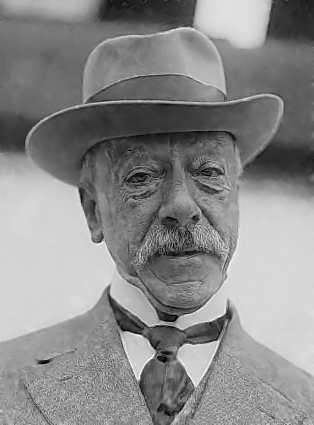
With the support of Ernesto Nathan, Montessori, Therefore, had opened in Rome, in via dei Marsi 58, the first «Children's Home» for the children of the inhabitants of the San Lorenzo district, electoral stronghold of the Mayor:
«At the inauguration he said that women must free themselves from their domestic role like a butterfly emerging from the chrysalis. Montessori never talks about marriage in her writings, but always of unions, of love, of a change in the conception of motherhood thanks to the "conscious and free choice" of one's partner as a contribution to the regeneration of the race. In short, we go from free love to the transformation of education into a breeding of human races. His much vaunted method, Then, consists in abolishing all effort of the child, nullifying the authority of parents. No laws or obligations should be presented to him, but help him discover for himself what is right to do. Parents and teachers should not teach the child anything, much less correct it, much less punish him.»[3].
The Montessori method is devastating as it perceives education as the free spontaneity of the child, conceived as an agent of the cosmic evolution of humanity, not as a fragile creature of God, limited after original sin e, so, always fighting, inside and outside of himself, between what is good and what is evil. But when the parents and the teacher guide the child with wisdom and rules, it is clear that his life will have advantages and gains, for oneself and for others in the present and in the future.
Montessori pedagogy aims to stimulate the child's energy, considered a particle of the fire of universal life. It's not possible, by association of ideas, don't think of the modernist theologian Pierre Teilhard de Chardin SJ (1881-1955) evolutionary scientist, paleoanthropologist, who hypothesized a "cosmic Christ" and a pantheistic Christianity, where matter was spiritualized and, so, deified.
Montessori's cosmic ideas arose when she adhered to the feminism and esotericism of the Theosophical Society, which we talked about last time. The founder, Helena Blavatsky, he frequented occultist and spiritualist circles, where she became a student of Allan Kardec (1804 – 1869), French pedagogist and philosopher, as well as founder of spiritualism, doctrine of which he was the main popularizer worldwide. In séances the Russian adventuress Blavatsky played the role of "medium". She claimed to have fought, dressed as a man, in the battle of Mentana, alongside Giuseppe Garibaldi.
Thus Montessori, friend of dark and diabolical theosophists (those who refer to mysterious “masters) they are spiritualists (those who receive enlightenment from consulting the deceased), he forged a pedagogy outside the rules of nature.
«The program of the Theosophical Society is the same as that of Freemasonry: dissolve laws and institutions, to arrive at a universal brotherhood of humanity, without distinction of race, sex or belief.»[4].
These are some of the cultural seeds from which the European Union arose and Montessori is among the major protagonists of the unreasonable and confusing drama of our contemporaneity.
Entry into 1899 in the Theosophical Society, will remain deeply linked to it, so much so that he spent the years of the Second World War in Adyar, in the international headquarters of the company itself, even if in forced residence, being an Italian citizen and therefore of an enemy belligerent country. Philosophical-feminist writings are unquestionable proof of that nefarious theosophical influence.
In the 1904 obtained a teaching degree in anthropology and, Therefore, obtains the opportunity to take care of the educational organization of nursery schools. Meanwhile his essay The method of scientific pedagogy it is enthusiastically received and translated throughout the world.
Upon his arrival in the United States, In the 1913, the «New York Tribune» presents it as «the most interesting woman of Europe» («the most interesting woman in Europe»). The Montessori movement was born from the success of the Roman experiment, from which in 1924 the «Montessori teaching school» and the National Montessori Opera will originate», erect, the latter, into a moral body and aimed at knowledge, to diffusion, to the implementation and protection of its method. She becomes its honorary president.
From the moment she learns that her lover Montesano would marry another woman, he only takes to dressing more in black. His life only becomes more public, ma, ultimately, it always had been.
Some progressive critics have criticized her for the many private schools opened in her name and for her high-ranking friendships. While right-wing critics did not appreciate his educational indications to guarantee criteria of collective equality.
In the 1914 moves to Spain, where it remained until after the end of the world conflict; he returned to Italy in 1924 and his international fame conquered not only Mussolini, but even Pope Benedict XV, who gave her an audience. In the second half of the 1920s Maria Montessori hoped that the modernity of her Method would receive national consecration and be supported by both Catholics and fascists.
His lust for fame was insatiable.
He managed to carve out considerable space for himself even under fascism. The «Society of Friends of the Method» is transformed into a moral body, taking the name of «National Montessori Opera», with offices in Naples and Rome, with honorary president Benito Mussolini. However, Montessori positivist schools, seen by the regime as a possibility to combat illiteracy, for which the progressive Maria José of Savoy also has sympathies, they are starting to disturb many. In Italy the culture of idealism of Croce and Gentile and the general director for the educational sector is dominating, Giuseppe Lombardo Radice, initially sympathetic to the Montessori method, now makes heavy criticism, accusing her of stealing ideas from Rosa (1866-1951) and Carolina (1870-1945) Agazzi, claiming that only the two sisters from Brescia had developed an entirely Italian method. In Radice's wake other criticisms arrive and Maria Montessori is now defined as «skilled enchantress», «camouflage», «businessman».
After completing the international courses held in Rome in 1930 and in 1931 and conferences abroad, especially that of Geneva on peace, whose echo was enormous, a break with the regime is reached: In the 1933 is published Peace and education, but fascist culture no longer supports the author. In the 1934 all Montessori schools are closed, both for teacher training and for children. Two years later, by order of the minister Cesare Maria De Vecchi, The three-year Royal School of the Montessori Method also closes its doors, who in Rome trained the masters from 1928; the same way, always in 1936, the activity of the National Opera is brought to an end.
Maria Montessori leaves Italy in 1934 and goes to live in Spain together with his son Mario, born in 1898 from the relationship with the psychiatrist Giuseppe Montesano, and that she gave birth secretly, entrusting it to a family from Vicovaro, a small municipality in Lazio, and therefore under the care of Mrs. Vittoria Pasquali. He will subsequently enroll him in a boarding school. When his mother died, Montessori took her fourteen-year-old son with her, whom she always presented as a nephew. Mario's true identity will only be revealed in his will[5].
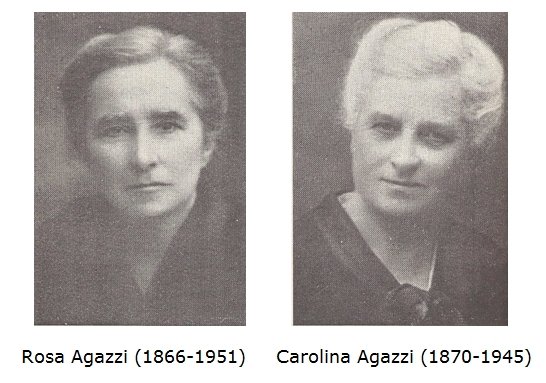
Instead of the Montessori method, fascism welcomed the method of the Agazzi sisters, «pedagogy of order» compared to the «pedagogy of freedom». The Spanish Civil War leads the feminist and universal peace educator to move to 1936 in England. Mother and son then settled down, at the invitation of Ada Pierson (that in 1947 married Mario), get in there, where they were founded, dal 1923, Montessori schools, both secular and Catholic. Right here he met, In the 1937, George Sydney Arundale (1878-1945), freemason, bishop of the liberal Catholic Church and president of the Theosophical Society, who informed her about the success of Montessorism in India, where he will die. It's right around this time, we are in 1939, that Montessori held some conferences in London (subsequently collected in the work From childhood to adolescence, Milano 1949), in which he began with determination the reflection on the "cosmic plan".
In the same year he left for India with his son to direct a course for Indian teachers. The outbreak of the Second World War stopped it here and Mario was imprisoned because he was considered an "enemy". He dedicated himself to deepening the centrality of "cosmic" education, and his theories were collected in the volume How to educate human potential (first ed. English 1947 with the title To educate the human potential; then Milan 1970). He returned to Holland in 1946, ma, conquered by oriental suggestions, he made several more trips to India.
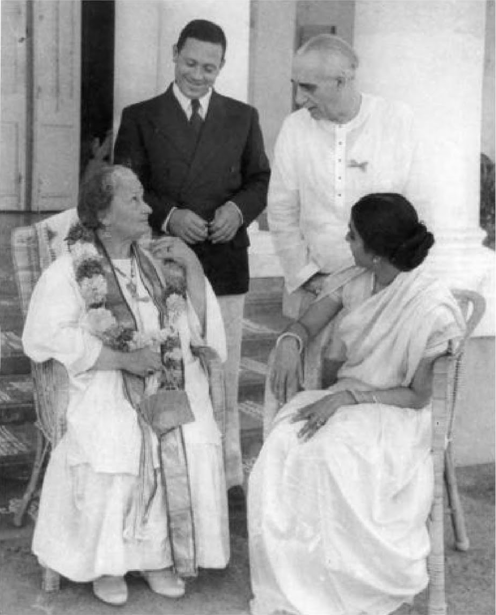
Maria Montessori with her son Mario on the left, along with George Arundale and his wife Rukmini on the right, India 1939
After the war he crossed the republican soil of Italy and here he found fertile ground, being able to reorganize the Montessori Opera and its schools. He maintained his primary residence in Amsterdam and continued to travel the world publishing books and giving multiple lectures. In Perugia he founded the International Center for Pedagogical Studies. Era, at this point, an international celebrity and was nominated for the Nobel Peace Prize.
He died on 6 maggio 1952 a Noordwijk aan Zee (When) and was buried in the local Catholic cemetery. On his tomb it reads:, in Italian: «I pray dear children, who can do anything, to join me in building peace among men and in the world».
His Cosmic Education, present in its schools, it is an unfortunate legacy, where we find today's concepts of ecological education (environmentalism), peace education (pacifism) and global education (globalism-globalization). All disciplines, especially history, Geography and Sciences, they were profoundly influenced by these principles, from which the child's love for life was born. The preventive education of Saint John Bosco, based on Reason, Religion, Loving kindness, gave the world generations and generations of "good Christians and honest citizens", Montessori's cosmic education has given the world generations of unstable and insecure people. Yet she took the place of the effigy of Marco Polo on the last thousand lire banknotes and in the television miniseries that immortalized her (2007, directed by Gianluca Maria Tavarelli), with the interpretation of Paola Cortellesi, she is presented as an exemplary woman, beacon for all women. In reality she was a worthy follower of the "free" Marianne.
[1] R. de Mattei, Roman trilogy, Solfanelli, Chieti 2018, p. 67.
[2] Maria Montessori, Education and peace, Garzanti, Milano 1949, National Montessori Opera, Roma 2004, p. 20
[3] Ivi, pp. 68-69.
[4] Ivi, p. 70.
[5] B. Vespa, Women of Italy, Mondadori Editions, Milano 2015, p. 369.
Source: https://www.europacristiana.com/maria-montessori-una-vita-fra-massoni-modernisti-e-femministe-ii/?fbclid=IwAR0lho9ANshpnrSdeHqOQAK_Yrm-6ySEVezu-PqaqdI6dmsSqq2EKn36lE0

Many thanks for the article, that I filed away ! I had always had doubts about the method, in particular for direct experiences on children educated according to these principles of great freedom without education in order and personal discipline. Now I have valid reasons.