

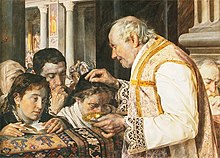
 TODAY, ASH WEDNESDAY, START THE LENT
Reporting of Federici Studies Center
Major Catechism of Saint Pius
35 D. Which is Lent?
R. Lent is a time of fasting and penance established by the Church by apostolic tradition.
36 D. For what purpose is Lent established??
R. Lent is established:
1. to make us aware of the obligation we have to do penance throughout our lives, of which, according to the Holy Fathers, Lent is the figure;
2. to imitate in some way the rigorous forty-day fast, that Jesus Christ did in the desert;
3. to prepare ourselves through penance to celebrate Easter in a holy way.
37 D. Because the first day of Lent is called Ash Day?
R. The first day of Lent is called Ash Day, because the Church places the sacred ashes on the heads of the faithful on that day.
38 D. Because the Church at the beginning of Lent uses to impose sacred ashes?
R. At the beginning of Lent, the Church uses to impose sacred ashes, so that we remember that we are composed of dust, and with death we must reduce ourselves to dust, we humble ourselves and do penance for our sins while we have time.
39 D. With what disposition should we receive the sacred ashes?
R. We must receive the sacred ashes with a contrite and humiliated heart, and with the holy resolution to spend Lent in works of penance.
40 D. What should we do to spend Lent well according to the mind of the Church?
R. To spend Lent well according to the mind of the Church we must do four things:
1. observe the fast exactly, and mortify ourselves not only in illicit and dangerous things, but still, as much as possible, in lawful things, what it would be like to be moderate in recreation;
2. make prayers, limosine, and other works of Christian charity towards others more than in any other time;
3. listening to the word of God not out of pure custom or curiosity, but out of a desire to put into practice the truths that are heard;
4. be careful to prepare for confession, to make fasting more meritorious, and to prepare ourselves better for Easter Communion.
41 D. What does fasting consist of??
R. Fasting consists of eating only one meal a day, and in abstaining from prohibited foods.
42 D. On fasting days, other than the single meal, any other meal is prohibited?
R. On fasting days the Church allows a light lunch in the evening, or even at midday when the only meal is postponed to the evening.
43 D. Who is obliged to fast?
R. All those who have completed the twentieth first year and are not legitimately prevented from doing so are obliged to fast.
44 D. Those who are not obliged to fast are completely exempt from mortifications?
R. Those who are not obliged to fast are by no means exempt from mortifications, because no one is exempt from the general obligation to do penance and therefore they must mortify themselves in other things according to their strength.
Source: Major Catechism of Saint Pius http://www.sodalitium.biz/della-quaresima/
Ash Wednesday, meaning and prescriptions of Lent
Discipline of fasting and abstinence
