Headquarters, il film "Rosso Istria" arrives in theaters. Gasparri: «It tells a denied truth»
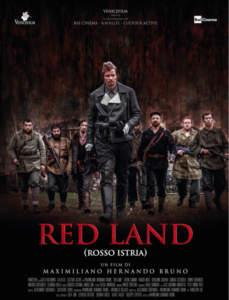
red-istria-poster

A stellar cast for a courageous first work: And Red Land (Red Istria), the film I go through the martyrdom of Norma Cossetto tells of the terrible violence suffered by the Istrian populations, Fiumane, Julians and Dalmatians by the Tito partisans. The film, produced by Venicefilm in collaboration with Rai Cinema, will have its world premiere on Tuesday 6 November at 20 at the “The Space – Moderno” cinema in Piazza della Repubblica in Rome, while in the morning will be presented to the press in the Nassiriya Hall of the Senate. A sign of the institutional commitment to ensure that this production was realized, e created under the aegis of Rai.
An unexpected fact, consider the reticence and sometimes the outright denialism towards this page of Italian history. Despite, Indeed, for fifteen years now (the law was passed in 2004), the memory of the Foibe has entered the civil calendar of the country with Remembrance Day of the 10 February, talking about this Italian drama is still very difficult. He knows it well among others Antonello Belluco, who signs the screenplay together with the director Maximiliano Hernando Bruno to his first work. Belluco's previous work on theme of partisan violence, The Secret of Italy, which tells the story of the Codevigo massacre, it was in fact the subject of a ferocious boycott, which also saw the ANPI deployed. And the same production as Red Land (Red Istria) it had a long and difficult gestation: all the commitment and courage of the team that produced the film and of those who supported it were needed so that Norma Cossetto's story could finally be told to the general public, leaving the channels of "voluntary" projections (as it was game force for The secret of Italy), projecting itself onto the international scene also thanks to the participation of stars such as Franco Nero e Geraldine Chaplin e, above all, getting Rai's institutional commitment. Read More

Share

That racist and anti-Semitic Marx you don't expect

Image result for CARL MRX

Communism and Antiracism: if not now synonymous, However, they are two terms that lately conveniently go hand in hand. But how much do the comrades really know their cultural roots? Listening to the talk going around or reading some hysterical tweet, I'd say not much. On the contrary, I would say not at all.
With today's article we will move away for a moment from the sphere of right-wing philosophy and thought to immerse ourselves in the strange communist world, flowery on the outside and genocidal on the inside, going to discover those statements by Marx and Engels that would make even the most hardened of xenophobes tremble. The hope is that someone can finally change their minds about the genuineness of communism and the unconditional goodness of its "values", understanding how false the communism-anti-racism connection is.
To understand what follows, a fundamental premise must be made: per Marx, communism could only have established itself once capitalism had reached its peak, with the collapse of the latter under its own weight. The first type of racism is therefore shown towards all those peoples defined as "counter-revolutionary", that is, peoples who, due to culture or technological backwardness, were still tied to pseudo-feudal models, thus not allowing capitalism to spread and therefore, consequentially, removing the possibility of the realization of the communist dystopia.

Read More

Share

And then, Which side are the Catholics on??

REVIEW OF THE BOOK BY MATTEO CASTAGNA
Of Mattia Rossi per The newspaper OFF of The newspaper
It caused a sensation, some time ago, the cover of Christian family against the Minister of the Interior Matteo SalviniGo behind Salvini», it stood out on the cover under the photograph of the Northern League leader). Shortly after, but, the newspaper poll Libero: 85% of Catholics would be in favor of the Minister's policies
And then, which side are they on? (or they have to stay) the Catholics? With what, commonly, is defined as populism or with the pro-European globalism? And southern fascism? Where to position yourself for those who profess to be Catholic? But then, as Catholics? Those of the modernist official hierarchies or those "integral" and faithful to the Catholic Magisterium of all time?
He tries to give the answers Matthew Castagna, journalist and militant Catholic (responsible for the Sedevacantist-oriented “Christus Rex – Traditio” club) in his Catholics between Europeanism and populism. The challenge to nihilism (Solfanelli, pages. 248, euro 17) recently in the bookstore.
Ascertained immediately, from Castagna, that «a “progressive Catholicism” cannot exist» and that «the only possible Catholicism is the “integral” one», There are numerous doctrines that the Veronese journalist reviews (Savonarolism, counter-reformism, the second Francoism, the neo-Lutheranism of Nazism) and then move to the Catholic side in the chapter Integral Catholics, Jesuits, modernist, clerical-fascists.
Catholic integralism, explains Castagna, «perceives in white-Jesuit internationalism, Christian Democrat-Modernist is the political and theological instrument through which the greatest attack is manifesting itself, never conceived, to Christianity". It follows that, according to the author, «the fundamental danger of the Jesuit-modernist union would be represented, per mons. Benign, from the end of the social disintegration of the Western Constantinian and Gregorian Tradition; from absolute and dogmatic anti-fascism; from left-wing Christian Democrats; from fanatical and relativistic technical-pragmatic and politicistic anthropocentrism; from the rejection of the XXIV theses of Thomism; all of this, if achieved with the victory of international anti-fascism, it would have led to neo-modernist nihilism and secularization”. Read More

Share

Guareschi, del '68 se ne fece un baffo

Of Marcello Veneziani

Like today (yesterday for those reading, n.d.r.), fifty years ago, in the fateful '68, he went to the other world Giovannino Guareschi. He left the small world that few had described, to reach the big world, the one where that Lord lived who in his House gave advice to one of his fiery dependents on earth, Don Camillo. At least that's what Guareschi says.

He left early, Giovannino, a 60 years, after a troubled life, between concentration camp, prison under fascism and anti-fascism, plus a host of books translated all over the world, of very popular films that represented that fabulous post-war Italy, and adventures in the press, like his impertinent Candide who played a decisive role in the defeat of the social-communist popular front in the 1948 elections.
Giovannino died on 22 July '68 but he had time to write his last Don Camillo dedicated to today's young people. The book was released posthumously and marked the striking contrast between the old communist Peppone (that the anti-communist Guareschi had made sympathetic with his irrepressible humanity), the tough Don Camillo and a young, beardless protester, who was traveling on a motorbike with studded and fringed bags and a black jacket with a skull and the words "Veleno". Which becomes the boy's nickname for Guareschi and also the metaphor of the protest. "The Chinese" also arrive in the town of Brescello and upset the ideological geometries of the Italian-Stalinist Peppone and also displace the religious ones of the parish priest. Guareschi links the protest to the advent of the consumer societyi. For him the antagonism between the two phenomena is only occasional, related, not substantial. Consumerism devours the small ancient world and the old faiths, but he catches Peppone who leaves his bike and rides in a red spider. Consumerism is the habitat of 1968. Read More

Share

Christians taking to the streets in Vietnam against the communist regime


Catholics on the streets in Vietnam, a Binh Thuan, ad Ha Tinh e Vinh, for example, with rosaries, Vatican flags and banners, to protest against the granting of land to the Chinese communists and against the liberticidal law on cybersecurity, authentic Internet censorship: anyone who connects to Catholic sites risks prosecution.Law enforcement has already made thousands of arrests among protesters across the country, the regime has already threatened harsh repression. Which did not intimidate the Church: the Bishop emeritus of Kontum, mons. Michael Hoang Duc Oanh, also asked President Tran Dai Quang in writing to respect the will and rights of the people, to release those who have been arrested, as well as thus maintaining social peace.
The Bishop Emeritus also criticized the priests who are members of the National Assembly, completely regimented and for this reason they expressed themselves in favor of the new regulation on the web: "They betray our faith and our country", said the Bishop. Read More

Share

Catholics persecuted in capital-communist China

Reporting of Federici Studies Center

New persecutions by the Chinese capital-communist regime against Catholics, without any reaction from the Pharisees of the West and in particular from the Italian radical-chic.
China, the persecution continues: Via Crucis demolished
A popular site among Catholics in Henan provinces, Hebei and Shanxi was shot down at night. Yes, yes “allow Catholicism to exist but not to develop”
Anyang authorities, Henan province (China), they had them demolished 14 Stations of the Cross located along the path that leads to the oldest pilgrimage site in the area, the Shrine of Our Lady of Mount Carmel in Tianjiajing, a popular site among Catholics in Henan provinces, Hebei e Shanxi, which had been built by the priest of the Pontifical Institute for Foreign Missions Father Stefano Scarsella, then apostolic vicar of northern Henan (between 1903 and the 1905).
Slate panels, which represented various moments of the Passion of Christ, accompanied by drawings and graffiti made in Chinese style and enriched by devotional comments, they were demolished with bulldozers and jackhammers, weeks after Chinese officials told Bishop Joseph Zhang Yinlin of Weihui (That's it) to dismantle the Via Crucis without specifying the reason.

Read More

Share

Silence of the Italian media on Tiananmen: the Chinese regime won

Reporting of BastaBugie editorial team

Courier, Repubblica and the others forgot about the 29th anniversary of the massacre in China, but they told us about the anti-robot strike in Las Vegas, Nobel Prize winner Malala's defense of university hangovers, a new drink from Japan, ecc.
Of Leone Grotti

(AUTOMATIC READING)

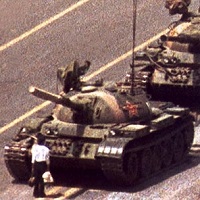
More than 115 thousand people in the square to remember one of the largest massacres in contemporary history ordered by a totalitarian regime against its own people. It happened in Hong Kong, where myriads of young and old for the 29th consecutive year lit a candle in Victoria Park to "resist authoritarianism" and condemn the Chinese Communist Party, that the 4 June 1989 ordered the People's Liberation Army to massacre students peacefully gathered in Tiananmen Square in Beijing.
NOT EVEN A LINE IN THE ITALIAN NEWSPAPERS
It's an event. In a world where young people are accused of being careless, concerned only with the moment and lacking historical memory, tens of thousands courageously take to the streets (Hong Kong is certainly not free from the influence of mainland China) to denounce one of the greatest horrors in history, fruit of one of the bloodiest regimes in history, e… no one talks about it. Leafing through the pages of the main Italian newspapers, one discovers that today no one has dedicated even a single line to the event.
Worse. Corriere della Sera, Republic, Press, Sheet, Newspaper, Libero, Sole 24 Ore, Daily Fact: no one found space – not even a short one, not even a box, not even a photo, not even a line – to mark the 29th anniversary of the massacre. In the editions of 3-4-5 June the main Italian newspapers dedicated articles to the most disparate topics: the anti-robot strike in Las Vegas, Nobel Prize winner Malala's defense of university hangovers, the criticism of Blair's former spokesperson for not doing housework, the success of the Ogiek tribes of Kenya and that of the new alcoholic drink from Japan. But not a word about the tragic events in Tiananmen Square. Read More

Share

The president of the European Commission honors Marx

Report Roman correspondence


The President of the European Commission, the Luxembourger Jean Claude Juncker, he went on 5 May in Trier – the city of which he is an honorary citizen -, in the Palatinate, to commemorate the 200 years since the birth of Karl Marx, giving a speech in front of the statue of the founder of communism, statue donated by China. He will be accompanied for the occasion by the Social Democratic President of Rhineland-Palatinate, Shame Dreyer.
The announcement of the singular visit raised understandable questions, indignant protests: Marion Smith, director of the Memorial Foundation for the Victims of Communism, wrote a scathing letter to Juncker, remembering: «The philosophy of Karl Marx, once applied, it has generated some of the worst suffering in the history of humanity. Marxist states, such as the Soviet Union or communist China, they are directly responsible for over one hundred million deaths, result of their delusional desire to put Marx's utopian ideas into practice».
The visit to Trier by the President of the European Commission, definitely out of place, it only fuels caustic comments on the analogies between the Soviet Union and the European Union (T.M.).

Read More

Share