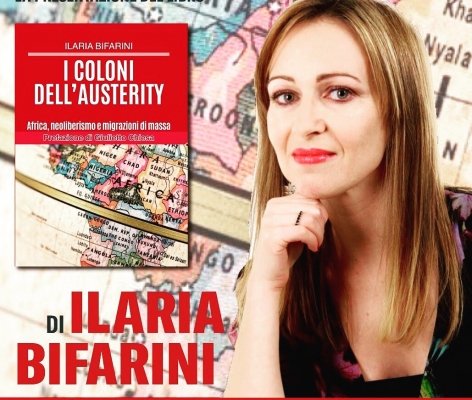
L'Italia e il neocolonialismo francese

Of Ilaria Bifarini (economist, our guest at the conference on Thursday 31.01.19 a Verona)
Source: Sputnik
Africa with its problems and paradoxes, a very rich territory but crushed by poverty, remains at the center of the debate or rather of international discord. The ramifications of responsibility between European states for the management of the migratory emergency and the cross accusations between the French and Italian governments continue..

The French government, who did not hesitate to define Italy's management of migratory flows as disgusting, However, he does not seem to feel the slightest embarrassment for the neocolonial exploitation of the continent and for his responsibilities in the armed destabilization of Libya, with the consequent resurgence of the migratory phenomenon. A dark picture emerges where Italian geopolitical interests clash with those of the “allies” French.
To delve deeper into the topic, Sputnik Italia reached out to Ilaria Bifarini, economist and writer, author of the essay “The settlers of austerity” (Altaforte Editions), the first to have raised the case of French neocolonialism in Africa in the context of mass immigration. Read More
Share

The State is the opposite of a family

Of Ilaria Bifarini (Bocconiana redeemed)
The State is the opposite of a family
Repeated exposure to an image or content causes the individual to modify their perception of reality and internalize the message conveyed. It's what psychologists call the "priming effect", and which advertisers and communication experts know very well. The more a message is repeated and emphasized, perhaps through the shape of the commercial, the more familiar it will be.
Thus it can happen that a concept lacks truthfulness, but repeated insistently and convincingly, acquires the rank of truth. This is what happened with the fake economic news of the moment, as absurd as it is apparently effective: the state budget would be like that of a family. Journalists repeat it in unison, television hosts, economists and indifferent people. So do ordinary people, fast in economics and above all in good faith, he internalized a completely misleading thought.
According to this logic, when a country has public debt - therefore normal in a modern economy- she should behave like a good and careful housewife: tighten belts and cut family expenses. As, how a temperate woman will save on food, on clothing and, in conditions of extreme ratio, to health care for themselves, for your spouse and children, so the State should follow his virtuous example. Read More

Share

USA: Neoliberalism grows the elite

Of Ilaria Bifarini (Bocconiana redeemed)

There are graphs that are worth more than a thousand explanations. This is what happens to the redistribution of wealth with the end of Keynesianism (1973) and the definitive affirmation of neoliberal policies in the USA, inaugurated for all purposes of the administration Reagan, icon of neoliberalism together with her British "sister" Margaret Thatcher.
The graph shows how, with the application of the new economic model, which completely replaces the previous one, the growth rate of the wealth of 90% of the country is gradually decreasing in an increasingly significant manner, in the face of a mirror enrichment by a restricted group 0,1% of the American population.
After the Reaganomix, the administrations Bush, junior e senior, Clinton e Obama (which also will not distance itself from the elitist model of neoliberalism) they will only accentuate this trend.
The economic model implemented in the USA, than with the presidency Trump is facing a strong backlash, it is the same as applied in Europe and imposed on an almost universal scale. It is not possible to deal with the income redistribution and the socio-economic inequality of states without calling into question the dogmas of neoliberalism.
Source: http://ilariabifarini.com/usa-il-neoliberismo-fa-crescere-lelite/ Read More

Share

Because international organizations like migration so much?

Of Ilaria Bifarini
Because international organizations like migration so much?
Source: Heretically
“Migration can benefit everyone in building more inclusive and sustainable societies. Globally, the number of international migrants has reached approx 258 million in 2017, compared to 173 million of 2000. Migration contributes to inclusive and sustainable economic growth and development in both countries of origin and destination. In the 2017, remittance flows to low- and middle-income countries have reached $ 466 billion, more than three times the amount of APS (Public development aid) received in the same year. Remittances constitute a significant source of family income, improving the situation of families and communities through investments in education, healthcare, sanitation services, housing and infrastructure. Destination countries also benefit, as migrants often fill job gaps, they create jobs as entrepreneurs and pay taxes and social security contributions. Overcoming adversity, many migrants become the most dynamic members of society, contributing to the development of science and technology and enriching their host communities through cultural diversity.”
This is what we read in the Agenda 2030 for Sustainable Development of the United Nations, a firma del cinese Liu Zhenmin, UN Under-Secretary-General for Economic and Social Affairs. So, compared to 2000 the number of people who left their country of birth and now live in other countries increased by approximately 50% percent (il 49% to be precise) with a continuous growth trend. Beyond the optimistic and unrealistic tones used in the programmatic document, we can extrapolate the presumed economic model of development supported by the proponents of current migrations, That, unlike the past ones, have reached massive levels and are following new directions. Triggering a hypothesized virtuous circle of growth would be, on the one hand, the supply of labor by migrants for unsatisfied requests from local workers, on the other, the flow of money sent to the countries of origin, which would be used not only to alleviate family poverty, but for productive investments in the national economic fabric. A virtuous model and a harbinger of growth, accompanied by a happy coexistence, almost symbiotic, between migrants and citizens of the host country. Read More

Share

Help them at home?

Image results for stop immigrationBlog report by Maurizio Blondet
Of Ilaria Bifarini
Where did the billions of dollars of aid to Africa go??
Huge loans from international financial organizations, significant relief from state debt, funds raised by private initiatives, who mobilized everyone, from individual Western citizens through organized forms of charity to show business stars, who worked for the rights of the weakest through concerts and performances.
Rivers of billions of dollars that do not seem to have made any dent in the problem of underdevelopment and endemic poverty in the Third World. On the contrary. It was found that, since the mid-1990s, circa 60 developing countries have become poorer in terms of per capita income than 15 years before. By 2030 two-thirds of the world's poor will come from Africa.
Africa is therefore increasingly poor, but of a new poverty compared to that of the colonial past. In fact, the African continent includes the countries with the highest levels of inequality in the world, in which the gap between a small elite dedicated to luxury and the rest of the population living in a state of poverty is abysmal.
So, what didn't work? Where have the rivers of billions of dollars gone? Read More

Share

ONG, finance and migrants. The Jacques Attali case

Of Ilaria Bifarini
ONG, finance and migrants. The Jacques Attali case
Source: Economic Scenarios
Known as the gray eminence of French politics since Mitterrand and known for his ultra-Europeanism, Jacques Attali is the man who discovered Macron, presenting him to President Hollande of whom he became an advisor. He is credited with the authorship of a very explanatory phrase on elitist sentiment : “But what do you believe, the European rabble: that we created the euro for their happiness?”. Another statement by the illustrious economist is less well known, professor, financier and long-time trusted advisor to the Elysée: “The most intelligent form of selfishness is altruism”.
Philanthropy, this humanitarianist quirk that seems to infect the most successful men, he did not spare Jacques Attali, that in 1998 he founded the non-profit association Planet Finance. Right, the name immediately betrays what should be the humanitarian aim of this organization that operates in 60 countries and offers financial services and consultancy, microfinance to be precise. Ended up in the eye of the storm for the "slavery" economic treatment reserved for interns who required first-rate requirements, the company changes name and becomes Positive Planet, evoking in its name the positivity of the economic model it represents. Read More

Share

L'Africa siamo noi

by Paolo Becchi
Africa is us
Source: Paolo Becchi
To understand something about what is happening in Africa and the mass emigration from that continent, we must first detoxify ourselves from what the newspapers write every day or what the mainstream publishing houses publish, and maybe start by reading a book recently published by Amazon and Youcanprint (both as an ebook and in paperback).
The author, Ilaria Bifarini, she is a young scholar, who presents herself as a "redeemed Bocconian", already known for a volume, Neoliberalism and mass manipulation (2017), which has sold thousands of copies online. His new book, titled The settlers of austerity. Africa, neoliberalism mass emigration (2018) continues the same critical theoretical path towards the neoliberal doctrine, tackling the topic from a counter-current perspective, very relevant today, of mass migrations. The fundamental thesis is soon stated: let's get out of our heads the convenient narrative that traces current African underdevelopment to the colonial past. This thesis is often supported today to justify uncontrolled reception. But it's false.
The disintegration of colonial empires starting from the 1950s led to the formation of independent national states, who however did not have the opportunity to develop their economies independently because they were prevented from doing so: colonialism was thus replaced by something even worse, a form of postcolonialism, focused on economic control, which prevented local economies from growing and developing. Read More

Share

Cosa c'è dietro l'immigrazione di massa

Of Ilaria Bifarini
What's behind mass immigration
Source: You are afraid
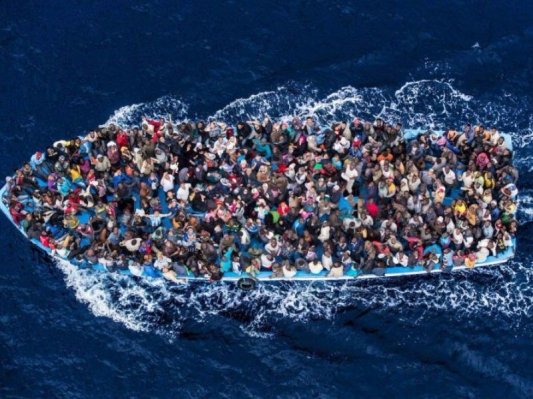
In recent years, European public opinion has learned to understand and in some way metabolize the phenomenon ofmass immigration. Throngs of men, women and children crowd around uncomfortable boats that sail the Mediterranean Sea until they are reached by boats of the now well-known NGOs, which take on the task of ferrying migrants to the northern coasts. This is only the last stage of a process that begins in the immigrants' countries of origin, but which has its roots in the financial mechanisms that regulate the global economy.
Austerity, debt, Malthusianism
The topic was discussed last Thursday at the Theater Hall of the Cristo Re Foundation, in Rome. Speakers Enzo Pennetta, biologist, teacher and writer, e Ilaria Bifarini, economist, author of the books Neoliberalism and mass manipulation (2017) e The Colonists of austerity: Africa, Neoliberalism and mass migration (2018). It is an analysis of the facts that starts from afar that Bifarini offers, which is defined as one “redeemed Bocconian”, from the name of the prestigious university where he studied, the “Bocconi” in Milan, factory of future high finance managers.
L’austerity, in his opinion, e even before the debt, they would be the triggers of mass immigration as well as the globalization of poverty. Austerity that, in Pennetta's introduction, would find a correlation with the Malthusianism, economic doctrine inspired by the Englishman Thomas Malthus according to which the population grows faster than the available resources. Hence the necessity, promoted by followers of this theory, Of reduce social assistance because it encourages population growth. And exactly cuts in public spending are the point of contact between Malthus and austerity. Read More

Share