

Of Ilaria Bifarini
Source: Economic Scenarios
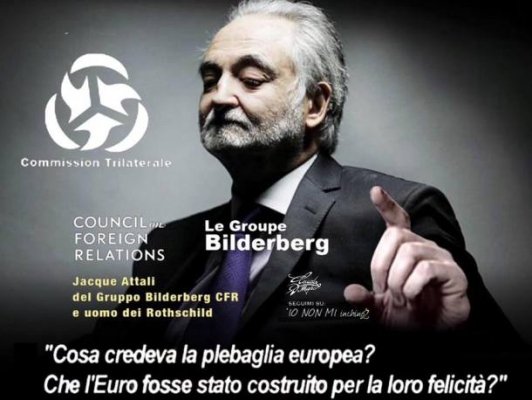
Known as the gray eminence of French politics since Mitterrand and known for his ultra-Europeanism, Jacques Attali is the man who discovered Macron, presenting him to President Hollande of whom he became an advisor. He is credited with the authorship of a very explanatory phrase on elitist sentiment : “But what do you believe, the European rabble: that we created the euro for their happiness?”. Another statement by the illustrious economist is less well known, professor, financier and long-time trusted advisor to the Elysée: “The most intelligent form of selfishness is altruism”.
Philanthropy, this humanitarianist quirk that seems to infect the most successful men, he did not spare Jacques Attali, that in 1998 he founded the non-profit association Planet Finance. Right, the name immediately betrays what should be the humanitarian aim of this organization that operates in 60 countries and offers financial services and consultancy, microfinance to be precise. Ended up in the eye of the storm for the "slavery" economic treatment reserved for interns who required first-rate requirements, the company changes name and becomes Positive Planet, evoking in its name the positivity of the economic model it represents.

Images from the Positive Planet Forum in San Patrignano
Among its objectives are “economic inclusion, social and environmental issues around the world in a sustainable and equitable way.” As? Making it possible for the poorest countries to access financial services. Its mission is in fact to "fight poverty through the development of microfinance." To carry it out it uses eight specialized units, including a microfinance rating agency. The organization is so effective that it received an award for the 80th best NGO in the world according to the Global Journal in 2013. In the same year it achieved a turnover (turnover) Of 2 251 000,00 €.
The corporate bodies include names of great importance on the global political and economic level. From Jacques Delors to the Minister of Foreign Affairs of Oman, passing through partners of consultancy giants such as Ernst & Young e Bain, up to the president of Microsoft International.
Sweet at the bottom, the co-founder of this very branched NGO is Bengali Muhammad Yunus, the father of modern microcredit. Thanks to the support of illustrious supporters, like the Clintons and Bill Gates and with the support of the World Bank itself, in the early 1980s he created the Grameen Bank, a financial institution that gave money to the poorest people, unable to access credit. As already found in a study conducted on Cambodia, in which by analyzing the frequency and methods of emigration of the population, a direct correlation emerged between the expansion of microcredit and the increase in migratory flows abroad, here too the loans granted turned into an incentive for the local population to emigrate. Il Bangladesh it is in fact the country of origin of about a tenth of the migrants who arrive in Italy every year (beyond 10 thousand in alone 2017). And it is precisely here that the business of the so-called "migration loans" was born, loans to finance migrant travel, managed by BRAC (Bangladesh Rural Advancement Commitee), leader in the sector and the largest NGO in the world, which also operates in Asia e in Africa.

Microcredit and the financialization of desperation: the BRAC case
