Report by Giacomo Bergamaschi
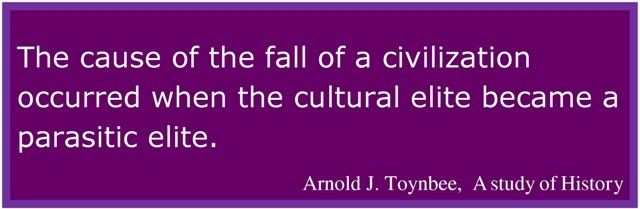 We are happy to publish this theoretical contribution, despite us we disagree with Vilfredo Pareto's conception of the elite, which the author instead defends. A conception, the Pareto one, theoretically as strong as it is mythical and a-historical. If everything is historical and transitory, everything must be placed in its right context: the story of the elites cannot be understood regardless of the specific nature of the political system in which they are formed, of the social forces that compete for the power of the State. Concept that, if we are allowed, seems to escape Eos when he states that: «The “people against the elite” does not exist and cannot exist. The only struggle that can exist is between the political elite and the Pareto plutocratic-demagogic oligarchy (enlightened and liberal)».
in response to Sabino Cassese
Roberto Michels is perhaps the most coherent theorist of 20th century elitism with Antonio Gramsci. We are in fact in the presence of an ideological elitism, not merely positivistic or neo-positivistic. The elitism of Michels, who comes from the "revolutionary syndicalist" and Sorelian faction of socialism in the early 1900s, it is the elitism of a non-conservative "revolutionary" right which in Italy will then identify with the fascist regime, the Gramscian one is instead, at least in our opinion, an elitism far more neo-Jacobin and neo-White than orthodox Marxist.
Michels e Gramsci, well read, they are very current because they show that elitism does not at all mean "managerial revolution" or bureaucratic transformation of the social structure with which today populists and ideologues of liberal oligarchism confuse it. Just the Michels (1898-1936), who held the chair of Political Economy and Economic Sociology at the University of Turin thanks to the intercession of the socialist Achille Loria, in his theoretical-political works he identifies the liberal or democratic-representative regime with the formal democracy in progress, not with substantial democracy, the so-called “popular will”, Michels maintains, “It is not a criterion of democracy. It is also possible there is a dictatorship or a popular tribunate (parliament is replaced by consensus, often silent, but sometimes expressed and visible, even if not measurable from a statistical point of view). A monarchic dictatorship established through an electoral system is even possible. By means of the plebiscite the people give themselves absolute dominion. This is what happens in Bonapartism; in it the Caesar is the embodiment of the popular will" (R. Michels, The sociology of the political party).
Formal and parliamentary party democracy is neither possible nor conceivable without the rationalized organization of civil life by an oligarchy., those who say organization in fact say "tendency towards oligarchy" , the “iron law of oligarchy” is thus the quintessence of formal democracy, that is, representative and liberal democracy. Based on the presumed rule of law and the rightsism, on the democratic basis it rises, hiding, the oligarchic structure of the democratic edifice. The mass, in liberal democracy, must be neutralized politically and substantially, more than they have been in absolutist regimes, the history of France under the Sun King Louis XIV, for example, proves that the regime of absolute monarchy is fully reconcilable, much more than the oligarchic democratic-party building, with the historical-political practice of the rise of new elites or the overcoming of old elites.
Says Gaetano Mosca, in a review of Michels' work, that the latter does not fight democratic liberalism with the usual legitimistic and "reactionary" arguments but with modern arguments, denying the possibility itself, the political theory of liberalism is presupposed, of a sincere and substantial democratic government. Michels therefore would not be an anti-democrat at all, but an ademocratic (G. Mosca, Parties and unions in the crisis of the parliamentary regime, p. 27).
Carl Schmitt, years later, in writings of acute meditation on original Machiavellian and Hobbesian motifs, but also Sorelians, he would have argued that the greatest political and philosophical antithesis to substantive democracy would not be popular dictatorship, a plebiscitarian democracy for ours, therefore in summary a sort of substantial Democracy but the liberal and free-market dictatorship marked precisely by the domination of the "iron law of oligarchy".
Consequentially, Cassese describes us —
WHAT YOU NEED TO KNOW ABOUT OURS “STRONG POWERS” —
social mobility, or the potential social mobility of what Weber, taking up some intuitions of Hegelian political philosophy, he considered the modern "bureaucratic class".. It does not describe the elites or their circulatory process, according to the Michelsian or Gramscian vision. It camouflages integral political elitism with classic bureaucratism. But maybe Cassese doesn't know, and he cannot fail to know this given his scientific and learned texts on the fascist regime [1], that the social mobility of the "bureaucratic class" in the fascist era, as De Felice claims in the well-known Interview, it was qualitatively superior to that of the classic liberal regime? And after all, the social mobility of Stalin's Soviet dictatorship has something less than Elstin's liberalism?
Absolutely not, the opposite. De Felice explains well, not by chance, like Mussolini, had not engaged the country in a world war, would have completed the definitive elite circulation, which was one of the purposes of his mission. And he focuses on the story on several pages, considering it rightly decisive as to whether fascism was an "ideology", or a doctrine, antagonistic or not to classical liberalism.
And this is precisely the moment, Machiavellianly, determinant; the “match theory”, formulated by the Florentine Chancellor in Ghiribizzi and reiterated in “The Prince” (XXV), that is, the agonistic and voluntaristic conception of political praxis. In fact, the mechanistic conception of politics and history in which certain actions correspond to certain reactions did not belong, minimally, to Machiavelli; the anti-determinism and anti-naturalism of the Chancellor of Florence should please Cassese, apparent apologist for the great tactics of the elites. The opposite. Cassese's entire horizon is radically anti-elitist, like that of the "populists" who he seems to despise so much. Cassese's elites would be the secret services and ministerial officials. Which is saying something.
Nothing seems to have taught these professors the great tradition of Italian political thought with humanistic-Renaissance roots, competent and anti-populist. What characterizes their vision of the world is unlimited trust, of neo-enlightenment and neo-liberal derivation, in the mechanism of social science, which would be a tool to impact reality. The furthest thing you can get from the political voluntarism of a Machiavellian or neo-Machiavellian elitism.
But not only that.
Sabino Cassese, apologist for liberal and bourgeois oligarchies, whose mission has always been to neutralize the rise of the ideological voluntarism of the pan-politicist elites, it is also pre-Weberian and a-Weberian, given that it doesn't even consider Max Weber's theory about the "iron cage" that the Enlightenment and liberal worldview brings with it, with the disenchantment of the world typical of Western capitalism, but in a similar context of social-scientific analysis (or presumed to be so) such a lesson cannot be ignored, which remains unsurpassed.
So, the radical problem is a problem of worldview. “The people against the elite” does not exist and cannot exist. The only struggle that can exist is between the political elite and the Pareto plutocratic-demagogic oligarchy (enlightened and liberal).
NOTE(1) Singular, at least, Cassese's definition of the "greatest historian of fascism" (G. Melissa), almost as if R had not existed. De Felice or Z didn't exist. Sternhell.
source – https://sollevazione.blogspot.com/2019/01/di-quale-elite-stiamo-parlando-di-eos.html


 We are happy to publish this theoretical contribution, despite us we disagree with Vilfredo Pareto's conception of the elite, which the author instead defends. A conception, the Pareto one, theoretically as strong as it is mythical and a-historical. If everything is historical and transitory, everything must be placed in its right context: the story of the elites cannot be understood regardless of the specific nature of the political system in which they are formed, of the social forces that compete for the power of the State. Concept that, if we are allowed, seems to escape Eos when he states that: «The “people against the elite” does not exist and cannot exist. The only struggle that can exist is between the political elite and the Pareto plutocratic-demagogic oligarchy (enlightened and liberal)».