

Report Arianna Publishing
Of Ernesto Galli Della Loggia – 25/02/2018
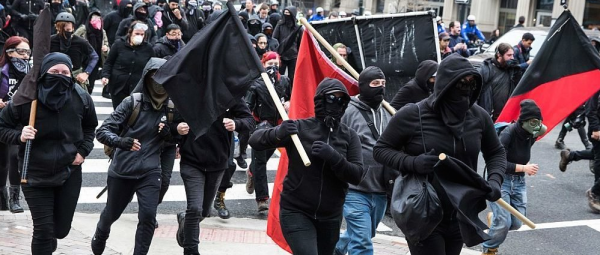
Source: Corriere della Sera
«We condemn any violence and from any source. However, we cannot help but remember that Italy is a Republic founded on anti-fascism, that our Constitution is anti-fascist". These are roughly the words of many exponents of the left wing commenting on the very serious accidents in Turin and in general on what is happening in many places in Italy. Words that precisely revolve around a formula that is felt and resented these days: ours is an anti-fascist Constitution.
He's fine. As it happens, however, history - history, I repeat, and not our personal opinions - should make us ask: anti-fascist yes, but of what anti-fascism? As anyone who has read any book knows, history records many events that cannot fail to pose some content problems when the term anti-fascism is used. They were certainly anti-fascists, for example, those who in Spain burned down churches and shot priests, anarchists and Trotskyists. They were anti-fascists who in 1939 they thought that the Soviet Union had done very well to annex the Baltic countries and half of Poland after reaching an agreement with Hitler, as were those who on our eastern border from '43 to '45 threw a few thousand Italians into the sinkholes.
Anti-fascists and moreover partisans were also those from whose association (the Empire), not sharing the underlying ideas, first the Catholic partisans broke away and then the shareholders led by Parri in 1948-49. Still: Eighteen-carat anti-fascists were also those who in the 1950s did not hesitate to define the United States as "Nazi" while not reserving a single word of solidarity, not even one, to Czechoslovakian or Hungarian anti-fascists, only a few years earlier their comrades in the Resistance and now sent to the gallows with the most unlikely and defamatory accusations by the communist regimes established in their countries. And the terrorists of the Red Brigades and other similar organizations have not always proclaimed themselves anti-fascists - in fact, they say, of the most "coherent" anti-fascism.?
In short, words are often ambiguous. Defining our Constitution as anti-fascist is therefore true on the level of facts - in the sense that it was the work of anti-fascist forces - but on the level of values it does not mean anything precise, if it is true as it is true that the "hooligans" of Turin (copyright of Antonio Padellaro ) they say and consider themselves anti-fascists (and that even hooligans can be in good faith). We should then conclude that between them, who laugh at the law and systematically practice violence, and us, that we also recognize ourselves entirely in this Constitution and consider ourselves anti-fascists, However, there are common values? And which ones?
Someone answers: «The common value is anti-fascism, precisely: di fronte a un vero pericolo fascista si costituirebbe un fronte comune». Ma è una risposta sbagliata. Una risposta che allucinata dal mito della Resistenza, ma nulla sapendo della Resistenza vera (che in realtà fu attraversata da durissime contrapposizioni tra le forze antifasciste, non escluso il vero e proprio scontro fisico), estrapola l’oggi dalla situazione del ’43-’45. Ignorando che oggi, grazie precisamente alla Costituzione, viviamo però in un regime democratico. E che le democrazie si difendono dal fascismo non facendo la Resistenza — come pretenderebbero facendola a modo loro i teppisti di Torino, di Piacenza o di Palermo — bensì applicando la legge. Nelle democrazie il capo della Resistenza è il Ministro degli interni. Point. If it is not - but Minister Minniti appears from every point of view perfectly suited to the role - he must be reminded of his duties, not already replaced by some violent gang leader of the social centers.
If the past teaches anything, Indeed, is that the best favor that a free regime can do for fascism is to renounce the application of the law, the abandonment of the streets and squares to the clash between the violence of the opposing sides. In the Italy of the Constitution, Instead, defending democracy - from fascism as from any other threat - is the sole task of the law enforcement agencies of the Republic. And this is why towards them it is great, and it must be, citizens' debt of gratitude.
Faced with the violent events of recent days which claim to be left-wing, the question to ask is: what political line, what password, they serve to draw the most insurmountable boundary line with respect to this violence? What value serves to distance oneself from it in the clearest way? The password and value of anti-fascism or democracy and the law? If fascism is violence, illegality and suppression of freedoms, well, then its antithesis is not anti-fascism, it is democracy. After all, history also counts for something: while there has never existed a democracy or a democrat who was not anti-fascist, over and over again, on the contrary, people, movements and regimes that identified with anti-fascism showed that they did not have much to do with democracy. Anti-fascism (together with the victory of the Allies) he gave our country democracy, and this remains to his credit. But today there is no need for his violent emulators of the twenty-fifth hour: to guard against dangers, Italian democracy is self-sufficient.
Similar Posts
