Of Flavia Corso
Source: Heretically
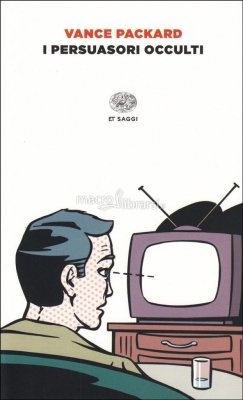
About sixty years have passed since the publication of the book The Occult Persuaders by Vance Packard. It was the 1957, and the American journalist and sociologist had decided to examine the mechanisms that regulated the consumption of the American people. A few years after the end of the war, in fact, we were preparing for the economic boom that would characterize the 1950s. However, the radical change in society had put the communication experts of the time into crisis. With the advent of mass production, companies felt the need to increase sales in order to reach an ever-increasing number of potential consumers. Advertising, In short, it had to transform. The problem that “hidden persuaders” mainly had to deal with (o, if we want, social manipulators) it was the apparent irrationality of the consumer when faced with choosing a product. These persuaders had in fact realized that there were no rational explanations underlying the purchase decision, but the real reasons that led consumers to choose one product over another resided in the unconscious. It was not enough to make a list of the quality characteristics that, rationally, they should have aroused the need to purchase in the American people. Often, On the contrary, this tactic had proven counterproductive, if not downright bankrupt, for many companies. Not even surveys could shed light on consumers' unconscious desires: in fact it was discovered that, in most cases, people lied when asked to give their honest opinion on any type of merchandise.
For these reasons, advertising agencies had quickly realized that, to sell their products, it was necessary to "attack the unconscious" of people, cynically leveraging the secret needs of each individual. Having identified this intimate need, “the public was promised that the only way to satisfy them was to buy this or that product, from air conditioners, to cake mixes, to motorboats".
Read More



 FIFTH COLUMN