

Hegemony of anti-national cultures
Of Luciano Del Vecchio
Source: Appelloalpopolo
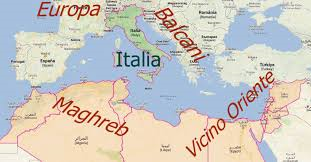
To avoid being overwhelmed by a story that, contrary to what the American political scientist Francis Fukuyama theorized, it never stopped and that, in these years, has accelerated its course dramatically, we should try to think about politics not only with ideologies or sociological categories, but also in terms of geographical-historical and physical-environmental factors, which geopolitics studies and interprets as elements that condition history. Italy, after the death of the homeland, he seems to have almost forgotten history and geography, and with them big politics, which is first and foremost foreign policy, renouncing to play any role on the international scene. In this space, Italians seem to have taken refuge in a sort of dissociative disorder that makes them unable to perceive themselves as people on their land, to recognize themselves in their history and identity, which the Anglo-Saxon historiographical narrative has distorted and altered for about 70 years. Collectively regress to an infantile need for colonial guardianship, happy to be relegated to a foreign province, as in the most politically unhappy periods of our history, abbiamo rinunciato al diritto-dovere di farci guida di libertà e democrazia per i paesi fratelli. In the fluid uncertainty of the present, Italy, to rediscover the ability to recognize oneself in the mirror and be fully aware of one's destinies, needs to rediscover the national interest, which is historically linked to the geographical area it occupies, to its economic development and social progress, to his freedom and that of the Mediterranean peoples, which is also his. The reconquest of popular and national sovereignty cannot ignore the awareness of its geopolitical mission, imposed by a territory that projects into "its" sea for thousands of kilometers of coastline between and towards lands inhabited by peoples, whose peace and security are vital for Italy.
Nation with apparent sovereignty, country reduced to a foreign arsenal, a people historically cursed to slaughter each other in continuous civil disputes in favor of the foreigner on duty, which one or more factions often invoke to invade us territorially or to influence us politically, since the last century we have given ourselves over to the hegemony of smoky anti-national cultures. Proletarian internationalism, clerical ecumenism, Enlightenment cosmopolitanism, all now declined as globalism, have always threatened national cohesion and harmony, in the present, they stretch their deceptive shadows in the form of smug mass self-denigration and of hypocritical and politically polite humanitarianism towards incoming influxes. Now we sink into the abyss of the pro-European dissolution of multinationals and stateless financiers, ignoring that our fate cannot be separated from that of the Mediterranean, how well those who understood, during the First Republic, they dared to make autonomous decisions in foreign policy. Starting with Enrico Mattei, the creator of the great national energy policy, which was followed by the coherent action of Aldo Moro, killed not for "parallel convergences" but because he was pro-Arab; finally to Bettino Craxi, forced into exile by the ambiguous Mani Pulite operation, not for corruption but for Sigonella, become mutually symbolic of an albeit ephemeral manifestation of rediscovered independence. Their fate confirms that any politician or entrepreneur who dares to oppose the marginal role imposed on the country, is eliminated politically or physically. Read More





 Of Caesar Baronius