

Of Alberto Negri
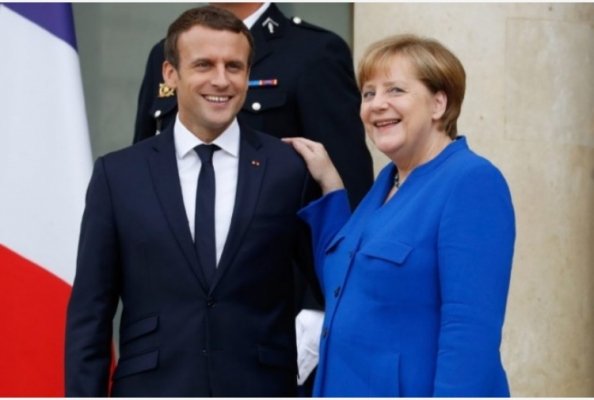
Source: Alberto Negri
Expelled from the Quirinale gate, Italian populism could transform into an unprecedented wave of nationalism in a country that has always demonstrated little attachment to the flag and a much greater attachment to the wallet, which today languishes. Mattarella leads Paolo Savona, an elderly and esteemed gentleman who allowed himself to be exploited by the crafty Matteo Salvini, it was a masterstroke to repel, at least for the moment, the Cinquestelle from the control room, but it could turn into a boomerang.
Go back to the fall of Gaddafi to understand
Italy remains a vulnerable country inside and above all outside, on markets and in foreign policy. Also vulnerable to the theories of an international conspiracy by the European and internal establishment to defend the euro, sometimes cited inappropriately as the father of all Italian troubles. But we must always find a culprit to justify our ignorance. There is no conspiracy, for the moment, but the evidence of the facts. Italy has been a fragile country since 2011 France, Great Britain and the United States decided to eliminate Colonel Gaddafi, its most important ally in the Mediterranean than just six months earlier, il 30 August 2010, had received with great fanfare in Rome, signing contracts worth tens of billions and relying on the Raìs for the control of migratory flows. Not only did Italy not defend it but it bombed it, giving in to the blackmail of its NATO allies who threatened to attack Eni's terminals.
It was Italy's biggest defeat since the Second World War. The consequences were devastating: colossal monetary losses and a wave of migration that, year after year, it destabilized the political framework of the country. From that 2011 Italy's allies and competitors have undermined our interests, leaving us alone and adrift. While yesterday in Rome the most lacerating political crisis of recent years was taking place, Emmanuel Macron has called an international conference on Libya for tomorrow in Paris which "will take place under the auspices of the United Nations" to set the date of the elections.
The new one “guerra” in Libya
What is Macron doing? In a nutshell, under the nose of Italy, is trying to take away what's left of Libya. The French president, who had said he was ready to collaborate with the former prime minister in charge Conte (without knowing, like everyone, not even who he was), summoned the Prime Minister of the Tripoli government Fayez al Serraj and General Khalifa Haftar to Paris, lord of Cyrenaica and ally of the French and the Russians with the aim of taking away the political and economic initiative in Libya from Italy, including oil. To achieve this result he also invited Aqila Saleh to Paris, president of the Tobruk Parliament, e Khalid al Meshri, president of the High Council of State, exponent of the Muslim Brotherhood. Only Misurata opposed France's strategy but this weak Italy certainly will not support it.
An executive that is too pro-Russian
Then there are the media aspects of an anti-Italian campaign that internal forces could exploit to claim the "mutilated victory" of the last elections. After Der Spiegel called us “aggressive freeloaders”, highlighting Savona's fierce criticism of Germany, the Frankfurter Algemeine warned that the German services, in the case of a yellow-green government, they would have suspended relations with our intelligence because the executive would have been too pro-Russian. The Salvini-Di Maio contract is under attack for the lines dedicated to the cancellation of sanctions on Moscow, a measure that Italy could not take without the agreement of Europe.
Being placed under police command
But all in all these are amenities compared to what can happen on the markets. The summoning of Carlo Cottarelli to the Quirinale has the air of a commissionership in view not only of possible elections but also of Mario Draghi's farewell at the beginning of the 2019 by the European Central Bank. The president of the republic who does not like anti-Germans and anti-euro people _ and not even those who are not friends of Americans and Israelis _ is counting on the former spending review commissioner to keep the Italian boat afloat which has so far benefited from the ECB's expansive monetary policy and economic growth.
The growing resentment
But the relative "truce" on the financial markets is not a given and it will not even be so simple to make public opinion digest that the winning party in the last elections will perhaps still have to go into opposition. The anger of disappointment may be a will-o'-the-wisp but the country has been harboring for years a dull resentment towards the ruling or presumed ruling class which has so far been ignored or dealt with badly. All this could become a trap and really trigger a sort of tension strategy that is fatal to the country's interests. The crisis, the real one, of the nation has just begun.
