

 He became very famous and followed by selling thousands of copies of books in which he outlines a strange hypothesis: the Biblical Texts, if correctly interpreted, they would contain the testimony of the visit of alien peoples to Earth in our past. The Bible, so, he would talk about anything but God. Below, a precise refutation of Biglino's hypotheses, starting from a historical perspective, philological, anthropological and archaeological.(Taken from chapters XIII and XIV of the essay: “UFOs and ALIENS”)
And: Gianluca Marletta, “UFOs and ALIENS. Origin, history and wonders of a pseudo-religion", Irfàn Publishing (chapters XIII and XIV)
In Italy, country notoriously allergic to reading and "cultural" issues, represents an unprecedented phenomenon: we are talking about Mauro Biglino, author of books that have sold tens of thousands of copies at home and abroad, real "pop star" of a certain self-styled "alternative" culture, with hundreds of interviews and conferences under his belt and highly visited sites and YouTube channels dedicated to him. (…) But what does Biglino say that is so revolutionary and shocking? Actually, the works of this author largely take up the themes of classical paleoastronautics, elaborating in particular elements already present in Zacharia Sitchin's books. The peculiarity of Biglino, However, it is his presentation as a "philologist" and "biblical scholar", something that cloaks his work with an aura of scientificity and claimed objectivity that other authors had never been able to boast. (…)
WHO IS MAURO BIGLINO?
Scrolling through the web pages of his supporters, the figure of Biglino is surrounded by a mythical aura. For many, he has a past as an official translator for Edizioni San Paolo o, really, as official curator of the CEI (Italian Episcopal Conference) for the writing of the Bible. For others, it would have translated well 19 books of the Old Testament and would have been the key point of reference for Italian biblical scholars. (…) But what is the truth of the facts? (…) Like Sitchin, Biglino is essentially self-taught: he does not obtain any degree or qualification other than a high school diploma and his knowledge of Hebrew is essentially individual. Despite having no publications under his belt at the time, for some reason it was noticed by the managers of Edizioni San Paolo, a Catholic publishing house, (which must be distinguished from Edizioni Paoline, as they are two different companies), engaged in the publication of works of a religious nature.
Despite the “legend” that arose later, However, Biglino has never been the "official translator" of San Paolo, and this for the simple reason that this publishing house publishes books of various genres and contents and is not a translation company, so it doesn't hire "official translators". In concreto, the fruit of this collaboration, in fact rather occasional and based on the friendship created with some managers of the publishing house, consists of two translations present in as many books published by Don Piergiorgio Beretta, priest of the Congregation of Saint Paul: The five Meghillòt (2008) and The Minor Prophets (2010).
Nevertheless, already in 2009 – therefore, precisely in the key period of his collaboration with San Paolo – Biglino began a completely different type of partnership with Uno Edizioni, publishing two books with a decidedly anti-religious and anti-Catholic slant such as the Catholic Church and Freemasonry and Resurrection and Reincarnation: comforting fairy tales or reality? (both of 2009), while in 2010 his best seller will also be released: The book that will forever change our ideas about the Bible, the first of the “alien” series. (…), from this moment a dazzling career began for Biglino. (…) The content of all these essays can be summarized in the following points:
– The Bible is not a religious book, it doesn't talk about anything that has to do with metaphysical issues, nor of any God;
– To a strictly literal reading, it would be clear that the Bible is first and foremost a historical book that narrates the events of a presumably "alien" race said of the Elohim, of whom "the Elohim of Israel", Yahweh, it would be just one of many;
– All the Hebrew terms in the Bible, if interpreted literally, would clearly refer to the story of these "aliens" who arrived on earth;
– Any religious interpretation, esoteric or metaphysical of the Scriptures would only be an "ideological superstructure" subsequently imposed by the caste of priests to dominate the people and consciences. (…)
THE BIGLINO METHOD
 (…) In summary, the Biglino method and the reasons for its success can be defined in the following points:
- Unlike other partisans of paleoastronautics, Biglino flaunts the title of alleged "biblical scholar". His personal story (a bit mythologized indeed) is configured narratively like a hero cycle where the protagonist, initially on “orthodox” positions, he converts to aliens on the road to Damascus, becoming a champion of free thought against religious obscurantism. This creates an immediate "empathy" and identification between the author and an audience generally made up of anti-clericals or in any case people strongly opposed to religion, especially the Christian one.
- The idea that the biblical text should be reduced to its immediate "literal" meaning. Biglino labels all spiritual interpretations as mystifications in advance, symbolic or metaphysical of the Scriptures. It is he who created the rhetorical form of the “Let's pretend that…”; although, as we will see, his “literal and objective” interpretations of biblical terms are, very often, much more "subjective" and one-sided than one might imagine from a superficial reading of his books.
- Biglino, as or even more than the previous followers of paleoastronautics, it literally glosses over the anthropological context, cultural and historical: “his” Bible is a decontextualized text, dove any reference to culture and traditional vision is excluded from the start. To propose to readers the idea of an "iron coherence" of his speech, Biglino eliminates any comparison with other disciplines than those, precisely, the most immediate reading of the text.
- A sensational hypothesis like Biglino's would be needed, moreover, also of a comparison with archaeological data; but this aspect, once again, is cleverly avoided by the author. The very few times Biglino refers to archaeological discoveries, as we will see, the data he reported are completely wrong, which (while wanting to safeguard the good faith of the author) it is significant of the attitude he used.
- One of Biglino's "strong points". it is the unscrupulous use of sources, to say the least (not just original texts, but also dictionaries, biblical commentaries, ecc.) which are reported in the form of extrapolated excerpts or even, in some cases, manipulated just enough to support his hypothesis. The whole thing, evidently, trusting in difficulty or impossibility, by its audience, to consult the original sources.
- Another of the rhetorical devices frequent in Biglino's work is that of use expressions that are both peremptory and vague of the type, “Researchers say…”, “Biblical scholars are now all of the opinion that…”, “The Jewish rabbis themselves agree on this point…”, ecc., however, being careful not to go into the details of his statement.
BIGLINO'S HYPOTHESES COMPARED WITH ANTHROPOLOGY AND HISTORY
One of the aspects that many readers of Biglino tend to forget once penetrated by the "suggestion" induced by his works, is that such a sensational hypothesis as the "alien" origin of humanity and the assertion that the sacred books are only "reports" of the encounter with such "visitors", to be truly credible, it should be somehow consistent with various disciplines and fields of knowledge. (…) Now it is evident that, even regardless of any traditional interpretation, theological or esoteric, the modern Comparative History of Religions has largely highlighted the existence of a symbolic language, of a cosmology and metaphysics widespread among many cultures and characterized by evident similarities of meaning.
From this point of view, for example, a historian of religions cannot help but be astounded when reading Biglino's commentary on Genesis, where the “separation of the upper waters from the lower ones” (symbolic element present in many traditions) (2) is reduced to the construction of a "dam" by alien travelers in the mood for reclamation works. The same symbolism of the Primordial Waters, which Biglino reduces to those of an alleged lake over which the aliens initially circled with their spaceship, it is actually present in countless traditions as a symbol of primordial chaos and the initial indifferentiation of forms (as we have already seen in the case of Mesopotamian myths).
(…) Moving on to another reading plan, it must also be said that the story proposed by Biglino does not even seem to have any kind of historical plausibility or coherence. Se, as we had already said regarding Sitchin's narration, It's not really clear what reason these ultra-technological Annunaki had for having crude hominids carry out excavation and reclamation work that, presumably, such beings could have easily accomplished this with their extraordinary technology, even the exploits of the "alien Yahweh" contain truly bizarre contradictions.
Biglino claims that Yahweh was a quarrelsome Elohim ready to fight and equipped with a powerful "space ship" equipped, evidently, with every possible weapon: How come, except for a few specific operations (like opening the Red Sea), this alien instead prefers to entrust the outcome of "his" wars to an army of Bedouins from the late Bronze Age? For what reason, if the alien hypothesis is true, Yahweh would have needed to “test the hearts of the Israelites” during a long journey 40 years in the desert along an Egypt-Palestine route that any modern plane would cross in less than an hour? Still: if the alien hypothesis is true, for what reason Yahweh, during the clashes between "his people" and tribes such as the Amalekites, it doesn't solve everything with laser beams or missiles? Why is Moses forced to "pray" to Elohim Yahweh on the mountain and only thanks to such prayers are the Israelites able to win in battle? (3) And how come, una popolazione che ha potuto beneficiare addirittura dell’addestramento militare di un comandante extraterrestre, una volta raggiunta la Terra Promessa dovrà subire il giogo di Filistei, Siriaci, Babilonesi, Assiri, Persiani, Greci e infine Romani? (…)
LE IPOTESI DI BIGLINO E I DATI ARCHEOLOGICI
However, l’ambito dove le ipotesi paleoastronautiche finiscono per naufragare in maniera davvero irrimediabile è, più d’ogni altro, quello dei dati archeologici. And indeed, proprio per questo motivo, nei libri di Biglino gli accenni all’archeologia sono esigui o, as we will see, basati su vere e proprie incomprensioni, dicerie o mistificazioni. La domanda che in campo archeologico si pone ogni volta ai sostenitori della paleoastronautica rimane la stessa anche riguardo a Biglino: if the past millennia have seen such a coming and going of aliens and spaceships on Earth (e Yahweh, let's remember it, he would have been just one of the many Elohim who would have brought good and bad times on our planet for millennia), because there are no findings that testify to this? Without necessarily expecting to find a computer or parts of a spaceship in an Egyptian or Sumerian tomb, because it is not possible to find even a fragment of a transistor or a banal leak of fuel in Tel Megiddo or among the excavations of Jericho?
And indeed, not by chance, looking for archaeological references in Biglino's work is truly a difficult task. In fact, the cases in which the "biblical scholar" refers to archeology are essentially three.
We find the first example in the best seller that gave rise to the success of the Turin writer: The book that will change our ideas about the Bible forever. A p. 63, it is written that, among unspecified ruins of the "Ugaritic civilization" (a Semitic culture of the Late Bronze Age, 15th–13th centuries to. C., which takes its name from the city of Ugarit in present-day northern Syria), would have been found and the oyster (ceramic fragment containing inscriptions) with a dedication written on it to Yahweh and his Asherah. Biglino's intent is evident: it is intended to imply that Yahweh was a divinity already known within the polytheistic pantheon of the Middle East and that even a female companion was attributed to him (the Asheràh often designate the female aspect in the "divine couples" of the ancient Canaanite religion). Furthermore, being a very ancient testimony (13th century BC. C.) and therefore prior to historical Israel, it is intended to imply that the cult of Yahweh was only one of many in the ancient East.
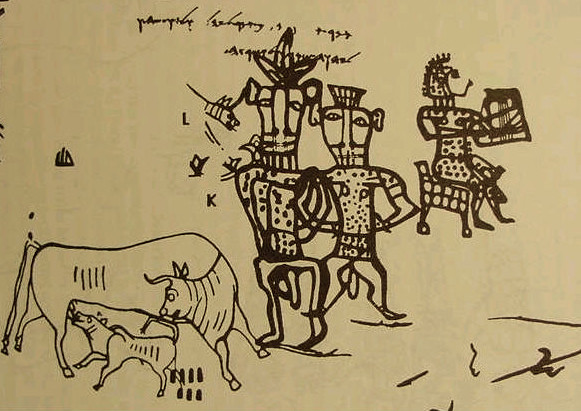 Actually, the ostraca exists, but it has nothing to do with the Ugaritic culture of the Bronze Age: it's about, rather, of a ceramic fragment found (not in Syria) but on the site of Kuntillet Ajrud, in Sinai (2000 km further south, al confine con l’Arabia), and dating back to the 8th century BC. C. circa (half a millennium after the disappearance of the Ugarit culture). Registration, in a mixed Hebrew-Phoenician alphabet, it would consist of a blessing in the name of "Yahweh of Samaria and his asherah". (4) The historical reference is therefore to the kingdom of Israel (the Northern Jewish kingdom, with capital Samaria) in a period in which, according to the Bible itself, the Jews of that kingdom were losing, under the influence of the nearby Phoenician peoples, the purity of monotheism, "combining" the cult of Yahweh with that of other divinities and in particular of a "female counterpart" (Asheràh), which is constantly stigmatized in the texts of the Chronicles and in the books of the Prophets. It's obvious, Therefore, That it is enough to "mistake" the date of a discovery by a few centuries, to assign it a very different meaning.
In the book There is no creation in the Bible, (pag 73) Biglino instead talks about a “stele” that would be kept at the Carthage Museum, in Tunisia, and that (as we will see later when talking about Biglini's interpretation of the term Ruach) it would represent an extraterrestrial spaceship in a stylized form.. According to Biglino, the find would have been dated to 1.950 a.C., but "some experts" would attribute it to the Sumerian-Akkadian civilization while others to the Phoenician one (which, according to the author, they would come from the same "geographical area").
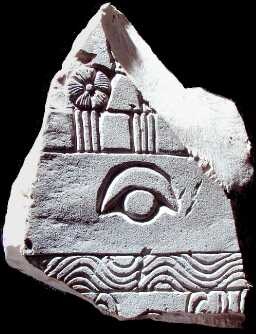 Such statements, in our opinion, they are truly paradigmatic of the Biglino method. The author, Indeed, he refers to "some experts" who, however, never cites precisely; it confuses and almost overlaps two cultures (the Akkadian one of the 3rd-2nd millennium BC. with the Phoenician one of the 1st millennium) separated by thousands of kilometers away and originating from two very different areas of the Middle East (In the 1950 a. C., date that, according to Biglino, would have been attributed – by whom? – to the stele, the Phoenicians, however, were still to come). Actually, the enigmatic stele is not found in the Carthage Museum, but in the private collection of a certain Leo Dubal, located in Paris, it does not date back to more than the 3rd-2nd century BC. and is of late Punic origin. (5) The symbol of the alleged “spaceship”, Furthermore, it is well known to archaeologists and has nothing to do with alleged Sumerian or Akkadian hieroglyphs representing “alien spaceships” but, very simply, with the symbol of the moon goddess Tanit, present on countless stelae from Carthage. (…)
OUTLINES OF BIGLINIAN EXEGESIS
Despite the total incompatibility with the historical context, cultural, anthropological and archaeological of the ancient Middle East, the hypothesis of Biglino, However, claims to have its “strong point” in the literal exegesis of biblical terms. (…) For space reasons, evidently, our examination will be limited to only a few of the most important cases: those who, on the other hand, wish to delve into the question of criticism of Biglino's theses and exegeses in a more exhaustive manner will be able to consult the numerous specialist studies that have appeared in recent years. (6)
(…) The workhorse of Biglini's exegesis is certainly the peremptory and revolutionary assertion that the Bible does not speak of God. According to Biglino, really, in the Scriptures there would not even be a term to express the "concept" of God e, therefore, it would be a contradiction to consider the Bible a sacred text. The term commonly translated as “God” in Western languages (in Hebrew Elohim) it would in fact have many other meanings and more, being a plural term, it would not in any way indicate the single God of monotheisms but rather a set of "beings" (which Biglino identifies with “aliens). In his essay The Bible is not about God, (p. 58) Biglino states:
Il termine God, Elohim, it is in fact variously traced back to the most diverse roots which summarize the following meanings: “those from above”, “shining”, “powerful”, “legislators”, “governors”, “judges”, "ministry". As you can clearly see, none of them postulate the term God, che non è neppure preso in considerazione nelle ipotesi formulate dalla filologia accademica.
And again:
So, il cosiddetto “libro sacro” per eccellenza è scritto in una lingua che non conosce né possiede il termine che identifica il centro, il fondamento, il nucleo irrinunciabile da cui ogni sacralità prende origine: Dio.
First things first, c’è da riconoscere che il discorso di Biglino contiene una qualche verità: nella lingua ebraica non esiste una parola che possa comprendere il “concetto” di Dio, così come – e questo sorprenderà non poco il “biblista” torinese – tale parola non esiste in nessuna lingua umana. And indeed, se prendiamo il termine “Dio” come sinonimo di Essere Supremo o ancor di più di Assoluto, è evidente che nessun termine ne potrà mai comprendere il “concetto” in pienezza ma potrà, at most, evidenziarne alcuni aspetti per analogia con le realtà terrene.
As, for example, anche nelle lingue indoeuropee, il termine “Dio” (al pari del Gott germanico, del Deus latino, del Theòs greco, ecc.), derivano tutti da una radice indoaria, Djew, che significa letteralmente “splendente” (la stessa da cui deriva il termine “giorno” in latino – dìes – in inglese – day – ecc.). Therefore, se vogliamo “stare al gioco” di Biglino, nemmeno le nostre lingue europee possiedono una parola che indichi letteralmente il concetto di Dio, benché non si possa affatto dire che tale “concetto” (se si vuole usare questo termine) non esista.
But returning to the term Elohim, also in this case it is clear that Biglino uses the rhetoric of "academic philology states that...", without then bothering to specifically cite official texts to support his hypothesis. Alternatively, Biglino uses definitions and concepts taken from some Biblical Hebrew dictionaries but amending them with definitions and meanings that could contradict his theses. About that, the dictionary most used by Biglino, il Brown-Driver-Briggs Hebrew and English Lexicon, alla voce God Elohìm (483),141 carries three meanings: – 1. Rulers, judges (…). The divine ones, superhuman beings including God and angels (…) of the, ecc. – 2. Intensive plural. God gives it (…) – 3. Il (vero) Dio. YHWH is (il) Dio. Needless to say, of all three definitions, Biglino appeals only to the first (more generic) e, naturally, the third one goes completely unnoticed (more specific and unambiguous), (…).
The root from which the term Elohim originates, of the rest, it is used to designate the gods or Divinity in all Western Semitic languages: it is found in Canaanite Ugaritic as ʾlhm, in Biblical Aramaic as ʼĔlāhā, and later in Syriac Alah “Dio”, and in Arabic to indicate generically the "deities", ʾilāh or how Allah to indicate “The” One God (article Al + ʾilāh).
On the question of the "plural" of the term Elohim, which aroused many inferences both in Biglino and in previous scholars of paleoastronautics, the Encyclopedia Judaica (edition 2006) provides the following examples and explanations (the italics are ours):
The word eloah “God” and its plural elohim, è apparentemente una forma allungata di El (…). (Elohim) è usato molto raramente in riferimento ad un dio straniero e poi solo in un periodo di ritardo (…). In tutti gli altri casi ci si riferisce al Dio d’Israele (…). In riferimento al “dio” d’Israele viene utilizzato molto spesso – più di 2000 volte – e spesso con l’articolo ha-elohim, “il (vero) Dio”. (…) alcuni studiosi lo considerano come un plurale che esprime un’idea astratta (ad esempio zekunim, “vecchiaia”, neurìm “tempo della giovinezza”. (…) È più probabile, but, che sia venuto da un uso cananeo generale. Nella lettera al Faraone el-Amarna è spesso designato come “miei dei (ilani’ya) il dio-sole”.
After all, molti termini ebraici, quando esprimono concetti di grande importanza, are reported in the plural, among them: hayim (vita), Rahamim (misericordia), ba'alim (master), ecc. The “concept” of God, so, it is perfectly present in Israel and in the Semitic context and the use of the term in the plural is widely documented in the cultures of that area and of that era also to designate eminent concepts whose meaning however remains in the singular.
Wanting, therefore, take Biglino's good faith for granted, it is clear that his "self-taught" preparation of the Hebrew language is not at all sufficient to convey the full meaning of a translation, especially with regard to a complex text with multifaceted meanings such as the Bible.
RUACH: SPIRIT OR “ENGINE SOUND”?
(…) another of the points characterizing Biglino's exegesis is the interpretation of the term Ruach, normally translated as “spirit” in Bible translations, to such an extent that "the Spirit of Elohim that hovered over the primordial waters" would be nothing other than the alien spaceship suspended over a body of water. The Holy Spirit, the Spirit of God who descends on men, and all other theological expressions linked to this term would be, so, nothing but late and senseless metaphysical fables. Actually, reconstructing the reason for this Biglini interpretation is a somewhat complicated but illustrative matter, once again, of a certain “method”. First of all, Biglino traces the term Ruach back to one (presumed) Sumerian expression RU-A which would be present in certain very ancient tablets:
This word (ruach) in fact, it has much older origins than the Jewish representation we have reported; has its roots in the Sumerian language in which the sound RU-A was rendered with a very explanatory pictogram: The design contains two elements: a superior object (I sound RU) which is located above a body of water (sound A). (M. Biglino, The Alien God in the Bible, cit., p. 41).
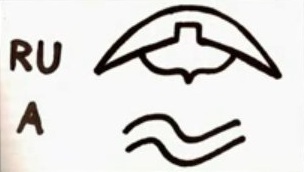 In the reproduction of this hieroglyph presented by Biglino himself, moreover, the RU-A sign really looks like the visual reproduction, however stylized, of the famous spaceship that "glides on the waters". It would therefore seem that indeed, at least this time, the Biglini hypothesis can count, if not on proof, at least on a significant clue. And yet it isn't like that. If you consult the prestigious Hebrew and Aramaic Lexicon of the Old Testament alla voce ֫רוַּ ח Ruach (8704) we immediately notice that this Hebrew term has its correspondent in all the main ancient and modern Semitic languages (in arabo Ruh; in pink Rh; in Aramaic Rwh/rwh’; in Ugaritic Rh, ecc.); on the contrary, it has no correspondent in Sumerian and this for a simple reason: Sumerian was not a Semitic language and there is no demonstrable derivation of the Semitic term from the Sumerian one.
Actually, Biglino's error is taken up by that of another "independent" researcher, tal Christian O’Brien, which simply refers to very dated sources. O'Brien, Indeed, to formulate his hypothesis on the existence of the term RU-A in Sumerian, it seems to hark back to the old work of George Barton, The Origin and development of Babylonian writing, dating back even to 1913. To be clear, this work was published before most of the Sumerian texts were studied and translated (the discovery and beginning of excavations at Uruk, for example, it is from 1912). When in the 1936, l’archeologo e filologo Adam Falkenstein pubblica Archaic texts from Uruk (MORE 1), the hieroglyph that Biglino and O'Brien identify with the sound RU- it is instead identified with the Šagan sound. Leaving aside these “new” discoveries (but they are almost gone 80 years from the publication of such research), Biglino then tries to validate his hypothesis with the now well-known depiction present on the "Akkadian" or "Phoenician" stele that we talked about in the previous chapter: che in realtà, as already said, è una stele punica risalente a qualche secolo prima di Cristo e che non rappresenta certo “simboli sumeri” di 2500 anni prima ma, più semplicemente, il simbolo della dea Tanit.
KAVOD: L’ASTRONAVE DI YAHWEH?
Alcune interpretazioni bigliniane di termini ebraico-biblici, volendo seguire il metodo letteralista da lui stesso propugnato, possono portare a soluzioni davvero grottesche e persino involontariamente comiche. È questo il caso del termine Kavòd, che nelle Bibbie è tradotto come “gloria” o “onore” (in specifico, la Gloria di Dio, ovvero la sua manifestazione visibile e immanente), ma che Biglino identifica come sinonimo della potente e pesante astronave dell’Elohim Yahweh.
Yes The book that will forever change our ideas about the Bible Biglino ci informa che (i corsivi sono nell’originale):
The verb from which it derives (the term Kavod n.d.a.) indicates the concepts of: “to be heavy, have weight, be honored, be tough". (…) The Greeks translated this term with the word doxa, which is in turn rendered in modern languages as “gloria”. The translation of this term has always been conditioned by the vision of divinity which - as we have seen - does not correspond at all to the representation of the Elohim present in the Old Testament: in fact the Elohim were anything but spiritual beings! (…) This variation in meaning derives exclusively from the need felt by theologians to find a way to reconcile the term kavòd with the idea of God that they have artificially elaborated. (pag. 88)
(…) But the question, naturally, it is much more complex. First of all, as is well known, Hebrew and Semitic words change significantly in meaning depending on their vocalization: essentially, since Hebrew and related languages do not write vowels, the same consonant root can give rise to conceptually very different words. In this specific case, the Semitic root is KVD (the KBD) which, depending on the vocalizations, takes on very different meanings, among which: KaVoD (honor, gloria), KaVéD (heavy, but also liver), ecc.
Of the many meanings, naturally, Biglino chooses the one that best suits his personal interpretation: “the burden of Yahweh” is a spaceship, and this is very convincing to his followers who, now influenced by the fascinating hypothesis, they are ready to accept anything. As, for example, when in Exodus 24, 15-17 it is said of Moses who climbs the mountain to admire the "Yahweh-kevòd" which has taken its place on the top, the image that Biglino offers to its readers is similar to that of the spaceship in Close Encounters of the Third Kind that lands on Devil's Peak.
If the image of the "spaceship over Sinai" can be very suggestive and even, somehow, vaguely plausible, other images however are decidedly less so. Always following Biglino's method and literally translating Kavòd as "spaceship", Indeed, many biblical passages would sound this way: - "Gentleman, you are my defense, you are my spaceship (kavod) and lift my head" (Salmo 3, 4); – “If I look at your sky, work of your fingers, la luna e le stelle che tu hai fissate, che cosa è l’uomo perché te ne ricordi e il figlio dell’uomo perché te ne curi? Eppure l’hai fatto poco meno degli angeli, di astronave (kavod) e di onore lo hai coronato (Salmo 8, 4-6); – “Or dunque fuggi a casa tua! Avevo detto che ti avrei colmato di astronave (kavod); ma ecco, Dio ti ha impedito di riceverli!” (Numeri 14, 11-12); – “Date al Signore, figli di Dio, date al Signore astronave (kavod) e potenza, date al Signore l’astronave (kavod) del suo nome, prostratevi al Signore in santi ornamenti” (Salmo 29, 1). Naturally, qualora si voglia “stare al gioco” fino in fondo, tra le tante traduzioni possibili potrebbe esserci anche quella del IV Comandamento che, tradotto tradizionalmente come “Onora il padre e la madre” potrebbe anche, alla luce di tale esegesi, translate with: "Astronaut (cab) your father and your mother".
 In the next essay The Bible is not about God, Biglino, however, takes things up a notch, suggesting that the kavod does not strictly mean the entire spaceship of the Elohim, but rather a weapon mounted on the spaceship itself:
Continuing the brief list of these singular characteristics, remember that those beings traveled on flying machines called ruach, kavod, merkavah, to which detailed analyzes have been dedicated in my previous books. I'll just highlight a curiosity: (…) I invite readers to type the address kavodcustom.com into any search engine: they will have a surprise. I would like to point out that the Hebrew letters with which the כבוד logo is written are not modern but are precisely the Old Testament ones. (pag. 65)
The "twist" created by Biglino for the benefit of his readers would be the logo of an American arms manufacturing company, la Kavod Custom, which uses the biblical Hebrew term as the name of the company. At least in this case, so, Biglino seems to be right! And its enthusiastic readers can easily be fooled into thinking that the term kavod is really a synonym for "weapon"., since a modern company still uses it.
He is the researcher Daniele Salamone (7) who actually reveals the "enigma" to us simply by contacting the owners of the selling company by email who explain that, actually, the term was used not for some reference to the biblical text but rather, rather, for the use that Israeli army soldiers would make of it as an "informal greeting" (kavod can also be understood as “honor” e, precisely, like “glory”). Once again, in the eyes of those who want to see, the "Biglino method" therefore appears as a bizarre salad of misunderstandings and jokes which can certainly be "seductive" in the eyes of many but which, ultimately, is absolutely devoid of any foundation.
—————————————————————————————————————————————————–
NOTE:
- In un’intervista con Italo Cillo per il podcast Tempo di Cambiare (www.italocillo.it), Biglino ha affermato a tal proposito: “(…) nel frattempo io ho iniziato a scrivere i miei libri biblici, (…), e ovviamente il rapporto con loro si è interrotto immediatamente, perché capisco che loro non possono avere tra i loro traduttori uno che scrive e dice le cose che scrivo e dico io”. Actually, as we have seen, it was Biglino who left Edizioni San Paolo at the time, evidently, perceived the possibility of exploiting a much more popular line of "studies".
- In traditional symbolism, the separation of the Upper Waters (which will form Heaven and therefore the Spiritual and supraformal World) from the lower ones (which will generate “the world of forms”) it is one of the most interesting and most widespread cosmogonic passages in the religious language of humanity. This is the division of the two poles of the event, analogous to the Purusha and Prakriti of the Hindu Tradition and of the same Yin-Yang of the Far Eastern Tradition (cfr. R. Guenon, Symbols of the Sacred Science, cit., Cap. IX The symbolic flowers; cap. XIX The hieroglyph of Cancer; cap. LVI The passage of the Waters).
- Exodus 17, 8-13.
- Bonanno, Archeology and fertility cult in the ancient Mediterranean, University of Malta, 1986, p. 238
- D. Salamon, The Bible is not a myth, cit., pp. 397-400.
- In particular, we highlight the two exhaustive essays that we have already cited several times in the notes: D. Salamon, The Bible is not a myth; e D. Arrichiello, Elohim. The test of the alien god. Personally, although I do not share some positions of excessive "biblical literalism" present in these works, they remain a precious source of information for the benefit of those who wish to engage critically with Biglino's works. We also remember the online sites: www.ame-confutatio-blogspot.it and the videos published by the youtuber “Luce Originaria” (https://www.youtube.com/channel/UCCwcR0yh9zAulrHAJJ6o3Q/videos).
- Salamon, KavodCustom.com and Yahweh's Firearms, in http://danielesalamone.altervista.org/kavodcustom-com-le-armi-fuoco-yahweh/, archived on 09 August 2016.
source – http://www.gianlucamarletta.it/wordpress/2017/12/confutazione-biglino/
