Syria: terrorists confiscate Christians' assets

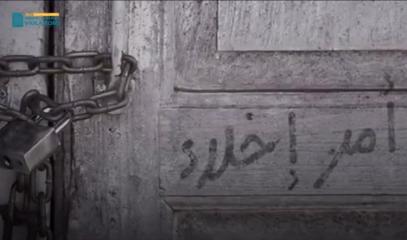
The project of states such as Israel and Saudi Arabia, implemented with the complicity of the West, it's well known: erase the Christian presence in the Near East. The article we are reporting denounces yet another piece of this criminal project: terrorist gangs (“moderates”) they confiscate the assets of Christians in Syria, as has already happened in the Christian villages of Palestine in 1948.
Idlib, Al Nusra confiscates the assets of escaped Christians
Da giorni il gruppo sorto da Al Qaeda ha diramato avvisi secondo cui “tutti i beni dei cristiani sono considerati bottino di guerra e di conseguenza verranno sequestrati”. The expropriation does not concern the few Christians - all elderly - present in the city. The province is almost entirely in the hands of Islamic terrorist groups or fundamentalist groups. Only a small part is under the Free Syrian Army.
Read More

Share

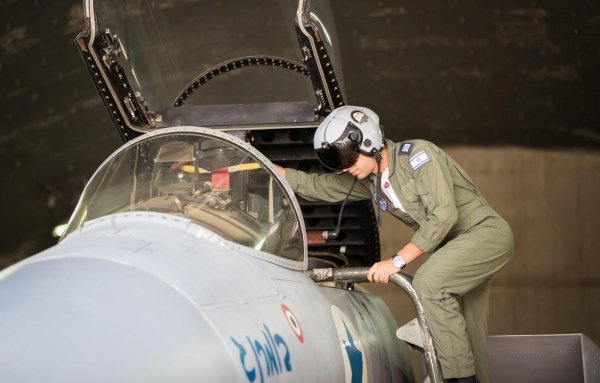
Why Israel struck Syria immediately after the Idlib agreement

Of Fulvio Scaglione
Why Israel struck Syria immediately after the Idlib agreement
Source: The eyes of war
The news of the latest events in Syria, from the first Russian bombings on Idlib province to American threats, from the Russian reconnaissance plane shot down by Syrian anti-aircraft due to the maneuvers of Israeli fighters to the missiles on Latakia to the phosphorus bombs dropped by the Americans on Deir Ezzor, it's obviously dramatic.
But the political background is more complex than it seems, in a certain sense, even less worrying. The game is the same as usual: control of Syria. Or better: the control of its fragmentation. A very powerful coalition for seven years, which goes from Saudi Arabia to the USA, from France to the United Kingdom, from Türkiye to Qatar, passing through a long series of countries that have been or are "de facto" accomplices, works to disintegrate the political and territorial unity of Syria.
These countries have not always shown perfect unity of action or political vision. Turkey, for example, after the failed coup of 2016, which Recep Tayyip Erdogan considers inspired by the USA, it took an autonomous path and built a sort of understanding with Russia and Iran. Nonetheless, that has always been the goal, under the slogan “Assad must go”. Such an important goal that, to reach it, the strange coalition has gradually bet on different horses. Read More

Share

To win the game in Libya, Italy must ally itself with Putin

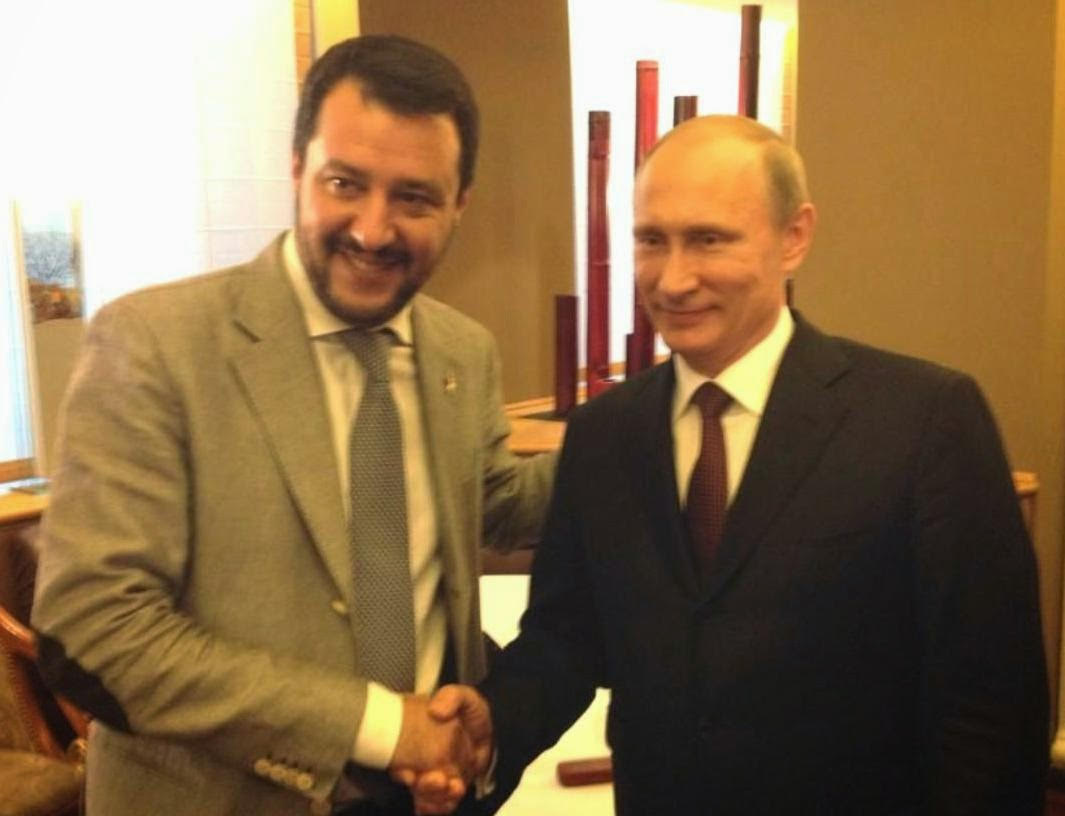
Image results for Salvini and Putin
In the crisis in Libya, Italy has a rival, the France, and an ally, the United States. But there is another actor, fundamental and until now on the sidelines, which can be decisive in resolving the conflict: the Russia.
Another base for the Mediterranean
Although the world's attention on Russian operations is naturally focused on Syria, Libya represents a fundamental point in the Kremlin's Mediterranean agenda. For Moscow, il Mediterranean represents the natural outlet towards the Atlantic. Controlling or in any case guaranteeing the presence in the Mediterranean therefore translates into the ability to emerge from the shell of the Black Sea and obtain positions in the intermediate sea between Russian ports and the ocean.
The Mediterranean is needed. And therefore Libya is needed, given that the conflict that has been shaking the North African country for years mainly concerns the coasts, where there are ports, arsenal, possible military bases e, inevitably, the terminals of gas and oil fields.
Support for Haftar Read More

Share

Libya, the secret war of Paris: special forces deployed by Macron

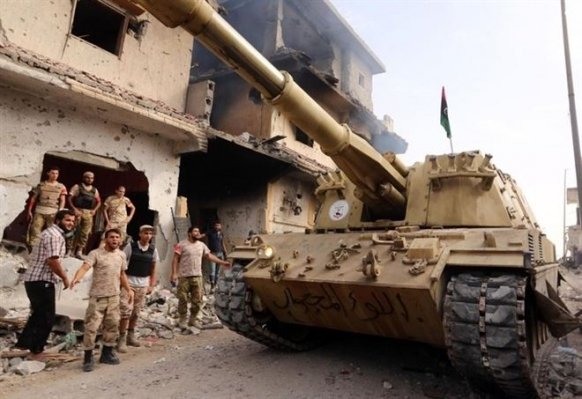
Image results for THE EYES OF WAR IN LIBYA
THE EYES OF WAR
Of Davide Bartoccini
A silent contingent of special forces and agents of DSGE secret services who operate in the Libyan theater for over two years: officially in "anti-ISIS function", but often close to the actions of the armed forces led by the general Khalifa Haftar. The man on the rise in the Libyan crisis who risks overwhelming the Tripoli government (Gna).
Italy is not the only European power to have a contingent of special forces engaged in “front line” on Libyan soil. France too, which according to what was reported in the past by The Mondeis waging a “secret war” in Libya, has a task force of special forces and military operators in the field Dsge – General Directorate of External Security – press the database Benina air base, east of Benghazi. The presence was also confirmed by the UN special envoy Martin Kobler .
A contingent of one hundred and fifty men, according to the latest rumors dating back to 2016, which may have been reinforced by additional units after some losses recorded, and following the continuous escalations that have reached their peak in recent days: when clashes in the outskirts of the capital saw some mortar shells fall near government buildings and embassies, forcing the evacuation of personnel - including Italians - from Tripoli. Read More

Share

The new war in Libya? It's just the old one, dirty, French colonialism

Of Fulvio Scaglione
The new war in Libya? It's just the old one, dirty, French colonialism
Source: linkiesta
The new one, yet another crisis in Libya, with the government of Fayez al-Sarraj on the brink of the abyss due to the attack by rebel militias, It has a very complicated outline, which includes historical rivalries between tribes, the role of Gaddafi's former hierarchs, the sharing of oil revenues, the interference of a long series of countries ranging from the USA to Great Britain, from France to Italy, from Russia to Egypt, from Türkiye to Qatar.
But the substance, at least in the reality of recent years, it's much much simpler: there is a very weak and almost impotent Government, the one led by Al-Sarraj, which acts under the auspices of the United Nations and is recognized by the international community; and there is a country, the France, who works for that Government to fall, even at the cost of plunging Libya back into total chaos.
Emmanuel Macron did his part when, last July, he called a unilateral summit to bring together Al-Sarraj and his sworn enemy, the former Gaddafi and former CIA general Khalifa Haftar, with the obvious result of delegitimizing the first and legitimizing the second. And he's still doing it, given that the moralizing militias (they say the Government is corrupt, think about that pulpit) they went on the offensive between our Prime Minister Conte's trip to Washington, where Donald Trump had gone so far as to propose an Italian-American "control room" for Libya, and the conference on Libya organized in Rome for 10 November. His plan is clear: eliminate Al-Sarraj and go to those elections in December that no one except him wanted and which would end up crowning a vassal of Paris.
The substance of this conflict is very very simple: there is a very weak government, the one led by Al-Sarraj but recognized by the international community. And there is a country, the France, who works for that Government to fall, even at the cost of plunging Libya back into total chaos. Macron's plan is clear: eliminate Al-Sarraj and go to those elections in December that no one except him wanted and which would end up crowning a vassal of Paris: Khalifa Haftar. Read More

Share

Macron e i trafficanti di uomini tendono una trappola all'Italia

Of Michela Mercuri
Macron and human traffickers are setting a trap for Italy
Source: The Subsidiary
For about five days some areas of the Libyan capital have been the scene of serious clashes between militias, despite some attempts at a truce, they don't seem to want to stop. Yesterday a mortar shell hit a hotel near our embassy. Internal settlement of accounts, as has already happened other times in the last year, or something more serious that could jeopardize the stability of the Government of National Accord (Gna) by Fayez al-Serraj, historical ally of Italy? And what our government's options might be?

First of all, it is necessary to shed light on the possible causes of this resurgence.

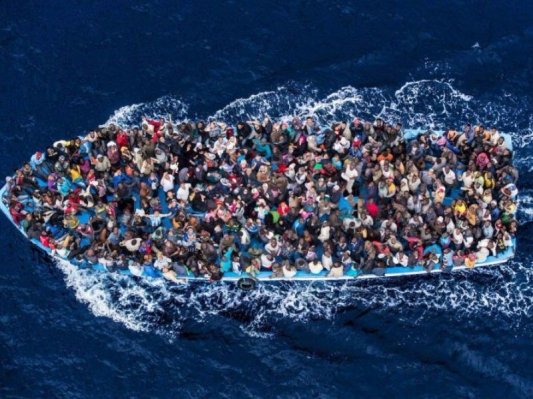
The tension between the various groups present in Tripoli can be attributed to various reasons. First of all, the decline in migratory flows from the Tripoli coasts - which guaranteed income to some groups present in the area - has cut a good slice of the cake from which many militias ate, satiating theirs “economic appetites”. Put another way, keeping armed groups under control with the proceeds of illegal trafficking is now much more difficult and this could constitute a risk for the stability of the UN-branded government. Proof either way, prima, the Seventh Brigade, a militia stationed in the cities of Tarhuna, south of the capital, it moved against formations loyal to Serraj, accusing them of being corrupt; Then, as reported by some agencies, Wrong Badi, controversial figure of the Libyan Dawn operation - who in 2014 forced the newly elected government to take refuge in Tobruk - he spread a message on Facebook saying he was ready to enter Tripoli at the head of the al Samoud brigade. As an old popular saying goes “hunger drives the wolf out of its den” and so it was. Read More

Share

Because international organizations like migration so much?

Of Ilaria Bifarini
Because international organizations like migration so much?
Source: Heretically
“Migration can benefit everyone in building more inclusive and sustainable societies. Globally, the number of international migrants has reached approx 258 million in 2017, compared to 173 million of 2000. Migration contributes to inclusive and sustainable economic growth and development in both countries of origin and destination. In the 2017, remittance flows to low- and middle-income countries have reached $ 466 billion, more than three times the amount of APS (Public development aid) received in the same year. Remittances constitute a significant source of family income, improving the situation of families and communities through investments in education, healthcare, sanitation services, housing and infrastructure. Destination countries also benefit, as migrants often fill job gaps, they create jobs as entrepreneurs and pay taxes and social security contributions. Overcoming adversity, many migrants become the most dynamic members of society, contributing to the development of science and technology and enriching their host communities through cultural diversity.”
This is what we read in the Agenda 2030 for Sustainable Development of the United Nations, a firma del cinese Liu Zhenmin, UN Under-Secretary-General for Economic and Social Affairs. So, compared to 2000 the number of people who left their country of birth and now live in other countries increased by approximately 50% percent (il 49% to be precise) with a continuous growth trend. Beyond the optimistic and unrealistic tones used in the programmatic document, we can extrapolate the presumed economic model of development supported by the proponents of current migrations, That, unlike the past ones, have reached massive levels and are following new directions. Triggering a hypothesized virtuous circle of growth would be, on the one hand, the supply of labor by migrants for unsatisfied requests from local workers, on the other, the flow of money sent to the countries of origin, which would be used not only to alleviate family poverty, but for productive investments in the national economic fabric. A virtuous model and a harbinger of growth, accompanied by a happy coexistence, almost symbiotic, between migrants and citizens of the host country. Read More

Share

Libya in the hands of traffickers now looks to Italy for a turning point

Of Alessandra Bocchi
Libya in the hands of traffickers now looks to Italy for a turning point
Source: The Lighthouse on the World
Migrations for Libya and from Libya are still a problem and, to pay for it, it is the same local population. “The Libyans want the immigration phenomenon to be stopped”, Jamal Adel tells us, a boy who is part of the Tebu tribe in Kufra in the south-east of the country.
“It would be a great thing if the new interior minister Matteo Salvini could stop the migration problem", another boy who requested anonymity for security reasons and who works for an organization that monitors conflicts in Sebha tells us, a town destroyed by human trafficking.
The boy then adds that “few newspapers are interested in what Libyans think about the migration phenomenon but, actually, we want this phenomenon to stop because it is seriously damaging our country".
Mac K. B. Simpsons, Ghanaian and migration expert who lives in Tripoli, he tells us: “It is important that this trafficking is stopped before the migrants even enter Libya”.
For many Libyans the problem is to be found above all in the NGOs operating in the Mediterranean: “Traffickers rely on NGOs, it has already been proven that they collaborate. They also feed the Libyan and Italian mafias", says Adel. Read More

Share

Israel wants to definitively "liquidate" the Gaza issue

Of Maurizio Blondet

Israel wants to definitively "liquidate" the Gaza issue

(with a nice genocide) The ultra-Zionist Betzalel Smotrich, on the population of Gaza: “let them all die of hunger, of thirst and malaria". Member of the Knesset, Betzalel Smotrich, gave an interview on the issue of humanitarian aid for the people of Gaza, as well as on the return of Palestinian prisoners and detainees: “For my part, the Gaza Strip must be completely…
Read all.


Read More

Share
1 2 3 4 5 8